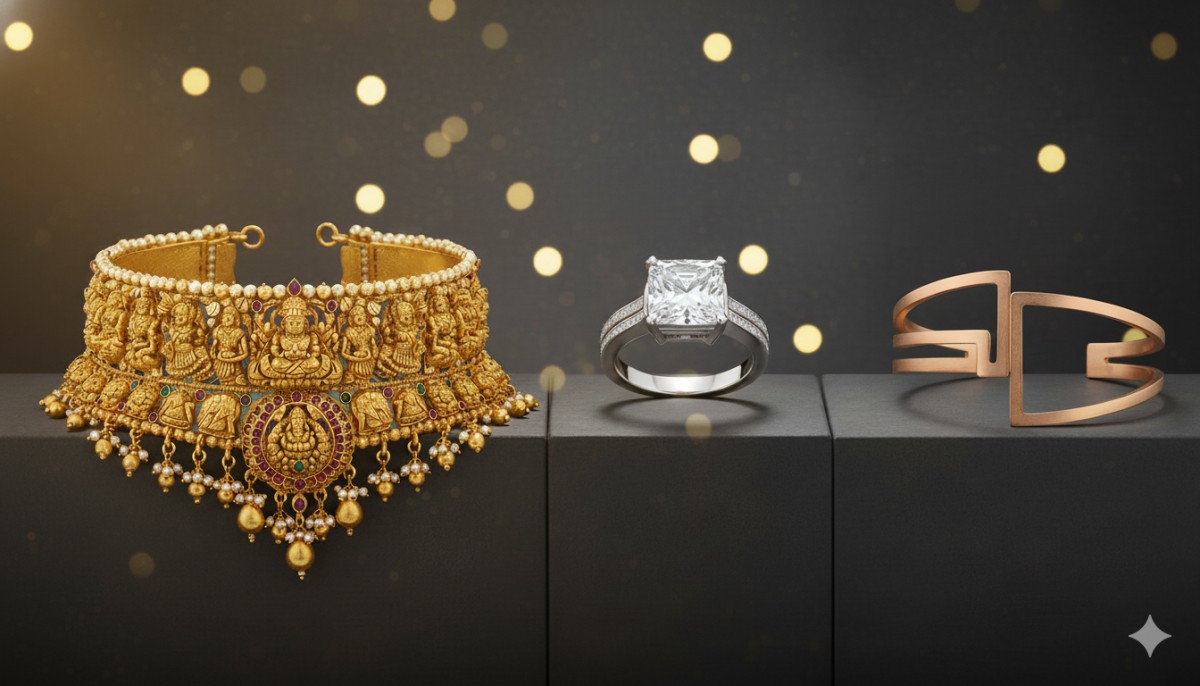
Gold jewelry is a globally cherished commodity, but the gold you purchase in Istanbul, Dubai, or Mumbai tells a very different story about its purity, craftsmanship, and intrinsic value. The question of “Which is Best Quality?” is complex because it depends entirely on the buyer’s definition of “quality”: Is it the highest gold purity? The most intricate craftsmanship? Or the greatest structural durability?
Turkey, Dubai, and India are three of the world’s most influential gold markets, each specializing in unique aesthetics and technical standards. While Indian gold prioritizes purity above all else, Turkish gold focuses on enduring structure, and Dubai offers unparalleled market variety. Understanding these distinctions is crucial, whether you are buying for investment, a wedding, or daily fashion.
Read more: Sleek Gold Bracelets for Office
1. Defining “Quality” in the Global Gold Market
To compare the three markets fairly, we must evaluate quality based on four key metrics:
A. Purity (Karat)
This is the percentage of pure gold in the alloy (24K is 100%). Higher purity means higher investment value but less durability.
B. Craftsmanship
This refers to the skill involved (hand-made Nakshi vs. high-tech machine pressing). High craftsmanship increases the ‘making charges.’
C. Durability and Finish
This dictates how well the jewelry holds up to daily wear and how resistant it is to bending, stretching, or losing its shape.
D. Hallmarking and Trust
The regulatory standard that guarantees the purity claims (e.g., BIS in India).
2. Hub 1: Indian Gold (Purity, Investment, and Heritage) 🇮🇳
India is the world’s largest consumer of gold, driven by cultural and investment demand. Indian gold prioritizes high purity and rich, traditional aesthetics.
Purity Standard: The Highest in the World
- Mandatory Purity: The dominant standard for jewelry in India is 22 Karat (91.6% pure gold). This is driven by the cultural belief that gold is an investment asset (an economic hedge) and must be purchased in its purest possible form.
- Color: Indian gold has the richest, deepest yellow color due to its minimal alloy content.
Craftsmanship: Hand-Made and Intricate Heritage
- Focus: Indian craftsmanship excels in highly detailed, intricate hand-made styles like Nakshi work (carving) and Temple Jewellery. These techniques create elaborate bridal Harams, heavy Kadas, and complex Kundan designs.
- Making Charges: Making charges are often higher here due to the labor-intensive, artistic nature of the jewelry.
Hallmarking and Trust
- Guarantee: India boasts one of the world’s most stringent hallmarking systems: the BIS Hallmark (Bureau of Indian Standards), now integrated with the mandatory 6-digit HUID (Hallmark Unique Identification) number. This system provides maximum assurance of purity.
Verdict: Indian Gold is Best For…
- Investment: Due to the 22K purity and HUID guarantee.
- Traditional Events: Perfect for heavy bridal and heirloom pieces (Kasu Mala, Temple sets).
3. Hub 2: Dubai Gold (Variety, Price Advantage, and Global Style) 🇦🇪
Dubai, the “City of Gold,” is a trading hub that caters to a massive global market, offering a vast range of purity and design, often at competitive prices.
Purity Standard: Wide Range
- Common Purities: While 22K gold is abundant (due to high Indian expat demand), Dubai also features a wide array of 18K gold jewelry. This lower purity is popular for Western designs, especially those featuring diamonds or precise structural settings.
- Flexibility: Dubai offers flexibility to choose purity based on budget and durability needs.
Craftsmanship: High Volume and Modern Appeal
- Focus: Much of Dubai’s gold is either imported or machine-made, resulting in lower making charges compared to Indian hand-made items. Designs often follow bold, modern, and global fashion trends, suitable for Western attire.
- Price: Due to its tax-free status (though VAT may apply) and competitive making charges, Dubai is often the best place to buy sheer volume of gold at the closest price to the live market rate.
Hallmarking and Trust
- Guarantee: Dubai follows strict government regulation under the Dubai Municipality (DM) Hallmark. The purity guarantee is exceptionally high, making it a safe place to purchase.
Verdict: Dubai Gold is Best For…
- Purchasing Volume: Due to low making charges and the tax environment.
- Modern and Global Style: Wide array of 18K structural and contemporary designs.
4. Hub 3: Turkey Gold (Durability, Finish, and Fashion) 🇹🇷
Turkey, particularly Istanbul, is famed for its craftsmanship, which focuses heavily on high durability, intricate structural design, and superior finish quality.
Purity Standard: Durability is Key
- Dominant Purities: Turkish jewelers traditionally favor 14 Karat (58.3%) and 18 Karat (75%) gold. This lower purity makes the metal harder, much more durable, and ideal for intricate, lightweight designs that need to resist bending.
- Color: They excel at creating beautiful variations, including white gold, rose gold, and unique matte or antique finishes.
Craftsmanship: Structural Artistry and Technology
- Focus: Turkish jewelers are masters of filigree work, structural chains, and antique finishing. They produce incredibly light yet voluminous jewelry (often using electroforming techniques) that looks massive but is comfortable for daily wear.
- Design Influence: Styles often reflect Ottoman history blended with contemporary European trends, such as bold geometric shapes and excellent chain craftsmanship.
Hallmarking and Trust
- Guarantee: Turkish gold is marked according to international standards (usually in Karats or Fineness), and the industry is highly competitive, ensuring quality workmanship.
Verdict: Turkey Gold is Best For…
- Durability and Daily Wear: The 14K/18K gold is stronger and more resilient.
- Fashion and Finish: Best for structural necklaces, high-quality chains, and detailed rings.
5. Direct Comparison: Key Differences Summarized
| Feature | Indian Gold (22K) | Dubai Gold (Mix) | Turkey Gold (14K/18K) |
| Primary Purity | 22K (91.6%) | 18K to 22K | 14K & 18K |
| Durability | Low (Soft, prone to bending) | Medium | High (Hard, best for daily wear) |
| Making Charges | High (Handmade, intricate) | Low to Medium (Competitive) | High (Structural engineering, technology) |
| Style Focus | Traditional, Temple, Bridal, Heirloom | Modern, Western, High Volume, Global | Structural, Filigree, Antique/Matte Finish |
| Hallmark | BIS 916/HUID (Best Trust) | DM (Dubai Municipality) | Karat Mark (International Standard) |
Conclusion: Which Gold Offers the Best Quality?
The “best quality” gold depends on your goal:
- For Investment and Purity: Indian Gold (22K) is the best. The high karatage and the mandatory BIS-HUID system offer unmatched purity and assurance.
- For Durability and Structural Integrity: Turkey Gold (14K/18K) is the best. The metal is harder, making the jewelry resistant to the wear and tear of daily use.
- For Best Price and Variety: Dubai Gold is the best. Low making charges and diverse international designs make it ideal for mass purchasing and choice.
Frequently Asked Questions (FAQs)
Which type of gold is least likely to scratch or bend?
Turkey Gold (14K or 18K) is the least likely to scratch or bend. The lower gold purity means higher alloy content (copper, silver), which increases the metal’s hardness and durability significantly.
Can I travel with gold purchased in Dubai or Turkey to India?
Yes, but you must declare it to customs if the value or weight exceeds the duty-free allowance limits set by Indian customs. Always carry the original purchase invoice and purity certificate.
Does 18K Turkish gold look drastically different from 22K Indian gold?
Yes. 22K Indian gold is a deep, rich yellow color. 18K Turkish gold is slightly lighter yellow and may have a different hue if alloyed with silver (for white gold) or copper (for rose gold).
Why are making charges often lower in Dubai than in India?
: Making charges are lower in Dubai because much of the jewelry is machine-made (high volume production), and labor costs for certain processes can be lower or more streamlined than the traditional, highly labor-intensive hand-made Nakshi work common in India.