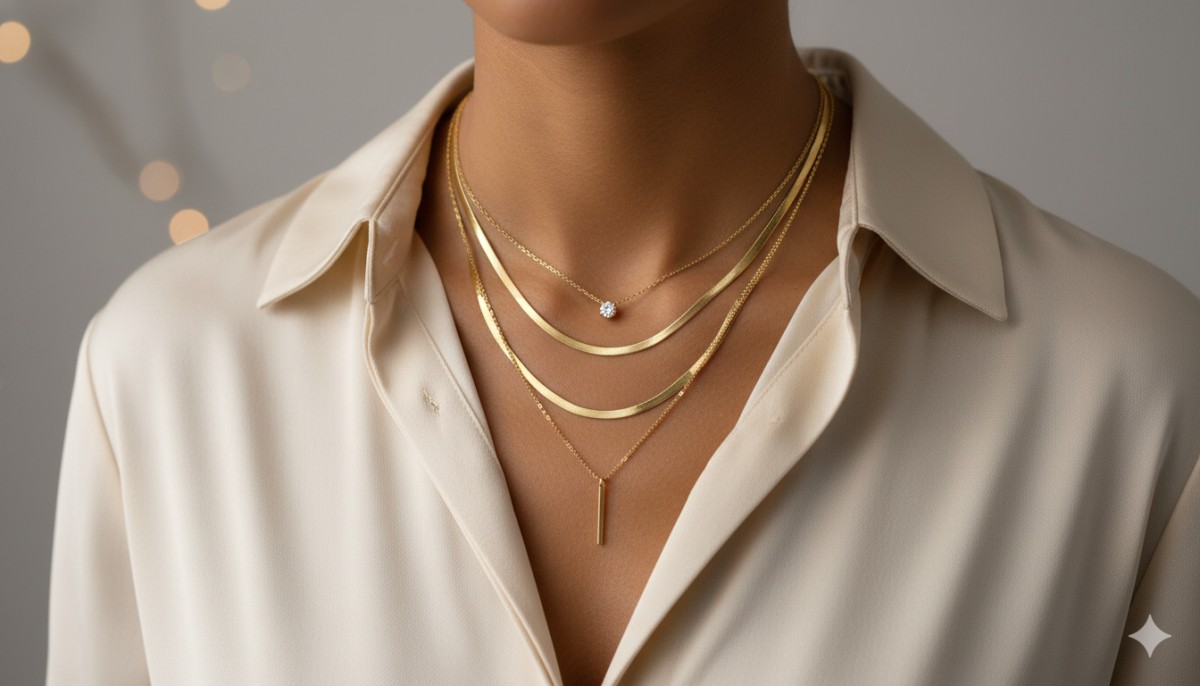
The art of layering necklaces has evolved from a simple stacking trend into a defined geometric technique, mastered by the creation of the “Waterfall” Effect. This sophisticated style involves arranging exactly three gold necklaces of distinctly different lengths and textures to create a cascading, fluid visual effect that commands attention. When executed correctly, the look is sleek, proportional, and incredibly luxurious, making it the signature jewelry choice for everything from red-carpet events to high-fashion street style in 2025.
Achieving the perfect “Waterfall” effect requires more than just throwing on three chains; it demands strategic planning regarding length, weight, and texture to ensure the pieces drape harmoniously without tangling or looking cluttered. This comprehensive guide breaks down the geometry, the strategic blueprint, and the technical solutions needed to flawlessly master the art of styling 3 gold necklaces.
Read more: Diamond and Ruby Bracelet Designs
1. The Geometry of Layering: Why Three is the Magic Number
The success of the “Waterfall” look hinges on creating visual balance through defined steps. Three pieces offer the ideal number to show progression and contrast without overwhelming the neckline.
A. The Necessity of Distinct Lengths
To prevent the necklaces from merging or tangling, there must be a minimum difference of two inches between each piece. The most popular combinations are:
- The Everyday Stack: 16-inch (Choker), 18-inch (Focal), 20-inch (Anchor).
- The High-Impact Stack: 14-inch (Collar), 16-inch (Focal), 18-inch (Anchor).
B. Creating the Waterfall V-Shape
When worn, the three necklaces should form a clear, descending ‘V’ shape on the chest. This visual hierarchy guides the eye downward, making the neck appear longer and the entire arrangement look intentional and polished. If the necklaces are too close in length, they will lie on top of each other, resulting in a cluttered, tangled look.
2. The Art of Contrast: Weight, Texture, and Pendants
The quickest way for a layered look to fail is if all three chains are the same style. Contrast is the key to creating definition and preventing metal friction.
A. The Contrast Rule: Mix Structure and Shine
Avoid stacking three pendant necklaces or three plain chains. You must mix texture:
- Structural Chain: Pair a flat, smooth chain (like a herringbone or snake chain) with…
- Textured Chain: A flexible, round chain (like a cable or rope chain) with…
- Focal Pendant: A chain featuring a single, well-defined pendant (like a coin, disc, or initial).
B. Balancing Weight
The necklaces should have varying weights, but not drastically so. A heavy, thick chain should be layered with two lighter chains. This ensures that the heaviest piece acts as the Anchor (Layer 3), grounding the entire look and helping the lighter pieces stay in their proper positions.
C. Metal Uniformity
Ensure all three necklaces share the same gold color and purity (e.g., all 14K yellow gold or all 18K rose gold). Mixing white, yellow, and rose gold is possible, but mixing the same-colored chains of drastically different purity (e.g., a high-shine 24K chain with a dull 10K chain) can look inconsistent.
3. The 3-Piece Blueprint: Defining Each Layer’s Role
Each of the three chains plays a distinct structural and aesthetic role in achieving the perfect “Waterfall” effect.
Layer 1: The Choker (14–16 Inches) – The Foundation
- Role: To frame the collarbone and set the overall tone. It should be the most fixed piece.
- Design Recommendation: A Herringbone (smooth, liquid flat chain) or a sleek, simple Cable Chain. Avoid bulky pendants, keeping this layer smooth and minimal.
Layer 2: The Focal Point (16–18 Inches) – The Message
- Role: To carry the main message or personal symbol. This is the eye-level layer.
- Design Recommendation: The perfect spot for a Pendant, such as a single solitaire, a birthstone, an initial, or a personalized engraved disc. The chain should be thin and durable (like a diamond-cut cable chain).
Layer 3: The Anchor (18–20+ Inches) – The Volume
- Role: To provide length, visual weight, and complete the V-shape.
- Design Recommendation: A slightly thicker link chain (like a paperclip or a curb link) or a long necklace featuring a substantial charm (like a vintage coin or a vertical bar pendant) that acts as a strong visual anchor.
4. Technical Solution: Avoiding the Tangle Nightmare 🔗
The biggest frustration with layering is tangling, caused by static and friction from same-sized links.
A. The Connector Clasp (The Professional Solution)
For guaranteed no-tangle wear, use a layering clasp connector. This specialized multi-clasp tool attaches all three necklaces to one central clasp, ensuring they separate naturally and do not twist around each other.
B. Different Link Sizes
Ensure the individual links of the three chains vary significantly in size (e.g., one snake chain, one small cable chain, one large paperclip chain). Different link sizes reduce friction and static between the pieces.
C. Clasp Placement
When putting the necklaces on, ensure all three clasps are lined up perfectly at the back of the neck. This prevents the heavy clasps from slowly sliding around to the front and disrupting the design.
5. Styling Guide: Matching the Waterfall to Necklines
The “Waterfall” effect is designed to complement specific necklines, maximizing its elegance.
| Neckline Style | Styling Strategy | Optimal Chain Lengths |
| V-Neck/Scoop Neck | Ideal; the necklaces should mimic the V-shape, ending just above the fabric line. | 14″, 16″, 18″ |
| Collared Shirt/Blazer | Wear the stack entirely under the collar, letting only the top layers peek out, or wear all layers over a tightly buttoned shirt. | 16″, 18″, 20″ |
| Turtleneck/High Neck | Wear a slightly longer stack, ensuring the anchor chain sits well over the fabric. The stack provides texture against the block color. | 18″, 20″, 22″ |
| Strapless/Off-the-Shoulder | The stack should sit high and tight (14″–16″–18″) to maximize the exposed skin, drawing attention to the collarbones. | 14″, 16″, 18″ |
Conclusion
Mastering the “Waterfall” Effect with three gold necklaces is a definitive statement of modern jewelry sophistication. By adhering to the principles of distinct length graduation, strategic texture contrast, and prioritizing durable 14K or 18K gold purity, you transform individual chains into a fluid, cohesive, and effortlessly luxurious ensemble that perfectly anchors your professional and personal style.
Frequently Asked Questions (FAQs)
What is the minimum recommended length difference between the necklaces?
A minimum difference of two inches (approx. 5 cm) is recommended. This separation ensures that the chains do not lie on top of each other, reducing tangling and clearly defining the three layers.
Will the necklaces tangle if I sleep in them?
Yes, they will almost certainly tangle if you sleep in them. Necklaces should always be removed before sleeping or engaging in vigorous exercise to prevent twisting, breakage, and damage to the clasps.
Can I mix yellow gold and rose gold in a three-chain stack?
Yes, mixing metals is highly fashionable. If you mix, ensure the different gold colors are placed on non-adjacent layers (e.g., Yellow, Rose, Yellow) and that the color difference is intentional, not accidental.
Should all three necklaces be the same gold purity (e.g., 14K)?
Yes, it is best for visual harmony and durability if all three pieces share the same gold color and purity (e.g., all 14K or all 18K). Consistency prevents one piece from looking noticeably duller or less valuable than the others.
What is the best technique to prevent tangling during the day?
The absolute best technique is to use a specialized layering clasp connector (or separator bar). This device links all three chains to one clasp, ensuring they remain perfectly parallel and separate throughout the day.