We Indians don’t just buy gold to look good. We buy it to feel safe. There is a reason our mothers and grandmothers hoarded those yellow metal biscuits and heavy chains. They knew that when life gets tough, gold gets going.
But here is the problem with modern jewelry shopping: The “Making Charge” Trap.
You walk into a showroom, fall in love with an intricate antique necklace, and swipe your card. You feel rich. But financially? You just took a massive hit. If that necklace has 25% making charges, your investment is instantly down by 25%. If you try to sell it the next day, you lose that money forever.
Does this mean you should stop buying jewelry? Absolutely not. It just means you need to stop shopping like a consumer and start shopping like a savvy investor.
The secret lies in choosing Low-Making Charge Gold Jewellery Designs. These are pieces where you pay for the Gold, not the Labor. These are designs that look stunning on your neck but act like bullion in your portfolio.
In this guide, I am going to reveal the specific designs that carry the lowest wastage (often 8% to 12%), strategies to negotiate labor costs, and how to build a jewelry box that doubles as a high-yield asset.
Read more: Lightweight Gold Jewellery
The Mathematics of “Wastage” (Making Charges)
Before we look at designs, you need to understand the enemy.Making Charges (Majuri) are the fees you pay to the artisan or factory to shape raw gold into jewelry.
- Hand-Made (High Charge): Requires skilled labor, time, and creates more gold wastage during cutting/filing. Charges: 15% – 30%.
- Machine-Made (Low Charge): Produced by automated casting or stamping machines. Fast, precise, zero wastage. Charges: 6% – 14%.
The Savvy Investor’s Rule: Never pay more than 12% to 14% making charges for an investment piece. Anything above that is a “luxury tax” you are paying for fashion, not value.
Top 5 Low-Making Charge Designs to Buy Now
These are the designs that respect your money. They are machine-produced or simple enough that labor costs are minimal.
1. The “Thos” (Solid) Gold Bangle
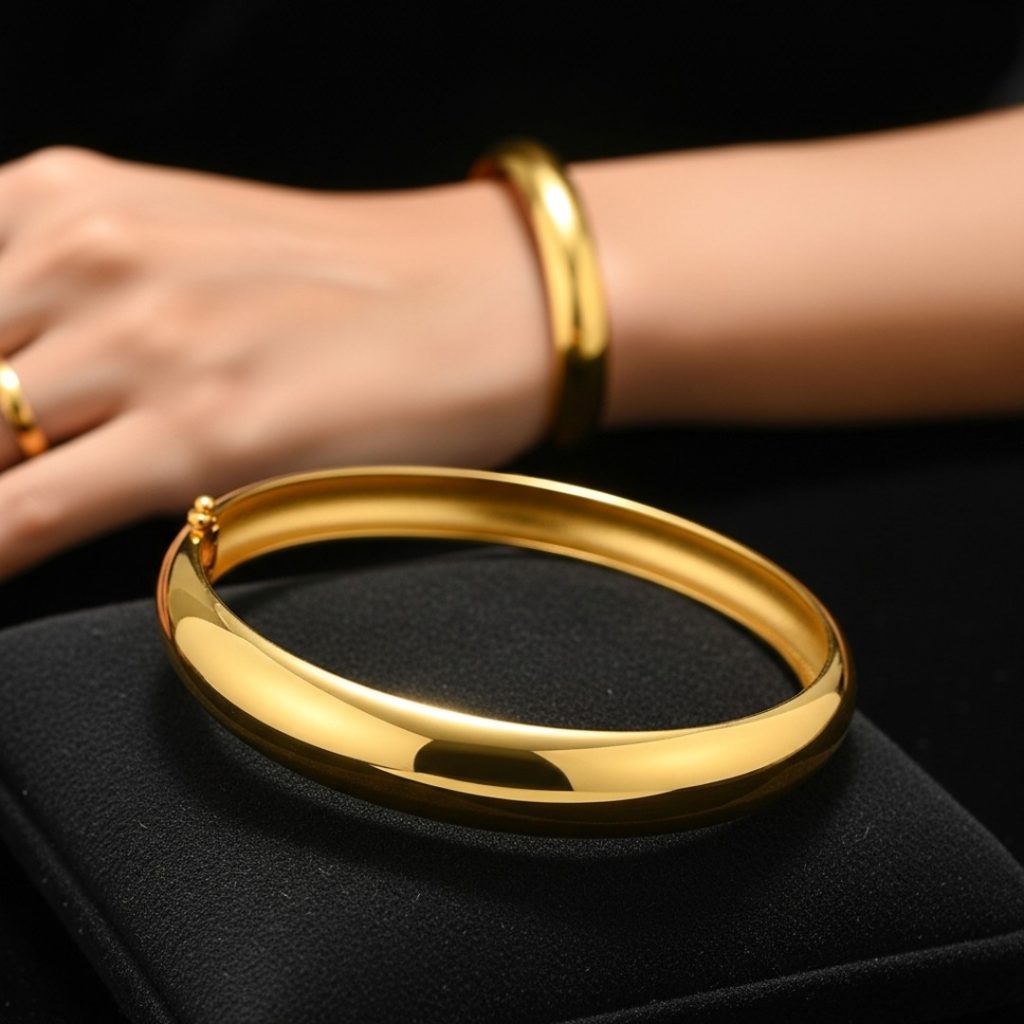
This is the holy grail of investment jewelry.
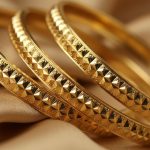
- The Design: A simple, round or semi-round solid gold bangle (Patla/Kada) with a smooth finish.
- Why it’s Cheap to Make: It is often made by a machine pulling a gold rod and bending it into a circle. Very little manual labor is needed.
- Making Charge Range: 8% to 12%.
- The Look: Classic, timeless, and heavy. You can wear a stack of 4 and look royal.
- Warning: Avoid “Nakshi” (carved) bangles if you want low charges. Carving = Labor = Cost.
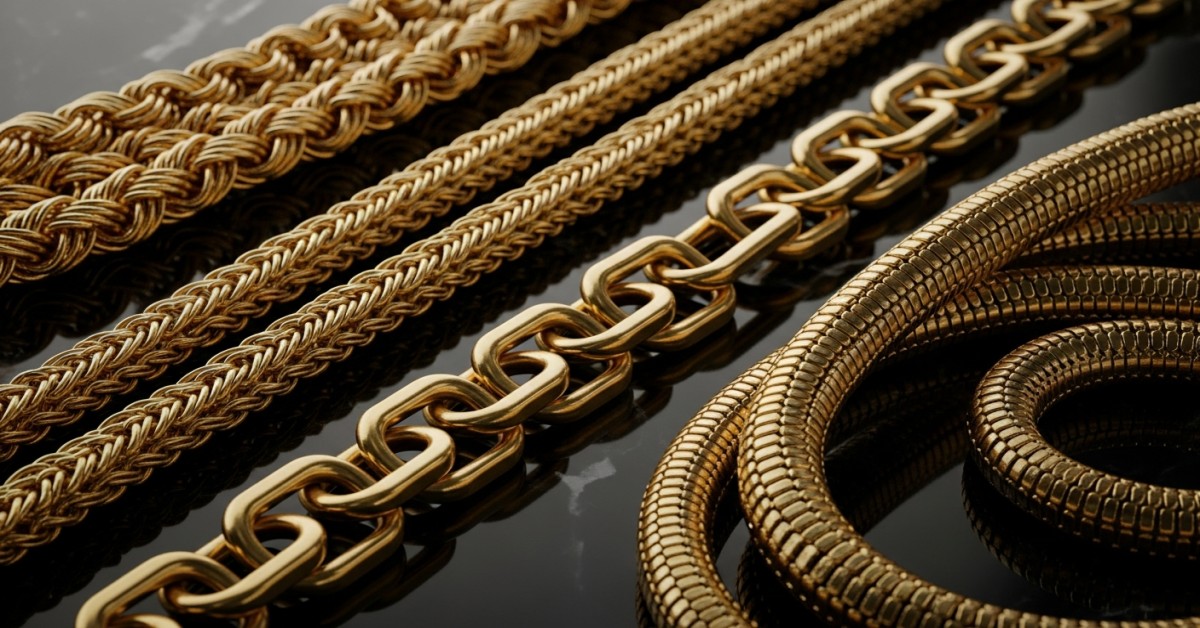
2. Machine-Cut Chains (Fox Tail, Box, Snake)
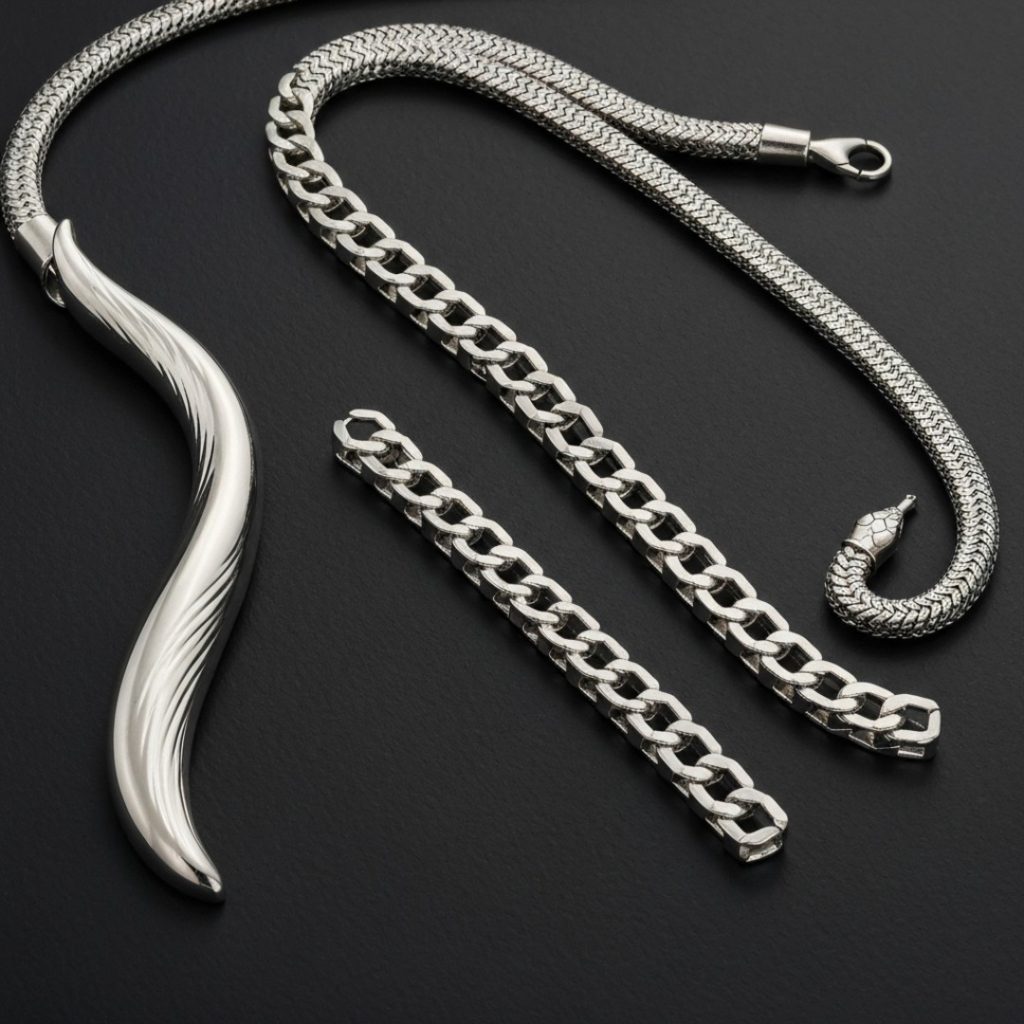
If you see a chain that looks like a perfect, shimmering liquid line, it is likely machine-made.
- The Design: Fox Tail, Box Chain, or Snake Chain.
- Why it’s Cheap to Make: These are manufactured in factories (often using Italian technology). The machine weaves thousands of links per hour.
- Making Charge Range: 8% to 12%.
- The Look: Sleek, modern, and perfect for daily wear. They don’t have the “imperfections” of handmade chains.
3. Coin Jewellery (Kasulaperu)
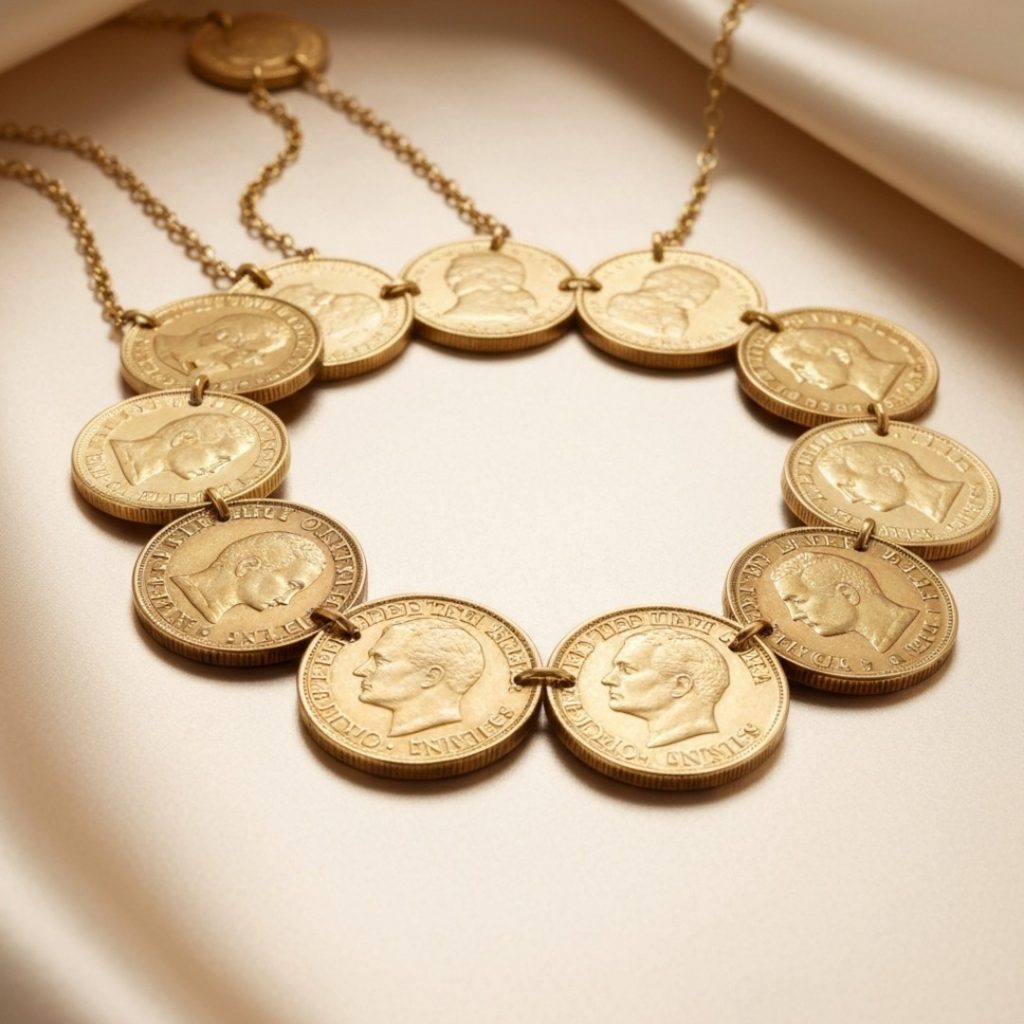
- The Design: A necklace made of gold coins (Ginnies) strung together.
- Why it’s Cheap to Make: Gold coins are stamped out of sheets (like cookie cutters). There is almost zero labor involved in making the coin itself. You only pay labor for the tiny ring linking them.
- Making Charge Range: 6% to 10%.
- The Investment: If you need cash, you can break off one coin and sell it. It’s the most liquid form of jewelry.
4. Stamped “Sheet” Pendants
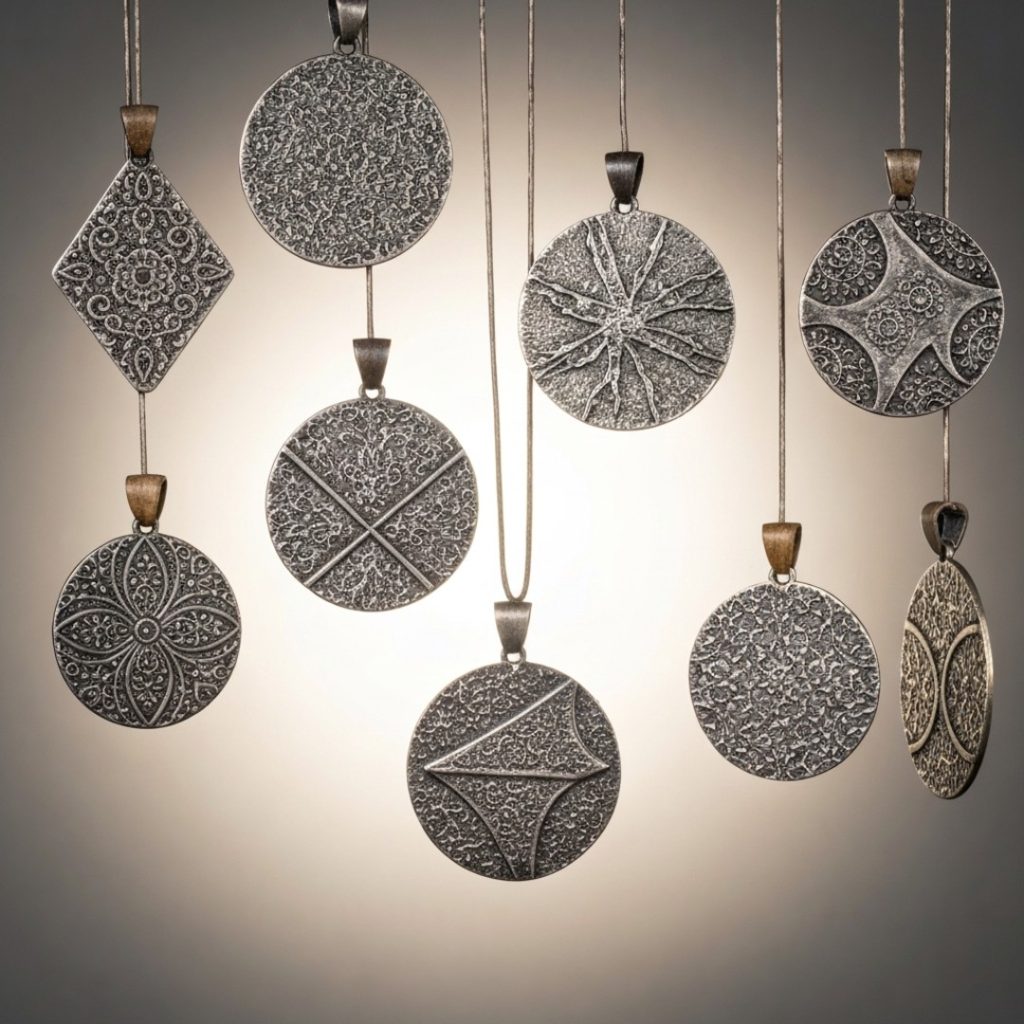
- The Design: Lightweight pendants (hearts, om symbols, geometric shapes) that look 3D but are made from stamped gold sheets.
- Why it’s Cheap to Make: It’s a “Die-Stamping” process. A machine presses a gold sheet into a mold. Boom—pendant ready.
- Making Charge Range: 10% – 12%.
- The Look: They are often puffed/hollow, so you get a big look (volume) for very little weight and cost.
5. Plain Gold Bands (Rings)
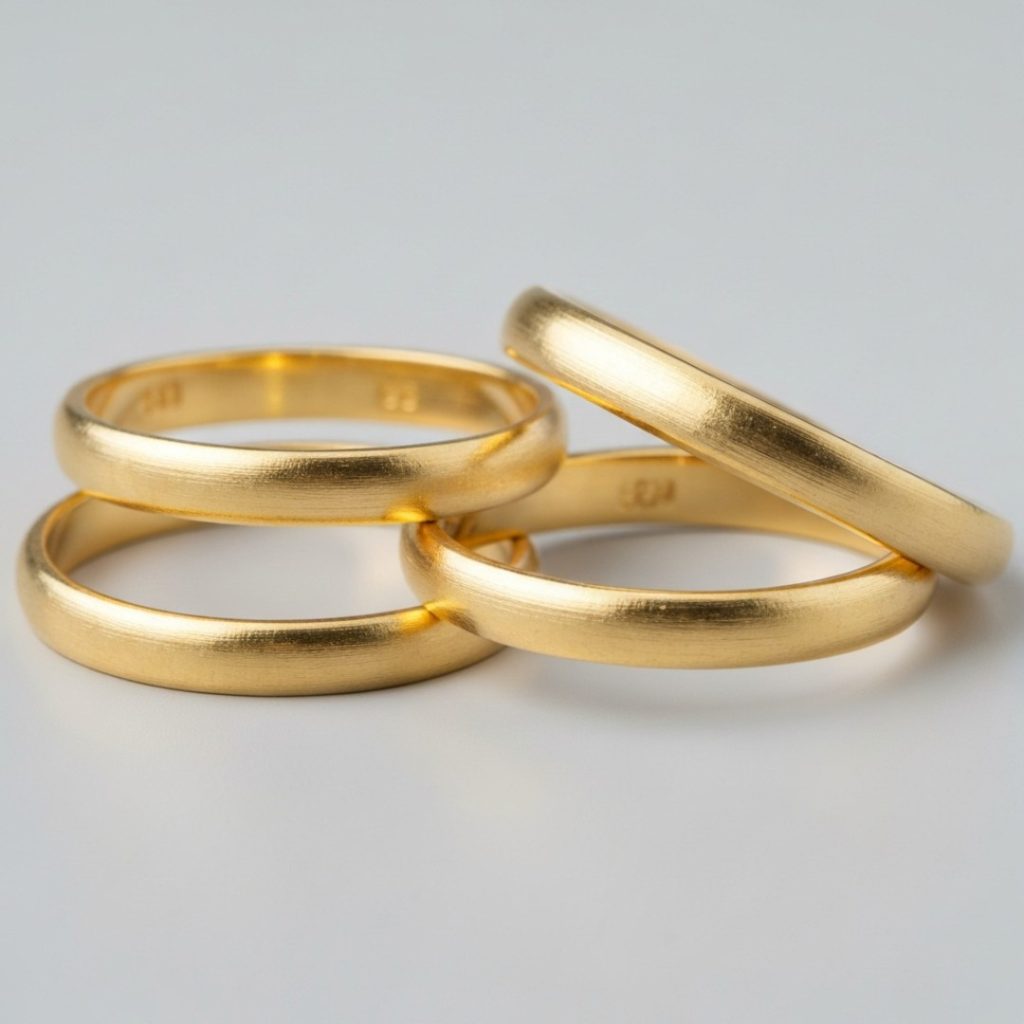
- The Design: A simple wedding band or “Challa” ring.
- Why it’s Cheap to Make: It is a single piece of metal, cut and polished. No soldering of complex parts.
- Making Charge Range: 8% – 12%.
- The Use: Perfect for men or for stacking.
What to AVOID: The “High-Wastage” Traps
If your goal is investment, stay away from these styles. They are beautiful, but they are wealth-erasers.
- Antique/Temple Jewellery: The intricate oxidised finish requires hours of manual labor. Making charges often hit 25% – 35%.
- Kolkata Filigree: While stunningly light, the delicate wire-work is entirely handmade and fragile. High labor cost.
- Kundan/Polki: The worst offender. You pay high labor for the setting and pay for the weight of the lac/wax inside.
The Negotiation Strategy: How to Lower the Charge
Here is a secret: Making Charges are negotiable. Gold Rate is not. If a jeweler quotes you 18% making charges on a chain, do not just accept it.
Step 1: The Comparison “I saw a similar machine-made chain at [Competitor Brand] for 12%. Can you match that?”
Step 2: The “Bulk” Card “I am planning to buy the bangle and the chain today. If you give me a flat discount on labor, I’ll take both.”
Step 3: The “Raw Gold” Exchange Some jewelers offer lower making charges if you provide the raw gold (old jewelry exchange) because they save on procurement costs.
Timing Your Purchase: The Discount Windows
You can get high-quality designs for low charges simply by waiting for the right time.
- The “Flat Off” Sales: Look for ads that say “Flat ₹199 per gram Making Charge.” Brands run these during their anniversary months or lean seasons (June-July). This is the best time to buy.
- Exhibitions: Jewelry exhibitions often have manufacturers selling directly to customers. They cut out the middleman (showroom cost) and offer very low making charges.
The Role of Purity: 22k vs. 24k
For the Savvy Investor, purity is everything.
- 22k (916): The standard for investment jewelry. It is durable enough to wear but pure enough to fetch high resale value.
- 24k (999): Generally too soft for jewelry. However, 24k Gold Coins have the lowest making charges of all (2-3%).
- Strategy: Buy 24k coins. Buy a simple, detachable 22k frame (bezel). Wear the coin as a pendant. You get 99.9% purity asset with wearability.
Conclusion: Beauty with Brains
Investing in gold doesn’t mean you have to lock boring bars in a safe. It means understanding the economics of beauty.
When you buy a Low-Making Charge Design, you are hacking the system. You are getting the joy of wearing gold, the status of owning it, but minimizing the “sunk cost” of labor. You are ensuring that if you ever sell that bangle in 5 years, the cash in your hand will be almost exactly what the gold is worth.
So, the next time a salesperson tries to sell you an intricate, high-labor necklace, smile and ask to see the “Machine-Made Section.” That is where the smart money lives.
I’d love to know: Do you negotiate making charges when buying gold? What is the lowest percentage you have ever paid? Let me know in the comments below!
Frequently Asked Questions (FAQs)
Which type of jewelry has the lowest making charges?
Gold Coins and Bars have the lowest charges (2-4%). In wearable jewelry, Machine-Made Chains and Plain Solid Bangles usually have the lowest making charges, ranging from 8% to 12%, because they require minimal manual labor.
Are machine-made designs durable?
Yes, often more durable than handmade ones. Machine-made chains (like Box or Rope chains) are created with precise tension and uniform links, making them less likely to snap at weak solder points. However, hollow machine-made items can dent if not handled with care.
Why do antique designs have high making charges?
Antique or “Temple” designs are usually Handcrafted. Artisans spend days carving, polishing, and oxidizing a single piece. You are paying for their time, skill, and the gold wasted (filed away) during the intricate carving process. This pushes charges to 20-30%.
Can I get 0% making charges?
Sometimes. During special promotions (like Akshaya Tritiya, Brand Anniversaries, or End-of-Season sales), big jewelers may offer 0% Making Charges on specific collections (usually diamonds or plain gold) to clear stock. This is the absolute best time to invest.
Does the brand affect the making charge?
Yes. Premium national brands (like Tanishq or Malabar) often charge a premium on making charges (starting at 14% – 20%) to cover their branding, showroom experience, and quality assurance. Small local jewelers may offer lower charges (10-12%) but ensure you verify their Hallmarking and purity testing rigor.