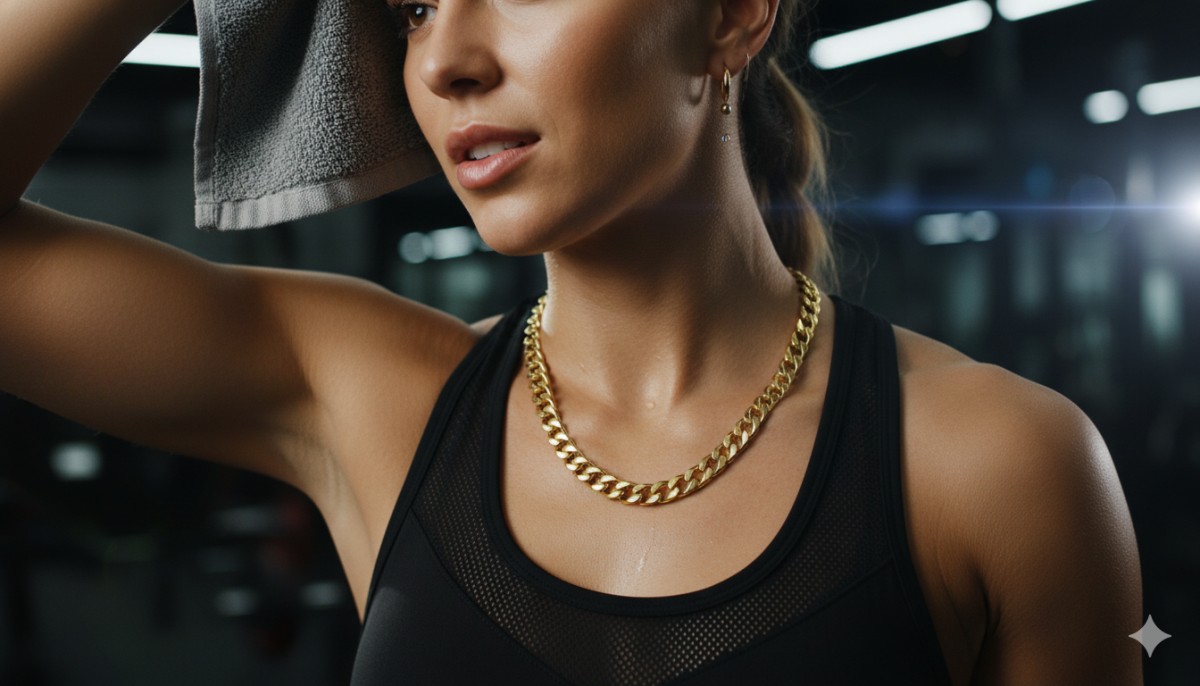
For years, gym trainers and athletes have been told that sweat ruins jewelry or that a barbell will snap a chain. But let’s be honest—jewelry is part of your identity. Whether it’s a lucky charm, a religious symbol, or just that confidence boost you get from catching a glimpse of gold in the gym mirror, you shouldn’t have to strip down your style just to hit a PR (Personal Record).
The truth is, you can wear gold to the gym. You just have to wear the right kind.
As a jewelry editor who has analyzed metal durability for over a decade, I’m going to break down exactly what “sweat-proof” means, why your 22k gold chain might be a bad idea for CrossFit, and which designs can actually survive a deadlift session.
Read more: Coorgi “Kokkethathi” Designs
The Science of Sweat: What Actually Happens to Gold?
Before we buy, we need to understand the enemy. Sweat is not just water. It is a cocktail of fats, oils, salts, and lactic acid.
Pure gold (24k) is inert—it doesn’t react with oxygen or acid. However, pure gold is too soft for jewelry. This is where “alloys” come in.
- The Reaction: When you sweat, the acids don’t attack the gold; they attack the other metals (copper, silver, nickel) mixed into the gold.
- The Result: If your gold purity is too low (like 9k or 10k), the high copper content reacts with sweat to turn your skin green. If the gold is too soft (like 22k), the physical impact of gym equipment will dent it.
The Golden Rule: 14k vs. 18k vs. 22k for Athletes
In India, we are emotionally attached to 22k gold. But for the gym? It’s time to rethink.
1. 22k Gold: The “Showpiece” (Avoid at Gym)
- Why: It is 91.6% pure gold. It is buttery soft.
- The Risk: If you grip a knurled barbell or a dumbbell while wearing a 22k ring, you will bend it out of shape. If you wear a heavy 22k chain while running, the constant bouncing and friction can stretch the links.
- Verdict: Leave it in the locker.
2. 18k Gold: The “Luxury Balance” (Yoga/Cardio)
- Why: 75% gold. It’s harder than 22k and has that rich yellow color.
- The Risk: It is durable enough for running, yoga, or spin classes. However, it is still susceptible to scratching against steel machines.
- Verdict: Great for light workouts, but risky for heavy lifting.
3. 14k Gold: The “Athlete’s Choice” (Winner)
- Why: 58.5% gold. The rest is durable alloys like zinc and nickel.
- The Benefit: It is rock hard. It resists scratching, it doesn’t bend easily, and because the gold content is lower, it is lighter to wear.
- Verdict: The absolute best standard for daily active wear.
Pro Tip: Rose Gold is Tougher! If you love the pink hue, you are in luck. Rose gold gets its color from Copper. Copper is an incredibly hard metal. Therefore, a 14k Rose Gold ring is often more durable than a 14k Yellow Gold ring.
Solid Gold vs. Gold Vermeil vs. PVD (Budget Guide)
Not everyone wants to risk a ₹50,000 chain at the gym. Here are your alternatives.
1. Solid Gold (The Investment)
- Pros: Never fades, has resale value, can be polished.
- Cons: Expensive, soft (prone to dents).
2. Gold Vermeil (The “Faux” Friend – AVOID)
- Vermeil is gold plated over silver.
- Why to Avoid: Sweat is acidic. It will eat through the thin gold plating within a few months of heavy sweating, revealing the silver underneath. It requires high maintenance.
3. PVD Stainless Steel (The “Gym Hero”)
- This is the new trend for athletes. “Physical Vapor Deposition” (PVD) is a vacuum coating process that bonds gold particles to steel.
- Pros: It is 10x harder than standard gold plating. It is waterproof, sweat-proof, and heat-proof. You can shower in it.
- Cons: Zero resale value. It is costume jewelry, not an asset.
The Best (and Worst) Chain Links for Training
Your chain needs to handle movement, sweat, and the occasional snag on a t-shirt.
The Survivors (Buy These):
- Cuban Link: The tank of gold chains. The links are round, thick, and interlocked. They roll over the skin rather than pinching it.
- Box Chain: Sturdy and sleek. The square links create a continuous line that doesn’t kink easily.
- Mariner / Anchor Chain: Inspired by the sea, these have a bar in the middle of the oval link, adding structural reinforcement.
The Fragile (Avoid These):
- Herringbone / Snake Chain: These are flat and stiff. If you twist your neck during a deadlift or a yoga pose, these chains can “kink” permanently. Once kinked, they cannot be fixed.
- Hollow Rope Chains: They look heavy but are empty inside. One heavy bounce on a treadmill can snap a weak link.
Gym Jewelry Etiquette & Safety
- Ring Warning: If you lift heavy, never wear a metal ring. It can pinch your skin against the bar (causing calluses or blisters) or worse, “degloving” in accidents. Switch to a Silicone Band for lifting, or wear your ring on a chain around your neck.
- Necklace Length: Keep it under 20 inches. Anything longer will swing into your face during burpees or get caught in the rowing machine. 16-18 inches is the sweet spot.
- Earrings: Stick to Huggies (small hoops that hug the earlobe) or screw-back studs. Large hoops are a safety hazard if they snag on a towel or headphones.
Post-Workout Care Routine
You shower after the gym; your jewelry needs one too. Sweat leaves a salt residue that makes gold look dull and can corrode alloys over time.
- Rinse: Immediately rinse your gold under warm tap water.
- Soap: Use a drop of mild dish soap (like Pril or Vim liquid) to break down the oils.
- Dry: Pat dry with a soft microfiber cloth. Never use paper towels (they scratch gold).
Conclusion: Train Hard, Shine Harder
Being an athlete doesn’t mean you have to be boring. You can absolutely wear gold to the gym, provided you choose 14k Solid Gold or high-quality PVD Steel and stick to sturdy links like Cubans or Box chains.
Your jewelry should withstand your lifestyle, not the other way around. So go ahead, wear that chain. Just maybe leave the 22k bridal necklace for the wedding, not the weight room.
I’d love to know: Do you wear jewelry to the gym? Have you ever had a piece break during a workout? Tell me your story in the comments!
Frequently Asked Questions (FAQs)
Can I wear 22k gold to the gym?
It is not recommended. 22k gold is very soft. Lifting weights or gripping bars can bend rings out of shape, and the constant friction and bouncing can stretch or snap delicate 22k chains. Stick to 14k or 18k for active wear.
Does sweat turn gold black?
Real gold does not turn black. However, if you are wearing 14k or 18k gold, the other metals in the alloy (like copper or silver) can react with the acids in your sweat and oxidize, leaving a dark mark on your skin or the jewelry. Regular cleaning prevents this.
What is the best type of earring for runners?
“Huggies” (small clicker hoops) or screw-back studs are best. They are secure and won’t fall out due to sweat or bouncing. Avoid fish-hook wires or heavy danglers that can swing and hit your face
Is ‘Gold Vermeil’ good for the gym?
No. Vermeil is a thick gold plating over silver. The acidity in sweat will eventually eat through the plating, causing it to fade and revealing the silver underneath. Solid gold or PVD Stainless Steel is a better choice for heavy sweaters.