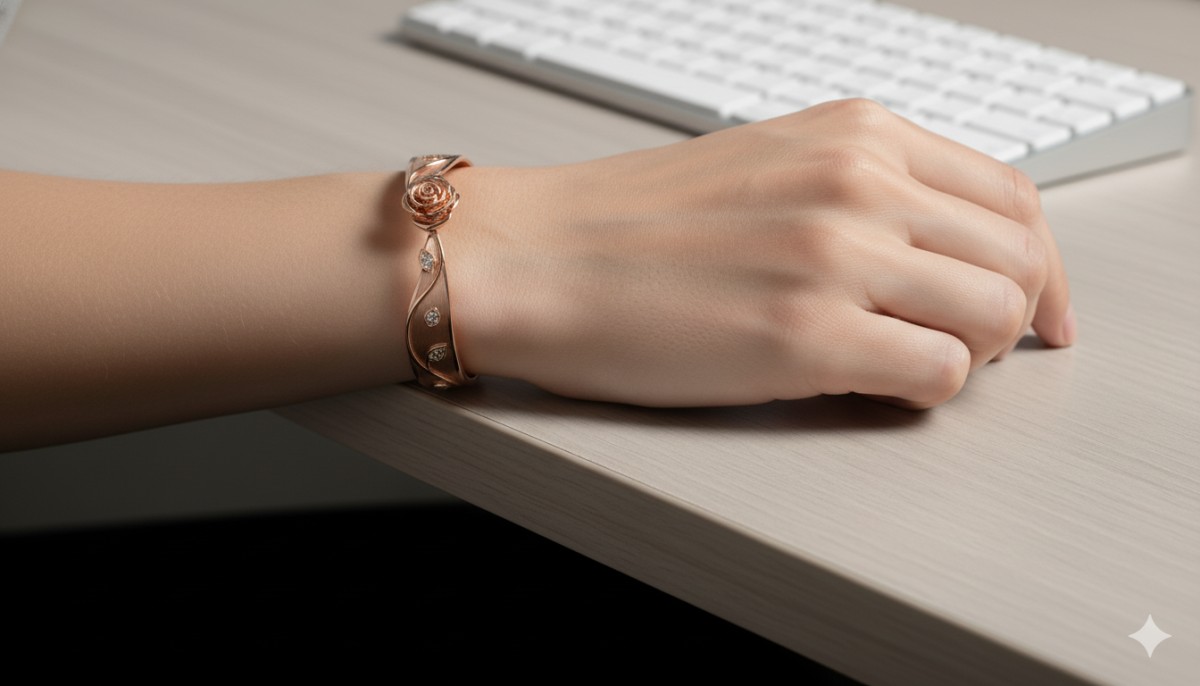
In the modern professional environment, every detail of your attire contributes to your brand of professionalism—and that includes your jewelry. The right gold bracelet can convey sophistication and confidence, but the wrong choice can quickly become a source of unwelcome distraction. The core principle for office jewelry is simple: elegance should be seen, not heard.
The growing demand is for Sleek Gold Bracelets for Office—designs that are minimalist, refined, and, most crucially, silent. This comprehensive guide explores the best structural designs, material choices, and wearing etiquette to ensure your wrist jewelry speaks volumes about your style without making a single sound on the desk or during typing.
Read more: Promise Rings in Gold: Meaning
1. The Etiquette of Silence: Why Noise Matters in the Office
The primary challenge of wearing bracelets in a professional setting is the noise they generate against hard surfaces (desks, keyboards) or when clashing with a wristwatch.
A. The Disruption Factor
Loose bracelets, stacks of bangles, or jewelry featuring multiple charms or ghungroos create intermittent noise that is highly disruptive in quiet office environments, client meetings, or while typing. The goal is to choose pieces that have a fixed structure and smooth, flush surfaces.
B. The Professional Aesthetic
Sleek, silent designs are inherently more professional. They signal attention to detail, restraint, and respect for the shared workspace, contributing to a polished, executive image.
2. Gold Purity and Professionalism: The Daily Wear Standard
For jewelry worn five days a week, durability and comfort are non-negotiable.
A. The 14K/18K Imperative
Choose 14K or 18K gold over gold-plated options. Solid gold offers superior longevity, resists corrosion from hand sanitizer and sweat, and maintains its shine without needing constant upkeep.
- 14K Gold: Highly recommended for its excellent durability and strength, making it resistant to dents and scratches common in a busy office environment.
B. Smooth Finish and Comfort
Ensure the bracelet has a high-quality, smooth finish (polished or matte). The interior edges must be rounded (comfort-fit) to prevent rubbing or irritation during long hours of typing and movement.
3. Top Sleek Designs That Define Quiet Sophistication
The best office bracelets focus on fixed forms, flat surfaces, and secure clasps that eliminate movement and noise.
A. The Minimalist Gold Cuff or Bangle (The Fixed Structure)
This is the safest choice for noise avoidance. A simple, fixed-size bangle or an open cuff bracelet sits securely on the wrist without jingling.
- Designs: Thin, rounded Kadas (bangles) or smooth, flat-top cuff designs. They convey strong, structural elegance.
B. The Sleek Snake or Herringbone Chain
These chains are characterized by their tightly woven, flat links that create a continuous, smooth surface.
- Advantage: They drape closely against the wrist like a ribbon, eliminating the gaps and movement that cause noise. They are elegant, modern, and highly comfortable for all-day wear.
C. The Gold Bar or ID Bracelet
This design features a thin, solid gold bar (often customizable with a subtle engraving) connected to a delicate chain.
- Structural Benefit: The solid bar rests securely on top of the wrist, while the delicate chain (often under 2mm thick) avoids contact with the desk.
D. The Flush-Set Tennis Bracelet
While featuring stones, a high-quality Tennis Bracelet set with small, flush-set AD (CZ) or diamonds is an excellent choice.
- Key Feature: The stones are set close together in a continuous line without large prongs or bulky settings, making the bracelet highly flexible but virtually silent.
E. Geometric Structural Links
Bracelets made of large, flat, interlocking geometric links (like paperclip chains or rectangular box links). While these links move, their flat surfaces prevent the sharp, high-pitched noise of traditional round chains.
4. Wearing and Maintenance Guide for Office Etiquette
A. Sizing is Critical
The bracelet should fit snugly but comfortably. A loose bracelet will slide down onto the hand and collide with the desk surface. Aim for a size that allows you to fit one finger between the bracelet and your wrist—no more.
B. The Watch Pairing Rule
If you wear a watch, wear the bracelet on the opposite wrist. If you must wear them together, ensure the bracelet is thin enough to tuck underneath the watch face, minimizing metal-on-metal collision.
C. Secure Clasps
Always choose a clasp that is strong and reliable, such as a lobster clasp or a secure box clasp, to prevent the bracelet from falling off during active typing or commuting.
D. Cleaning Routine
Due to constant contact with office surfaces and hand sanitizers, clean your gold bracelet weekly with mild soap and warm water. This maintains the professional shine and prevents residue buildup.
Conclusion
Choosing Sleek Gold Bracelets for Office wear is an act of sophisticated restraint. By favoring fixed structures, smooth chains, and minimalist aesthetics in durable 14K or 18K gold, you select an accessory that perfectly complements your professional image, ensuring your presence in the office is marked by quiet confidence and impeccable style, never by unnecessary noise.
Frequently Asked Questions (FAQs)
Is it acceptable to wear multiple bracelets (stacking) in a corporate office?
It depends on the environment. If you stack, limit it to two very thin, sleek bracelets that sit snugly and do not jingle or clash. Avoid stacks of bangles or charm bracelets entirely.
What is the quietest type of gold bracelet for typing?
The fixed gold cuff or bangle (Kada) is the quietest, as its rigid structure ensures there are no moving parts to strike the desk. The flat Herringbone chain is the quietest flexible option.
Is it better to choose a polished or a matte finish for office wear?
Matte (brushed) finish is often preferred for office wear. It is subtle, hides minor scuffs better, and conveys a sophisticated, understated elegance compared to the high-shine formality of a polished finish.
Should the gold bracelet be worn on the dominant or non-dominant hand?
Wear the bracelet on your non-dominant hand. This hand is less active, reducing friction against the desk surface and minimizing the risk of the bracelet getting damaged or creating noise while writing or typing.