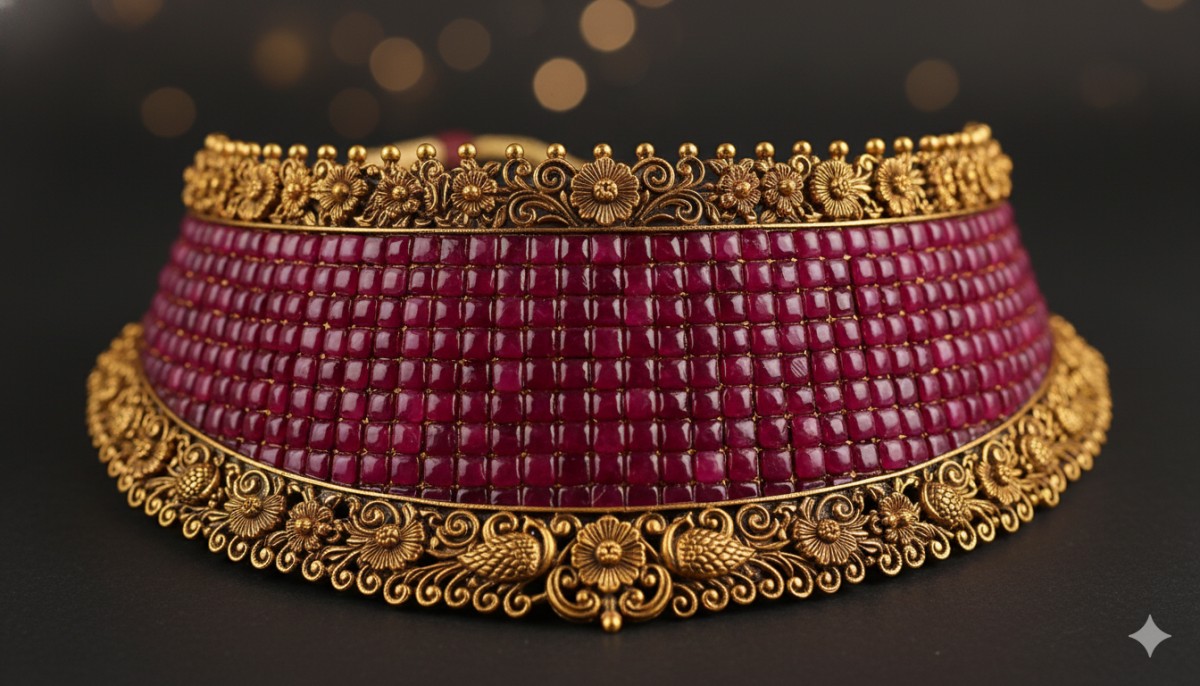
The pairing of brilliant red stones with high-purity gold represents the quintessential aesthetic of South Indian temple jewellery. Known regionally as “Kempu”—the term used for the deep crimson stones (often spinel or specialized glass) traditionally used in temple-style gold—these necklaces are unparalleled in their cultural significance, beauty, and festive opulence. A Ruby and Gold Necklace is not merely jewelry; it is a sacred symbol of prosperity, fire, and marital bliss, making it an indispensable choice for brides and grand ceremonial wear.
From the tightly woven Kempu Choker to the magnificent, layered Haram embedded with ruby accents, these designs exemplify the grandeur of 22K gold and the intricate craftsmanship of the region. This comprehensive guide delves into the symbolism, the unique artistry of the Kempu stone setting, and the trending necklace designs that continue to dominate South Indian weddings in 2025.
Read more: South Indian Actress Wedding Jewellery
1. The Power of Red and Gold: Cultural and Spiritual Significance
The combination of red stones (ruby/kempu) and gold is highly auspicious and deeply rooted in Hindu mythology.
A. The Symbolism of Fire and Prosperity
Red is the color of Agni (Fire) and the Sun, symbolizing vital energy, passion, and new beginnings. It is the primary color of the bridal saree (Kanjivaram), representing shakti (divine feminine power). Paired with gold, the color intensifies, inviting wealth and good fortune (Goddess Lakshmi).
B. The Deity Connection
Kempu stones have been used for centuries to adorn temple deities. Wearing Kempu jewellery is thus seen as an act of devotion and an invocation of divine blessings. The red stones often highlight the central deity motifs (like Lakshmi) carved on the necklace itself.
C. Auspiciousness in Marriage
Red signifies commitment and fertility. The abundance of red Kempu stones in bridal sets confirms the traditional adherence to auspicious symbols, guaranteeing a look that is profoundly regal and blessed.
2. The Art of Kempu: Stone Setting and Finish
“Kempu” is the local term (derived from Kannada, meaning “red”) for the stone used in temple jewelry. It requires specific setting techniques to achieve the authentic look.
A. What is Kempu?
While high-end modern jewellery uses natural rubies, traditional Kempu Jewellery often used Kempu stones (a type of synthetic spinel or glass). These stones were prized for their uniform, rich crimson color and their durability.
B. Cabochon Cut and Close Setting
Kempu stones are almost always cabochon-cut (smooth, polished, rounded dome shape rather than faceted). They are set using the close-setting technique—a traditional method where the gold is tightly moulded around the entire edge of the stone, often layered with foil, maximizing the stone’s color without relying on light reflection.
C. The Matte Gold Contrast
Ruby and Gold necklaces look best when the gold is given a matte or antique finish. This deliberate dullness provides a beautiful, dark backdrop that makes the fiery red of the Kempu stones “pop” with incredible intensity, giving the jewellery an heirloom appearance.
3. Top Trending Ruby and Gold Necklace Designs for Weddings
The designs achieve grandeur through density and complex layering, often incorporating other South Indian motifs.
1. The Classic Kempu Choker
- Design: A broad, flexible choker that sits high on the neck, entirely paved with densely set Kempu stones. Often bordered by tiny gold balls (gundlu).
- Role: Serves as the innermost, most colorful layer, essential for framing the face and adding immediate color contrast. The heavy structure commands attention at the neckline.
2. Kasu Mala Fusion with Rubies
- Design: The traditional coin necklace (Kasu Mala) is modernized by replacing gold links between the coins with continuous strings of small ruby (Kempu) beads or by framing the Lakshmi coins with red stones.
- Aesthetic: Blends the symbolism of wealth (coins) with the auspiciousness of red. This fusion design is increasingly popular for layering.
3. Manga Malai Accents (Mango Motif)
- Design: The intricate mango-shaped motifs (Manga Malai) are heavily framed with Kempu stones. Each mango unit often contains a central green emerald (or stone) with a dense ruby border. The units are linked together to form a rich garland.
- Look: Highly artistic and elaborate, often designed as a long Haram to be worn as the final, longest layer, symbolizing fertility and prosperity.
4. Multi-Layered Nakshi Haram
- Design: The grandest bridal look, featuring long necklaces (up to 30 inches) with large central pendants carved using Nakshi work (detailed hand-carving of Lakshmi or peacock motifs). The chain itself is composed of ruby beads, interspersed with intricately carved gold spacers.
- Role: Provides essential volume and regal length, dominating the chest area and complementing shorter chokers.
5. Peacock and Deity Motifs
The central pendant of any high-end Ruby and Gold necklace almost always features a peacock (due to its vibrant use of red and green) or a Goddess Lakshmi figure, which are both traditionally set using Kempu stones. These intricate mythological figures are the signature of Temple Gold.
4. Purity, Investment, and Styling Guide
A. 22K Purity and Investment
Due to the cultural weight of the piece, the Ruby and Gold Necklace is almost exclusively crafted in 22K gold (916 Hallmarked). This purity ensures the richest color and guarantees the highest intrinsic value, securing the necklace as a generational heirloom.
B. The Art of Contrast Layering
The key to styling Kempu jewellery is to use Green (Emeralds/Beads) as a complementary contrast. If the primary Kempu necklace is predominantly red, layer it with a separate, contrasting necklace made of green beads or a diamond/white stone necklace to prevent the look from becoming monolithic.
C. Kanjivaram Coordination
The traditional Kanjivaram or Pattu Silk Saree (often in deep contrast colors like saffron, green, or blue) provides the perfect backdrop, allowing the deep yellow gold and the rich red stones to shine without competing with fabric prints.
D. Jhumka and Accent Pieces
Pair the necklace with heavy Temple Jhumkas that echo the same Kempu stone setting and wear a Vaddanam (waist belt) featuring complementary Kempu motifs to balance the weight of the neckpieces. Use a Mattal (ear chain) to support the heavy earrings.
5. Longevity and Maintenance of Kempu Jewellery
A. Cleaning for Luster
Clean Kempu jewellery gently with mild soap and warm water only. Use a soft cloth to pat dry. Crucially, avoid using any abrasive cleaners or rough brushes, which can dull the surface of the cabochon-cut Kempu stones and scratch the soft 22K gold.
B. Protecting the Antique Finish
If your jewellery has an intentional antique or matte finish, avoid harsh rubbing or vigorous polishing, which can prematurely strip the oxidized layer responsible for the muted look.
C. Proper Storage
Due to the weight and density of the stones, store the Kempu necklace flat in a separate velvet-lined box. Never hang it, as the weight can stretch the gold chain links over time.
Conclusion
The Ruby and Gold Necklace Designs, the classic Kempu Jewellery, are the heart of South Indian bridal elegance. By embracing the auspicious symbolism of red, the artistic integrity of the Nakshi work, and the rich color of 22K gold, the wearer secures a look that is spectacularly opulent, spiritually blessed, and eternally traditional, setting the standard for bridal grandeur in 2025.
Frequently Asked Questions (FAQs)
What is the main difference between “Ruby” and “Kempu” stones in jewellery?
Ruby refers to the natural, precious gemstone. Kempu is the traditional term (used primarily in South India) for the vivid red stones often used in temple jewelry, which were historically synthetic spinel or specialized glass. While modern luxury pieces may use natural rubies, the style is still called Kempu.
Why is the gold in Kempu jewellery often dull or matte?
The matte or antique finish is deliberate. It prevents the gold’s excessive shine from overwhelming the delicate Kempu stones and the fine Nakshi (carving) work, ensuring the jewelry looks authentically antique and emphasizes the craftsmanship.
Is it considered safe to wear Kempu jewellery with high-purity 22K gold?
Ans: Yes, it is standard. Since the Kempu stones are typically close-set (not prong-set) or set using the robust Temple style, they are securely held even in soft 22K gold. This technique protects the stone and maintains the gold’s investment value.
Should I match the Kempu necklace with green stones?
Yes. The combination of Ruby Red (Kempu) and Emerald Green (often synthetic or natural) is the most traditional and visually powerful color combination in South Indian jewellery, symbolizing fertility and prosperity.
Is a Kempu necklace a good investment?
Yes. Due to the guaranteed 22K purity and the high labor value associated with intricate Nakshi/Temple craftsmanship, the Kempu necklace is considered an excellent investment and a valuable family heirloom.