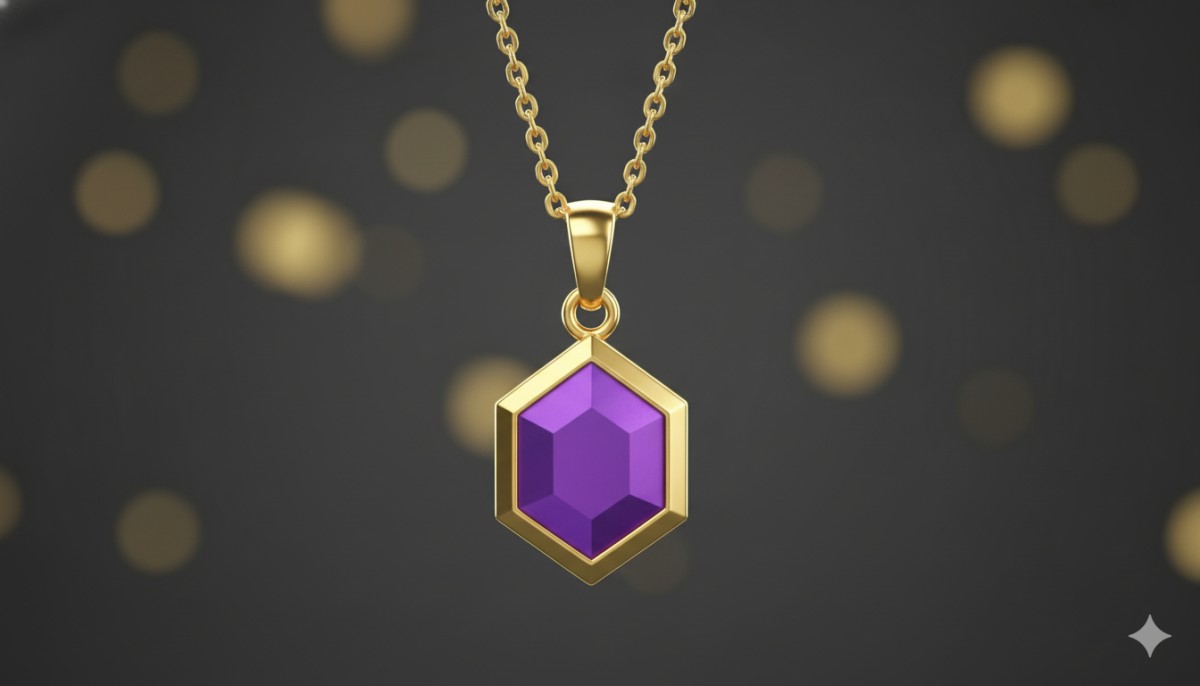
In the realm of fine jewelry, where rarity and uniqueness define true luxury, the Purple Gold Necklace stands alone. Also known as Amethyst Gold or Violet Gold, this extraordinary metal possesses a mesmerizing, permanent purple hue that cannot be achieved through simple plating or surface treatment. Due to its complex metallurgical structure, Purple Gold is notoriously difficult to work with, making it one of the rarest and most expensive forms of gold on the planet.
Gifting a piece of Purple Gold is the ultimate gesture for the discerning collector—the person who already owns traditional diamonds, rubies, and high-karat yellow gold. It is a gift of genuine novelty, technical innovation, and spectacular visual drama. This comprehensive guide explores the alchemical secret behind this color, the complex process of manufacturing a Purple Gold pendant, and the factors influencing its astronomical price.
Read more: Black Gold Jewellery
1. The Alchemist’s Secret: The Technical Reality of Purple Gold
Unlike standard yellow or white gold, which are malleable alloys, Purple Gold is defined by its unusual chemical composition and structure.
A. An Intermetallic Compound (AuAl2)
Purple Gold is not a simple alloy; it is an intermetallic compound formed primarily of gold and aluminum. The ideal composition is approximately 79% gold and 21% aluminum, placing it squarely in the 18 Karat range for purity (75% pure gold minimum). The purple color is a result of the unique molecular arrangement of the gold and aluminum atoms (AuAl2).
B. The Brittle Constraint
The main technical limitation of Purple Gold is its extreme brittleness. Due to the intermetallic bonds, the material cannot be stretched, hammered, or drawn into wires—techniques essential for making chains or traditional settings. If struck too hard, it can shatter like glass.
C. The Permanent Color
Crucially, the color is not a coating; it is integral to the metal. This ensures the unique amethyst/violet hue is permanent and will never fade or require re-plating.
2. Manufacturing Challenge: How is the Necklace Pendant Made?
Because Purple Gold is brittle, a necklace cannot be made entirely of this material. The central pendant must be manufactured as a structural piece and secured within a highly durable, traditional gold frame.
Step 1: Complex Casting
The Purple Gold is first created by melting the precise mixture of gold and aluminum at high temperatures (around 1,165°C). Due to the high reactivity of aluminum, the process requires specialized, inert atmospheric furnaces. The molten gold is then immediately poured into highly detailed molds, as traditional methods like forging are impossible.
Step 2: Grinding and Carving
Once cooled, the piece cannot be polished with traditional tools. It must be carefully ground, carved, and polished using specialized techniques to remove rough edges and achieve a smooth, mirror finish. This process involves significant material loss and requires highly skilled technicians.
Step 3: Inlay and Integration
The resulting solid Purple Gold piece is then treated as a valuable, brittle gemstone. It is set into a supportive metal frame, usually 18K White Gold or Yellow Gold. The traditional gold frame provides the necessary malleability, strength, and loops to attach the pendant to a chain, ensuring the fragile Purple Gold center is protected.
Step 4: The Supporting Chain
The necklace chain itself will be made of durable 18K Yellow, White, or Rose Gold, as a Purple Gold chain would snap under any stress.
3. Aesthetic Appeal and Symbolism
Purple Gold’s unique color brings with it associations of royalty, mystery, and spiritual depth.
A. The Royal Hue
The color purple has historically been associated with royalty, wisdom, and opulence due to the rarity of its natural dyes. Purple Gold carries this immediate association, making it a powerful statement of elite taste.
B. The Amethyst Connection
The color closely resembles the amethyst gemstone, which is traditionally linked to spirituality, clarity, and calmness. Wearing the pendant is believed to enhance one’s spiritual awareness.
C. High Contrast Statement
Purple Gold is stunningly dramatic when paired with White Diamonds (or AD) or simple Black Onyx. The contrast between the cool violet metal and the brilliant white or dark black creates a striking, modern aesthetic unmatched by other gold colors.
4. Top Trending Purple Gold Necklace Pendant Designs
Due to its structural limitations, the most successful Purple Gold designs are those that use the metal as a central, protected inlay.
1. The Gold Frame Inlay Pendant
- Design: A piece of smooth Purple Gold is cut (often into a circle, square, or teardrop) and securely bezel-set into a thick border of 18K Yellow Gold.
- Aesthetic: Maximizes the color display while ensuring structural safety and stability.
2. Geometric Sculptural Pendants
- Design: Utilizes the rigidity of Purple Gold to create sharp, bold geometric forms (like triangles or cubes) that would be impossible to achieve cleanly with soft, malleable yellow gold.
- Look: Highly modern, architectural, and striking, appealing to avant-garde collectors.
3. Fusion Pendants with White Gold
- Design: Small pieces of Purple Gold are fused alongside diamonds or sapphires, all set within a supportive White Gold structure. The White Gold enhances the coolness of the purple tone.
- Gifting: Ideal for a luxury anniversary gift.
4. Minimalist Disc Pendants
- Design: A simple, solid, small disc of Purple Gold worn on a thin Yellow Gold chain.
- Focus: Allows the sheer rarity and unique color of the metal to be the sole statement.
5. Pricing and Investment: The Astronomical Cost
The cost of Purple Gold is astronomical compared to standard gold jewelry, even at the same 18K purity.
A. Manufacturing Complexity Premium
The extremely high temperatures, complex alloying, and inevitable material loss during the brittle carving and finishing process add a massive specialty labor premium to the making charges—significantly higher than standard Kundan or filigree work.
B. Material Cost
While the pure gold content is 79% (18K), the cost of the specialty aluminum alloy and the technical expertise required to handle the volatile materials drives the initial production cost higher.
C. The Rarity Factor
Due to the niche market and complexity, few jewelers globally possess the capability to produce high-quality Purple Gold. This rarity itself commands a premium, making it a true collector’s item.
6. Gifting Etiquette: The Ultimate Gesture
The Purple Gold Necklace is the ultimate statement for the person who owns everything.
- Conversation Starter: It is inherently unique. Gifting this piece ensures the receiver wears something that few others possess globally, guaranteeing curiosity and admiration.
- The Uniqueness Factor: It signifies that the giver went beyond the conventional, seeking out a rare, technically brilliant material to celebrate the receiver’s own unique personality.
Conclusion
The Purple Gold Necklace is a triumph of modern metallurgy and bespoke luxury. By securing a fragile piece of this rare, permanent violet alloy within a durable 18K gold frame, the gift transforms into a unique, sophisticated, and memorable symbol of devotion. It is the perfect choice for the discerning collector, offering a permanent, dazzling color that defines rarity in fine jewelry.
Frequently Asked Questions (FAQs)
Is the color in Purple Gold permanent, or does it fade like plating?
The color is permanent because it is an intermetallic compound (AuAl2), meaning the purple hue is intrinsic to the metal’s structure and is not a surface plating. It will never fade or need re-plating.
Is a Purple Gold necklace durable for daily wear?
The necklace is durable only because the Purple Gold piece is small and set inside a supportive frame of standard 18K yellow or white gold. The central purple material itself is brittle and can shatter if struck sharply, so it should be worn with care.
Why is Purple Gold so much more expensive than 18K yellow gold?
The cost is driven by manufacturing complexity. The material is highly brittle, leading to significant waste during the carving process, and requires specialized, high-temperature casting techniques, all of which massively increase the making charges.
Can a wedding band be made entirely of Purple Gold?
No. Due to its extreme brittleness, a wedding band made entirely of Purple Gold would be prone to cracking or shattering under the pressure of daily wear. It must be used as a protected inlay within a stronger metal.