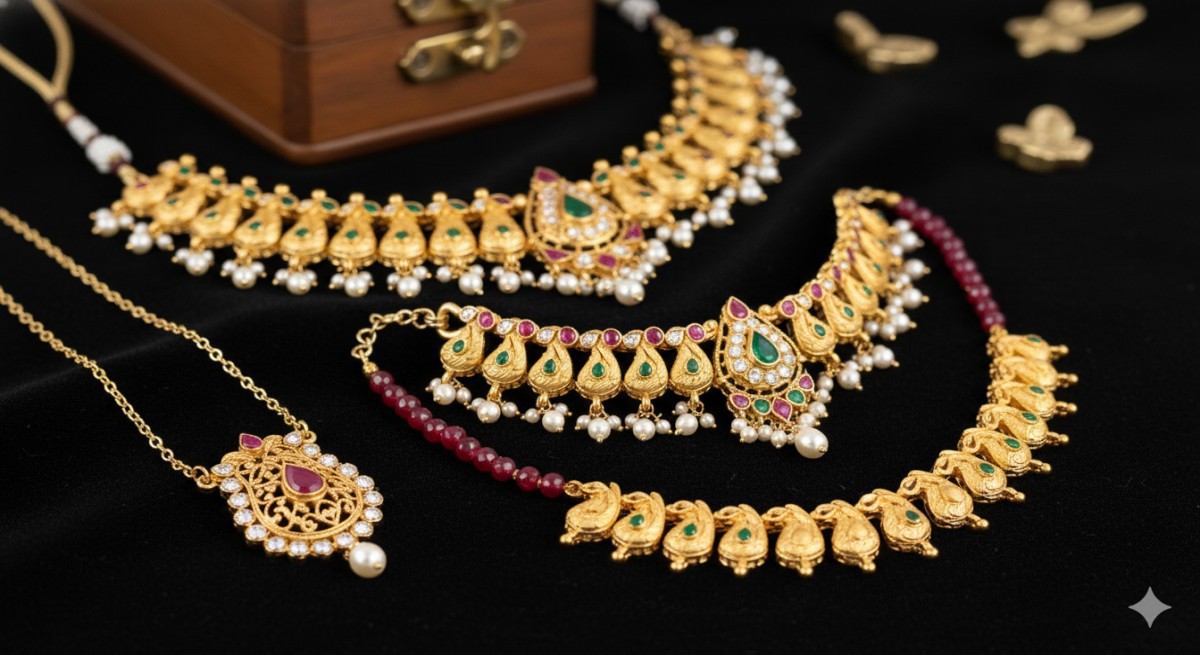
The Mango Mala, known in regional languages as Manga Malai (Tamil/Malayalam) or Mamidi Pindela Haram (Telugu), is a jewel of profound cultural significance, standing as one of the most iconic and enduring traditional necklaces of South India. This necklace is instantly recognizable by its distinctive, intricate mango-shaped motifs (paisley or manga), which are strung together to form a rich, dense garland of gold.
Far beyond mere ornamentation, the Mango Mala is a treasured heirloom, often passed down through generations. It is an indispensable part of the Kerala bride’s trousseau and a magnificent piece worn during major temple ceremonies. If you wish to understand the spiritual roots, the flawless craftsmanship, and the enduring style of Mango Mala (Manga Malai) Designs, this comprehensive guide explores its essence.
Read more: Couple Rings in Gold
1. Cultural Roots: The Symbolism of the Mango Motif
The profound value of the Mango Mala is tied directly to the auspicious symbolism of the mango fruit in Indian culture, which dates back to ancient kingdoms like the Chola and Chera dynasties.
A. Fertility, Prosperity, and Love
The mango tree and its fruit are considered sacred and highly auspicious. The mango symbolizes fertility, growth, prosperity, and divine affection. Wearing the Manga Malai is seen as invoking these blessings for the wearer’s journey and ensuring abundance in marital life. It is often used in wedding mandaps to ward off evil and invite positive energy.
B. The Temple Jewellery Legacy
The Mango Mala is deeply rooted in the Temple Jewellery tradition, where elaborate gold pieces were originally crafted to adorn idols of gods and goddesses. Wearing the Manga Malai is therefore an embrace of this spiritual and artistic heritage.
C. The Pièce De Résistance
In many South Indian (especially Kerala) weddings, the bride is adorned in multiple layers of gold. The Mango Mala often acts as the central, defining piece due to its unique structure and inherent cultural significance, lending a regal look that signifies status and tradition.
2. Craftsmanship and Structure: The Gold Standard
The creation of a traditional Mango Mala requires immense skill, utilizing high-purity gold and intricate detailing to bring the mango motif to life.
A. Pure 22K Gold Base
Traditional Manga Malais are predominantly crafted in high-purity 22K (916 Hallmarked) gold. The rich, deep yellow color of the 22K metal provides the perfect canvas for the traditional design and ensures the piece holds significant investment value.
B. Intricate Detailing and Texture
Each mango unit is intricately designed and traditionally handcrafted. Artisans often embed delicate carvings within the mango shape itself, such as miniature peacocks, florals, or Goddess Lakshmi figures.
- Finish: High-end versions often combine matte, antique, and polished finishes within a single piece to add texture and depth, ensuring the necklace lies gracefully on the neck.
C. Kundala-Velai Setting
For studded versions, the Kundala-velai technique (related to the North Indian Kundan tradition) is used, where gems (often cabochon rubies and emeralds, or Kemp stones) are secured into the gold using thin sheets of foil, maximizing the antique and royal appeal.
3. Mango Mala Designs and Trends for 2025
The designs have evolved into various lengths and stone combinations to suit modern layering needs while retaining the core motif.
A. The Traditional Short Mala (Attigai Length)
This shorter style sits snugly near the neckline and features smaller, uniform mango motifs strung closely together.
- Usage: Perfect for wearing as the primary necklace over a silk blouse, often paired with a simple gold choker.
B. The Grand Mango Haram (Long Necklace)
This is the grandest version, typically 26 to 30 inches long. The Haram features large, pronounced mango motifs interspersed with gold spacers and often culminates in a magnificent central pendant, sometimes featuring a Lakshmi deity.
- Layering: Designed to be the longest layer, complementing shorter Attigai and Kasu Malai necklaces.
C. Fusion with Precious Stones
Modern and bridal designs often introduce rich color to the 22K gold base:
- Ruby and Emerald Accents: The motifs are studded with prominent red (Ruby) and green (Emerald) stones, which are highly auspicious and enhance the vibrant color palette of a Kanjivaram saree.
- Palakka Fusion: The traditional Kerala Palakka (leaf motif) is sometimes incorporated into the Mango Mala, adding another layer of regional heritage and green stone work.
D. The Two-in-One Design
Contemporary Harams are often designed to be reversible, featuring plain gold Nakshi work on one side and Kemp stone setting on the other, offering maximum versatility for the modern wearer.
4. Styling Guide: Achieving Traditional Perfection
The Mango Mala is a powerful piece that should be styled with respect to its volume and cultural weight.
A. Saree Coordination
The Mala looks spectacular with opulent silk sarees (Kanjivaram, Pattu, or Banarasi). The gold’s rich color and texture harmonize perfectly with the sheen of the heavy silk.
B. The Essential Layering
For a traditional bridal look, the Mango Mala should be worn as the middle or longest layer. It is best balanced by a short, simple choker at the neckline and a contrasting Kasu Mala (coin necklace) for a varied, rich aesthetic.
C. Accent Accessories
Pair the Mango Mala with coordinating Kemp Jhumkas or traditional gold stud earrings. If the mala is long, ensure the accompanying Vaddanam (waist belt) is equally grand to maintain visual symmetry.
Conclusion
The Mango Mala (Manga Malai) Designs are far more than just adornments; they are a deep connection to South India’s artistic, spiritual, and marital heritage. By choosing a traditional 22K gold Manga Malai, you are not just acquiring a piece of jewelry but embracing a symbol of timeless beauty, prosperity, and enduring legacy, making it an essential purchase for any grand occasion.
Frequently Asked Questions (FAQs)
What is the main difference between Kasu Mala and Manga Malai?
The Kasu Mala (Coin Necklace) is made up of small, overlapping circular coins (often featuring Goddess Lakshmi). The Manga Malai (Mango Mala) is made up of distinct, paisley or mango-shaped motifs that are linked together.
Does the Mango Mala hold good investment value?
Yes. Since traditional Mango Malas are made from high-purity 22K gold and carry substantial weight, they hold excellent investment value and are often passed down as valuable family heirlooms.
Which metal purity is recommended for a Mango Mala?
22K gold (916 Hallmarked) is highly recommended for the Mango Mala to maintain its rich traditional color and investment purity.
How should a Mango Mala be stored to prevent damage?
Due to its intricate construction, the Mango Mala should always be stored in a separate velvet-lined box or soft pouch to prevent the delicate mango motifs from being scratched or tangled with other necklaces.
Is the Mango Mala suitable for modern fusion wear?
Absolutely. A single, short Mango Mala can be elegantly paired with a high-neck blouse or a simple silk gown, offering a powerful touch of traditional elegance that beautifully contrasts with modern silhouettes