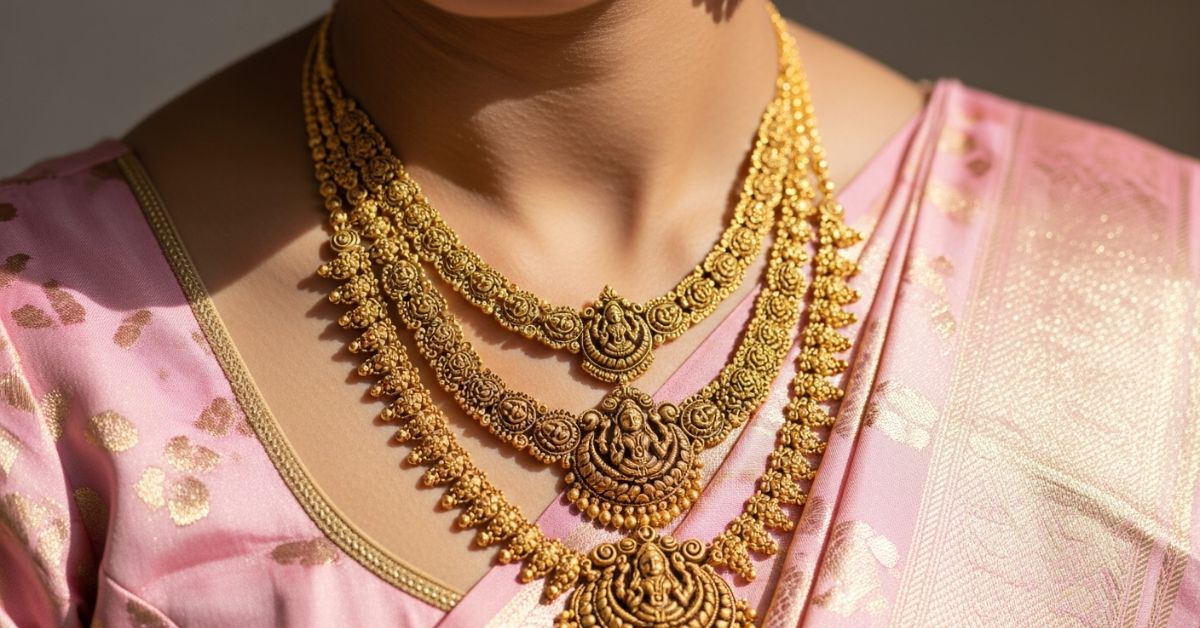
For generations, “Temple Jewelry” was synonymous with heavy, neck-straining gold sets that were as exhausting to wear as they were beautiful. But as we step into 2026, the wedding landscape has shifted. Modern brides and guests are demanding lightweight temple jewelry—pieces that retain the divine motifs of Goddess Lakshmi and dancing peacocks but are engineered for 12-hour comfort.1
In 2026, “Quiet Grandeur” is the theme. You want the look of a royal heirloom without the physical burden of a 100-gram necklace. This guide explores how modern technology has made it possible to wear heritage on your skin as light as a whisper.
The Innovation Behind the Lightness
How do artisans create a “heavy” look without the actual weight? In 2026, three specific techniques have revolutionized the temple jewelry market:
1. 3D Gold Printing & Electroforming
This is the “secret sauce” of modern lightweight jewelry. Electroforming allows jewelers to create complex, voluminous shapes that are hollow on the inside. You can have a thick, bold Kamarbandh (waist belt) or a chunky Jhumka that looks like it weighs 50 grams but actually weighs only 15 grams.
2. Laser Cutting
Traditional temple jewelry was made by pouring molten gold into molds, which required a lot of metal to capture detail. Modern laser-cutting technology can etch divine motifs into thinner sheets of gold, maintaining the intricate “repoussé” (raised relief) look while significantly reducing the gold volume.
3. Open-Work Designs
Instead of a solid gold slab, 2026 designs utilize “negative space.” Think of a Manga Malai (Mango necklace) where the motifs are outlines rather than solid chunks. This creates an airy, lace-like effect that feels incredibly modern and light.
2026 Styling: The “Day-to-Night” Wedding Look
The beauty of lightweight temple jewelry is its versatility. Because it isn’t “overpowering,” it transitions beautifully across different wedding functions.
- The Mehendi/Haldi: Pair a lightweight temple pendant on a thin gold chain with a floral-print lehenga. It adds a touch of tradition to a playful, casual outfit.
- The Muhurtham (Wedding Ceremony): Layering is key for 2026.2 Instead of one massive necklace, wear three lightweight pieces: a small choker, a medium-length Kasu Mala (coin necklace), and a longer Haram. Because each is lightweight, the total stack is still comfortable.
- The Reception: Style a pair of oversized, hollow temple Chandbalis with a contemporary cocktail saree. The earrings provide all the drama you need, allowing you to skip the necklace entirely.
Pro Tip: The “Ear-Support” Hack
Even with lightweight designs, wearing earrings for 12 hours can be tiring. In 2026, the trend is to pair temple Jhumkas with “Maatal” (Ear Chains). These chains hook into your hair, transferring the weight of the earring from your earlobe to your head, ensuring zero pain by the end of the night.
Technical Specs: Grams and Purity
When buying lightweight temple jewelry for a wedding, you are still making a financial investment. Don’t let the “lightweight” label distract you from the quality.
| Piece Type | Traditional Weight | 2026 Lightweight Target |
| Choker Necklace | 40g – 60g | 12g – 20g |
| Long Haram | 80g – 150g | 30g – 45g |
| Jhumkas (Pair) | 20g – 35g | 6g – 12g |
| Bangle (Single) | 25g – 40g | 8g – 15g |
Gold Purity & Hallmarking
Most authentic temple jewelry is crafted in 22k gold (916 purity) because it has the rich, yellow glow required for deity motifs.3
- The HUID Factor: Every piece of gold in India now must have a 6-digit HUID (Hallmark Unique Identification).4
- Check the App: Download the BIS Care App. Before you pay, enter the HUID code from the jewelry into the app to verify the weight and purity. This is your best defense against “gold-plated” items being sold as solid gold.
Maintenance: Protecting Your Delicate Heritage
Because lightweight pieces have thinner walls (especially electroformed or hollow pieces), they require extra care:
- Avoid Pressure: Never “squeeze” a hollow bangle or neckpiece. Unlike solid gold, which might bend, hollow gold can dent, and dents in temple motifs are notoriously difficult to repair.
- Chemical-Free Cleaning: Temple jewelry often has “antique” polish (a dark patina in the crevices). Do not use jewelry dip cleaners, as they will strip away this finish. A soft dry cloth is usually enough.
- Individual Pouches: Store each piece in a separate padded pouch. The sharp edges of a temple motif can easily scratch a thinner, lightweight piece stored next to it.
Conclusion
Lightweight temple jewelry in 2026 is the ultimate bridge between our grandmothers’ traditions and our own fast-paced lives. It allows us to carry our culture with us without feeling weighed down by it. By choosing hallmarked, 22k pieces with smart engineering, you are investing in a wedding look that is as comfortable as it is divine.
Are you planning a traditional wedding look, or are you looking to mix temple jewelry with a modern gown? Let’s talk about your dream wedding style in the comments!
FAQs
1. Is lightweight temple jewelry as durable as the traditional heavy sets?
While lightweight jewelry is made of the same high-purity gold, the thinner construction makes it more prone to denting if dropped or crushed. However, with “Electroforming” technology, these pieces are surprisingly resilient. As long as you store them properly and don’t apply direct pressure, they can last as long as any traditional set.
2. Can I get lightweight temple jewelry in 18k gold?
Yes. While 22k is traditional, 18k is becoming popular for lightweight wedding jewelry because it is harder. This extra strength allows jewelers to create even thinner, more delicate filigree work that won’t bend easily. It’s a great choice for brides who want a slightly more “rose gold” or “champagne gold” tint.
3. Does “lightweight” mean it’s cheaper?
Not necessarily. While you save money on the “gold weight,” the making charges for lightweight temple jewelry are often higher. This is because the technology and skill required to 3D print or laser-cut intricate deity motifs on a microscopic scale are much more complex than traditional casting. You are paying for the engineering and the artistry.