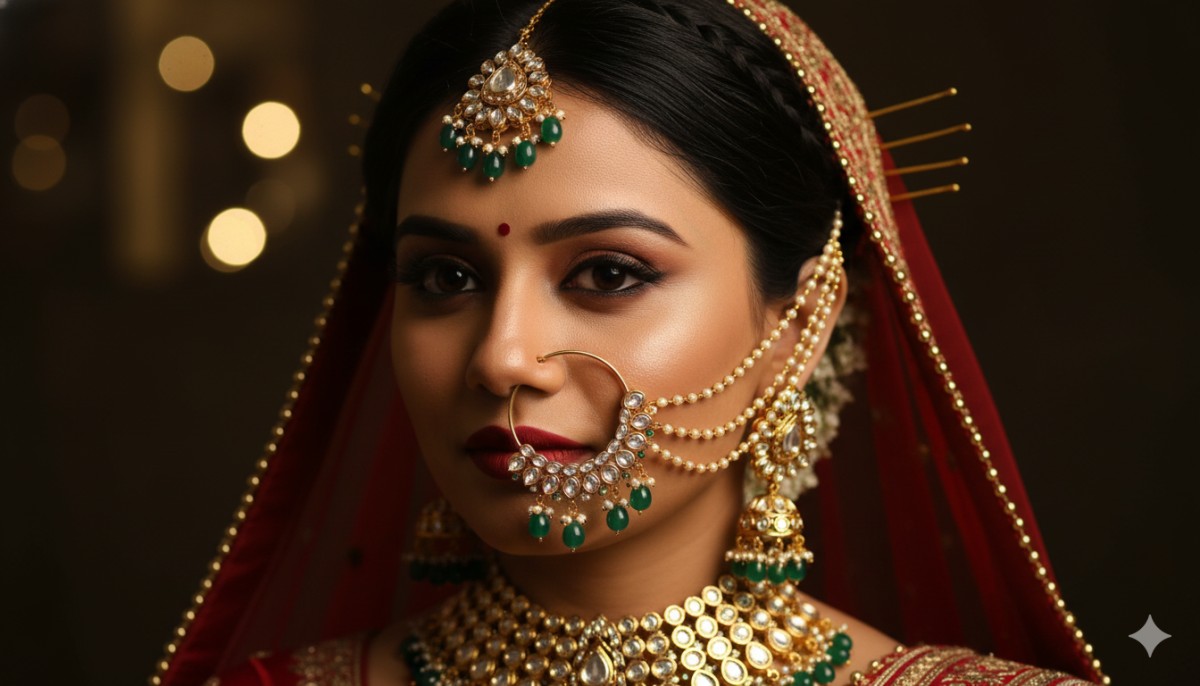
Wearing the Nath Chain is steeped in cultural significance, symbolizing auspiciousness and devotion, particularly to Goddess Parvati. This comprehensive guide explores the rich regional variations, the precise anatomy of the Nath and its chain, the top trending designs, and the crucial styling tips needed to master this magnificent gold statement piece.
Read more: Cocktail Gold Ring Designs
1. The Cultural Canvas: Significance of the Nath Chain
The Nath Chain is worn across India, but its style and symbolism shift dramatically by region, reflecting diverse marital traditions.
A. Auspiciousness and Marital Bliss
Across North and West India, the Nath is viewed as a mandatory symbol of matrimony (Suhaag). It is believed to represent the health and prosperity of the husband, making its wear a powerful cultural imperative for the bride.
B. Regional Identity
The style of the Nath immediately defines the regional identity of the bride—from the large, simple hoop of the Punjabi bride to the ornate, cashew-shaped gemstone Nath of Maharashtra. This jewelry acts as a powerful cultural identifier.
C. The Goddess Connection
The nose piercing is often associated with the seat of femininity and the third eye, and wearing the Nath is linked to paying homage to Goddess Parvati, seeking her blessings for fertility and a long, happy marriage.
2. The Anatomy of the Nath Chain: Hoop, Chain, and Fastening
The complexity of the Nath Chain lies in its three interconnected, yet distinct, components.
A. The Nath (The Ring)
The ring itself can range from a large, plain gold loop (often 2–3 inches in diameter) to a structurally ornate hoop.
- Decoration: The ring is often embellished with Kundan, Polki, or Meenakari (enamel work), featuring traditional motifs like peacocks or floral patterns.
B. The Chain (Latkan or Moti ki Sari)
The chain connects the Nath to the hair or ear and is essential for supporting the weight of the large hoop.
- Material and Style: The chain is usually crafted from gold links, pearls (moti), or small colored beads (ruby/emerald) woven together. It can be a simple single strand or a dramatic, multi-layered cascade.
C. The Fastening Mechanism
The chain must have a secure end: a small hook or pin that fastens either to the hair bun/braid (providing better support for heavy Naths) or to a clip or the back of the earring post (quicker and easier).
3. Top Trending Gold Nose Ring with Chain (Nath Chain) Designs
The current trends emphasize volume, color, and easy-to-wear versions, including non-pierced options.
1. The Rajasthani/Rajputi Nath
- Design: Defined by its immense hoop size (often 3–4 inches in diameter) and its simplicity, typically featuring a single large bead or gem where the chain attaches.
- Chain: Often a single, elegant strand of small real or cultured pearls or a thin gold chain, fastened high into the hair to pull the face back elegantly.
2. The Maharashtrian Nath
- Design: Distinctive cashew or comma shape that curves naturally around the cheek. It is typically studded entirely with pearls and colored stones (ruby/white AD).
- Chain: Usually a short, thick, multi-strand pearl or beaded chain that fastens behind the ear.
3. The North Indian Hoop and Multi-Chain
- Design: Features a medium-to-large gold hoop, often decorated with floral etching or Nakshi work.
- Chain: The signature feature is a thick, multi-layered chain (3 to 5 strands) of gold links interspersed with small ruby or emerald beads for maximum volume and grand ceremonial impact.
4. The Non-Pierced/Clip-On Nath
- Design: Designed for versatility. The hoop does not require a piercing but instead uses a small, internal, spring-loaded clip or screw mechanism to gently grip the nostril septum.
- Benefit: Allows anyone to wear the Nath chain without the commitment of a piercing. The clip must be cushioned for comfort.
5. The Pearl and Kundan Chain
- Design: The hoop features Kundan (uncut glass/foil work) or Polki, and the chain is composed entirely of intricately woven pearls and gold accents.
- Look: The ultimate luxury piece, blending the sparkle of Kundan with the traditional femininity of pearls.
4. Purity, Construction, and Wearability
A. 22K Purity Mandate
The Nath and its chain are traditionally crafted in 22K gold (916 Hallmarked) for its rich color and cultural significance. This purity ensures the metal is malleable enough for the hoop to be gently opened and closed if needed.
B. Weight Management
Due to the large size, the hoop and the chain links are often made using hollow construction (Hollow Tube Design) to minimize the actual gold weight and make the piece comfortable to wear for long hours during the ceremony.
C. Securing the Chain
The chain must be securely fastened. For the best support, the chain should be anchored into a tightly pulled hair bun or braid using a secured hook or a specialized pin, distributing the weight of the hoop evenly.
5. Wearing and Styling Guide
A. Placement
The Nath should sit elegantly on the side of the nose, gently resting against the cheek. The chain should sweep back and up, creating a graceful, diagonal line that lifts the face.
B. Coordination with Earrings
The Nath Chain must be perfectly coordinated with the earrings (Jhumkas or Chandbalis). The metal color, accent stones (pearls, rubies), and finish must match exactly for a cohesive bridal look.
C. Post-Wedding Wear
While the full, large Nath is generally reserved for the wedding, the chain can be worn separately as a gold accessory (a Matha Patti or delicate hair adornment) on a plain gold chain.
Conclusion
The Gold Nose Ring with Chain (Nath Chain) is a timeless icon of Indian culture and bridal splendor. By choosing a design that respects the traditional 22K gold purity and ensures structural support via a magnificent Latkan chain, the wearer steps into a look that is steeped in history, divine blessing, and absolute regal elegance.
Frequently Asked Questions (FAQs)
How do I wear the Nath if I don’t have a nose piercing?
You can opt for a non-pierced Nath. These feature a small, discreet clip or screw mechanism hidden within the hoop that gently secures the ring to the nostril or septum, allowing for temporary, comfortable wear.
Which side of the nose should the Nath be worn on?
While personal preference varies, in many North Indian and Rajasthani traditions, the Nath is traditionally worn on the left side.
How is the weight of the large Nath hoop managed?
The weight is managed in two ways: 1) The hoop is made using a hollow gold tube to reduce intrinsic weight. 2) The Chain (Latkan) is responsible for pulling the weight back and anchoring it securely to the hair, distributing the pressure away from the nose.
Should the Nath Chain be attached to the hair or the ear?
For very large or heavy bridal Naths, attaching the chain to the hair (braid/bun) offers superior support and prevents the chain from pulling on the earlobe. For lighter Naths, attaching it to the earring post is quicker and easier.
What gold purity is traditional for the Nath?
22K gold (916 Hallmarked) is the most traditional purity, prized for its rich color and cultural value. The high gold content is essential for ceremonial wear.