We Indian women love our gold. We love the weight of it, the deep yellow color of 22k, and the intricate craftsmanship of Temple or Kolkata jewellery. It is in our DNA.
But let’s be honest. Can you wear a heavy 50-gram Kundan necklace to a brunch with friends? Can you wear a thick bridal antique bangle while typing on your laptop at work? Usually, the answer is no.
This is where the world opens up. In 2025, there is a massive shift happening in the Indian jewellery market. We are looking West. We are embracing Global Trends: Latest Italian & Turkish Gold Jewellery Designs Online.
Why? Because these designs solve a huge problem. They offer Maximum Style with Minimum Weight. Italian gold makes you look like a fashion editor in Milan—chic, sleek, and minimalist. Turkish gold makes you look like a bohemian queen in Istanbul—bold, textured, and artistic.
In this guide, I am going to take you on a global tour. We will explore why these two countries are ruling the online jewellery space, the specific designs you should buy, and how to shop for these international styles right here in India.
Read more: Statement Gold Jewellery
The “Lightweight” Revolution: Why Go Global?
For decades, Indian gold was sold by weight. The heavier, the better. But Italian and Turkish artisans view gold differently. They view it as Fabric.
- Italian Technology: They use advanced machines to weave gold into mesh, chains, and tubes that are flexible and incredibly light. A thick Italian chain might weigh only 8 grams!
- Turkish Artistry: They master the art of “Hollow” gold and intricate filigree. A massive Turkish cuff bracelet looks like 50 grams but might actually be 15 grams of hollow gold.
For the modern woman who wants to wear gold every day without feeling weighed down (or spending a fortune), these global designs are the answer.
Part 1: Italian Gold Jewellery (The Art of Minimalism)
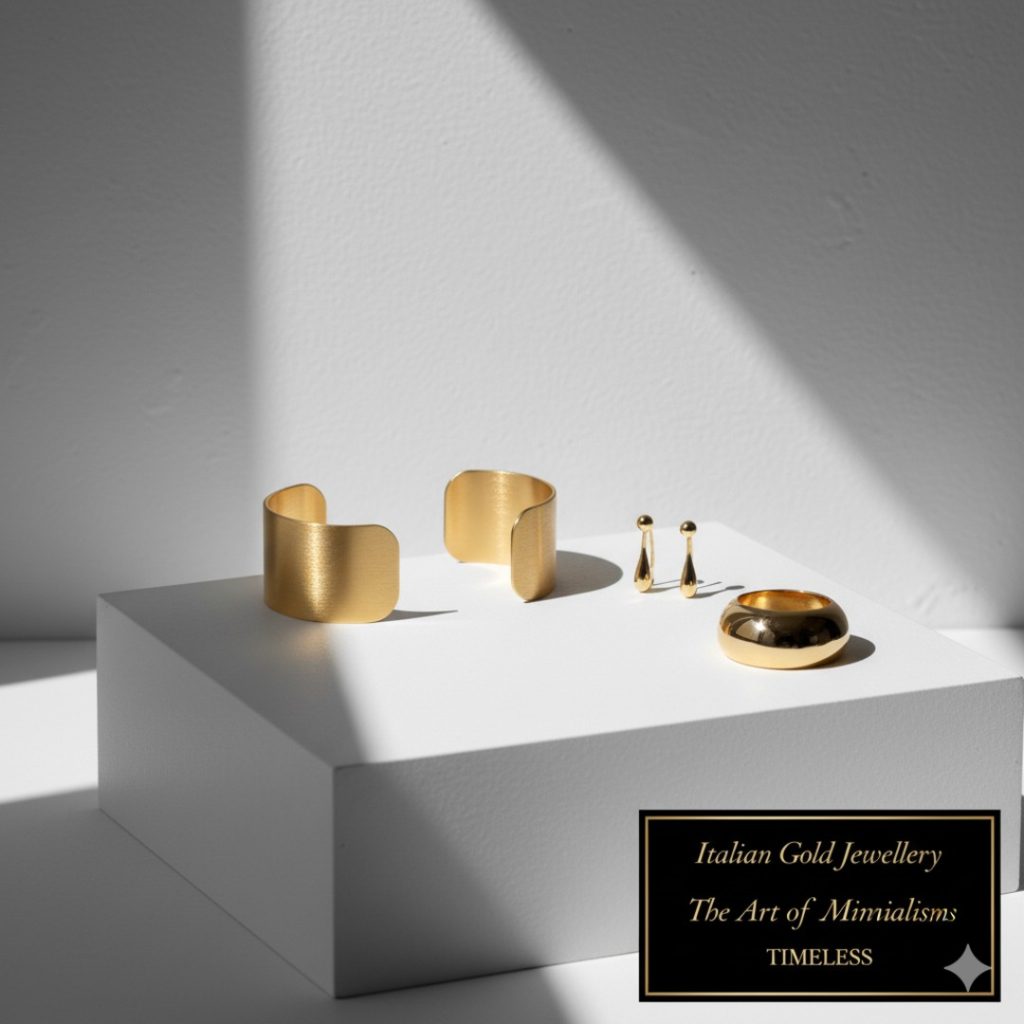
When you think of Italian gold, think of “Liquid Gold.” It is smooth, high-polish, and reflects light like a mirror. It doesn’t need stones or enamel to stand out. The gold is the hero.
1. The Iconic Italian Chains
Italy is the chain capital of the world.
- The Trend: Layered Chains.
- The Designs:
- The Figaro: A pattern of three small links followed by one long oval link. It’s classic and unisex.
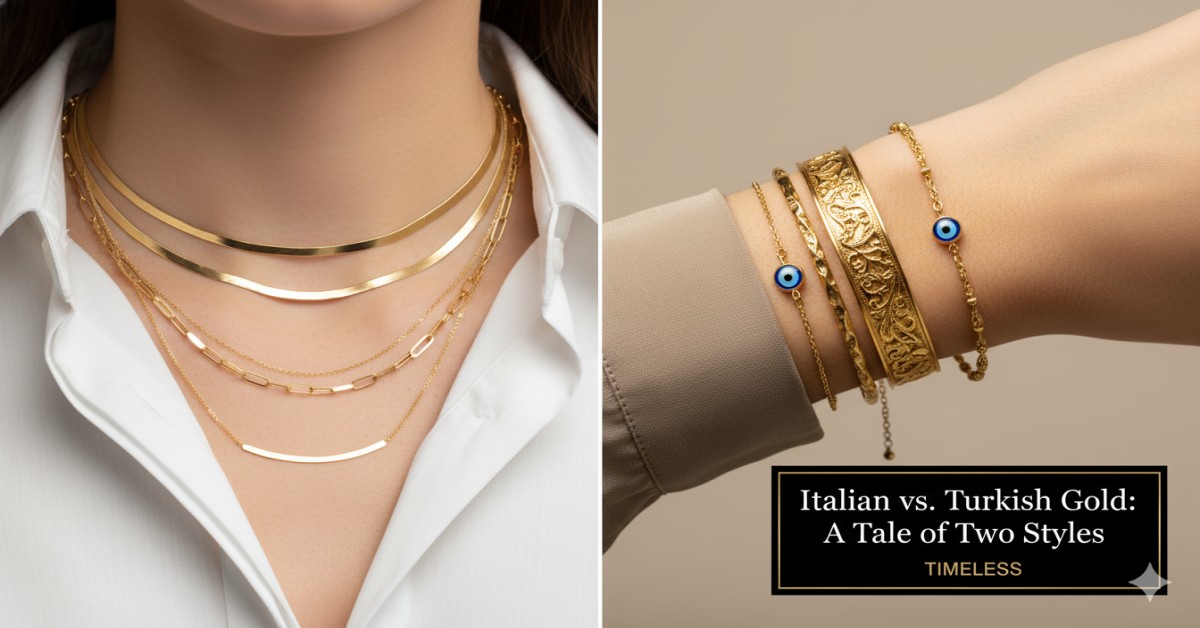
- The Omega: A wide, flat chain that sits on the collarbone like a rigid metal ribbon. It’s the ultimate “Power Woman” necklace.
- The Herringbone: A flat, snake-like chain that lies completely flush against the skin. It shines like a ribbon of water.
- Why Buy: These chains are perfect for office wear. They don’t tangle easily and look expensive over a simple black t-shirt or a crisp white shirt.
2. Gold Mesh Bracelets
- The Design: Gold woven so finely that it feels like silk fabric.
- The Look: Soft, flexible, and comfortable. These bracelets often come with magnetic clasps or buckle closures, making them look like a watch strap.
- The Vibe: Understated luxury. It whispers wealth rather than shouting it.
3. Laser-Cut Hoops
- The Trend: Large hoops that weigh nothing.
- The Tech: Italian machines cut facets into the gold tube. When you move, these cuts catch the light and sparkle as if they have diamonds, but it is just pure textured gold.
Part 2: Turkish Gold Jewellery (The Bohemian Soul)
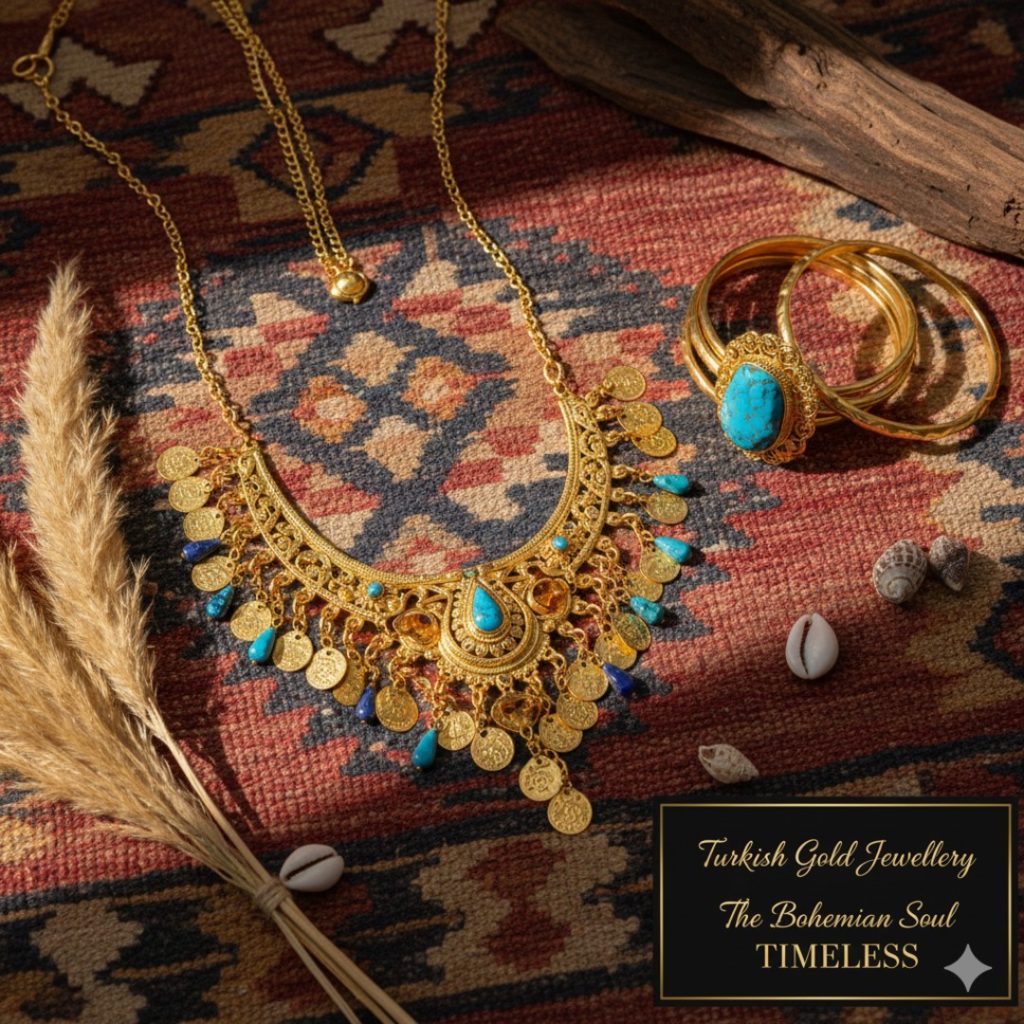
If Italy is sleek, Turkey is textured. Turkish designs are bold, mystical, and full of character. They often mix gold with colored stones and symbols.
1. The Evil Eye (Nazar) Collection
You cannot talk about Turkish jewelry without the Evil Eye.
- The Trend: Nazar Bracelets & Pendants.
- The Design: The classic Blue Eye (made of glass or enamel) set in yellow gold.
- The 2025 Twist: Instead of just round eyes, we are seeing “Hamsa Hands” (Hand of Fatima) and eyes integrated into thick chain links.
- Why Buy: It is a protective talisman. It makes for a thoughtful gift for someone starting a new job or traveling.
2. The “Ottoman” Textures
- The Design: Hammered, matte, and rugged finishes. Turkish gold often looks like it was dug up from an ancient treasure chest.
- The Pieces: Wide Cuff Bangles. These are usually hollow (electroformed) but look massive and chunky on the wrist.
- The Vibe: Edgy and artistic. It pairs beautifully with Boho dresses, maxi skirts, and fusion kurtas.
3. Filigree & Stone Fusion
- The Design: While Italians love plain gold, Turks love color.
- The Trend: Gold rings and earrings featuring Turquoise, Coral, or Agate stones set in intricate wire-work (filigree) gold.
- Why Buy: It adds a pop of color to your jewelry box. The combination of Turquoise Blue and Yellow Gold is the signature “Turkish Summer” look.
The Purity Question: 14k vs. 18k vs. 22k
Here is where Indian buyers get confused.
- Indian Standard: 22k (91.6%).
- Global Standard: 14k (58.5%) and 18k (75%).
Most authentic Italian and Turkish designs are made in 14k or 18k Gold.
- Why? Because the designs are complex. A thin Italian mesh or a hollow Turkish cuff needs strength. 22k is too soft; it would snap or dent instantly.
- The Color:
- Italian 18k: Often has a “European” yellow tone—slightly lighter and more subtle than Indian yellow.
- Turkish 14k/18k: Often has a warmer, reddish-yellow tone to mimic antique gold.
- The Advice: Do not be afraid of 18k. It is durable, holds its shape better, and is the international standard for high-fashion jewelry.
Styling Guide: Bringing the World to Your Wardrobe
How do you wear these global designs with Indian outfits?
1. The “Indo-Italian” Office Look

- Outfit: A simple cotton Kurti or a saree with a boat-neck blouse.
- Jewellery: A sleek Italian Omega Chain and small Laser-Cut Hoops.
- Why: It cleans up the look. It makes the traditional outfit look sharp and modern.
2. The “Boho-Desi” Wedding Guest
- Outfit: A fusion lehenga or a skirt-top set.
- Jewellery: A stack of Turkish Evil Eye Bracelets and a hammered Gold Cuff.
- Why: It matches the fun, colorful vibe of a Mehendi or Haldi ceremony perfectly.
3. The “Date Night” Glam
- Outfit: A Western dress or jumpsuit.
- Jewellery: Layered Italian Herringbone Chains (Snake chains) of different lengths.
- Why: It highlights the neckline and adds a “rich girl” aesthetic.
Shopping Online: How to Spot the Real Deal
Buying international designs online in India? Here is your checklist.
1. “Italian Style” vs. “Made in Italy”
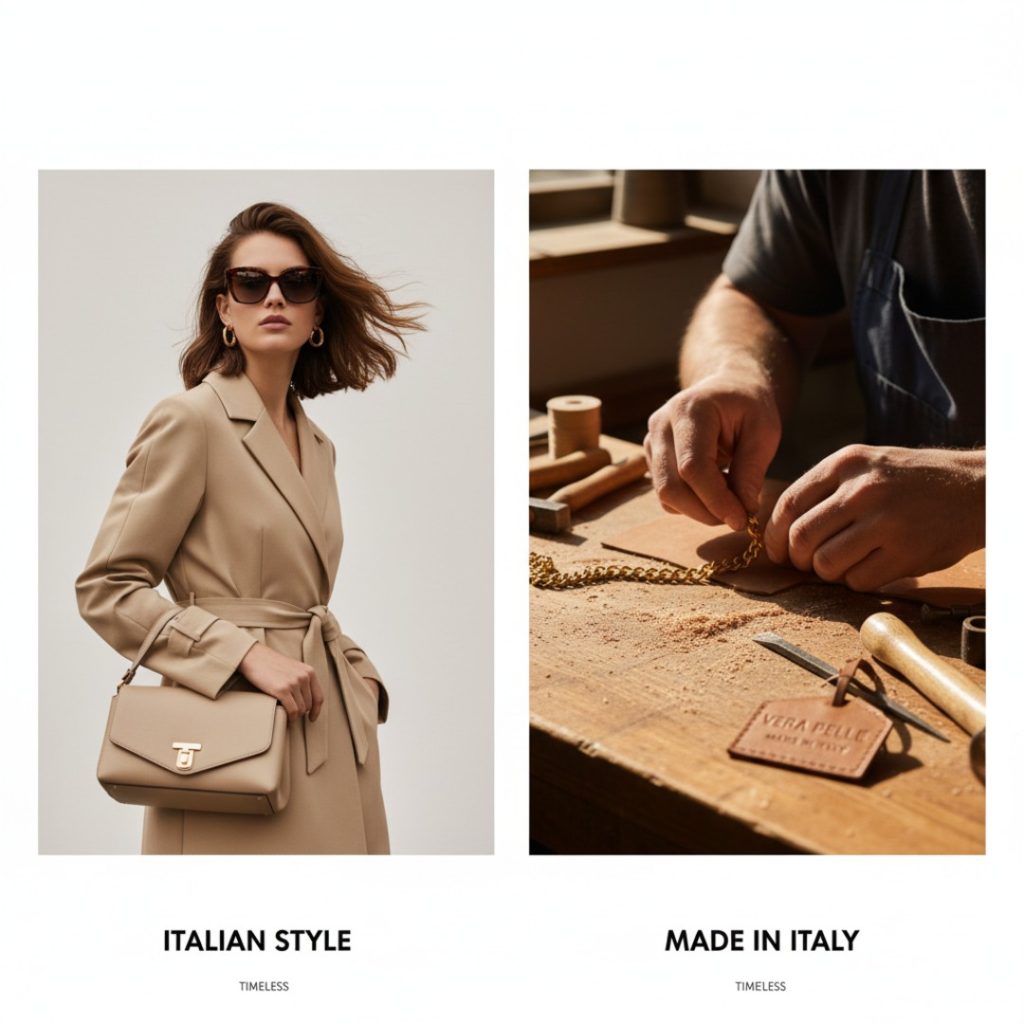
- Imported: Some luxury jewellers import actual pieces from Italy/Turkey. These will be expensive due to import duties.
- Indian-Made: Most online brands (like Melorra, CaratLane, Candere) sell “Italian Style” or “Turkish Inspired” designs manufactured in India. This is Good. You get the design aesthetic without the customs duty markup, and you get Indian Hallmarking.
2. Check the “Grammage” (Weight)
- Italian Chains: If a thick chain is listed as 4 grams, it is Hollow. Be careful. Hollow chains are light but can crush if you squeeze them. Treat them gently.
- Turkish Cuffs: Check the thickness. If it is too thin, it will dent.
3. Hallmarking is Mandatory
Whether the design is Italian, Turkish, or Martian—if it is sold in India, it must have the BIS HUID Hallmark.
- Ensure the hallmark matches the purity sold (e.g., “18k750”).
Maintenance: Caring for Global Gold
These designs are more delicate than solid Indian gold.
- Storage: Store Italian chains flat or hanging. Never ball them up in a pouch; they will kink (bend permanently).
- No Sleeping: Never sleep in a Herringbone or Snake chain. One wrong move and it will get a permanent “kink” mark that cannot be fixed.
- Water: Turkish hollow jewelry can trap water inside if it has small air vents. Remove before swimming or bathing.
Conclusion: Expand Your Horizons
The world is a beautiful place, and its gold is even more beautiful. Embracing Global Trends doesn’t mean you are abandoning your roots. It means you are evolving.
You can wear your grandmother’s Temple Choker for your wedding, and a sleek Italian Chain for your business meeting. You can wear a traditional Mangalsutra, stacked next to a Turkish Evil Eye Bracelet.
Fashion is about mixing, matching, and finding what makes you feel confident. So, log on, explore these new collections, and add a little international sparkle to your jewellery box.
I’d love to know: Which style calls to you more? The sleek minimalism of Italy or the textured boldness of Turkey? Let me know in the comments below!
Frequently Asked Questions (FAQs)
Is Italian gold better than Indian gold?
It is not about “better,” it is about “different.” Indian Gold (usually 22k) is valued for its purity and investment value. Italian Gold (usually 18k) is valued for its superior craftsmanship, technology, and design. Italian machines create chains that are lighter, smoother, and more flexible than traditional Indian handmade chains.
Why is Turkish jewelry often hollow?
Turkish artisans specialize in Electroforming and Hollow Tubing. This allows them to create massive, bold statement pieces (like big cuffs and chunky hoops) that are lightweight and affordable. If these same designs were solid, they would be too heavy to wear and too expensive to buy.
Can I repair a broken Italian Snake Chain (Herringbone)?
It is very difficult. Because of the intricate interlocking flat links, a broken or kinked Snake chain is almost impossible to repair invisibly. Soldering it usually leaves a stiff spot or a visible mark. This is why Italian chains require careful handling (store flat, don’t sleep in them).
Does 18k gold have resale value in India?
Yes. Gold is gold. When you sell 18k jewelry, you get the value of the 75% pure gold content at the current market rate. While you might lose money on the high making charges of imported designs, the gold value itself is always redeemable at any jeweler.