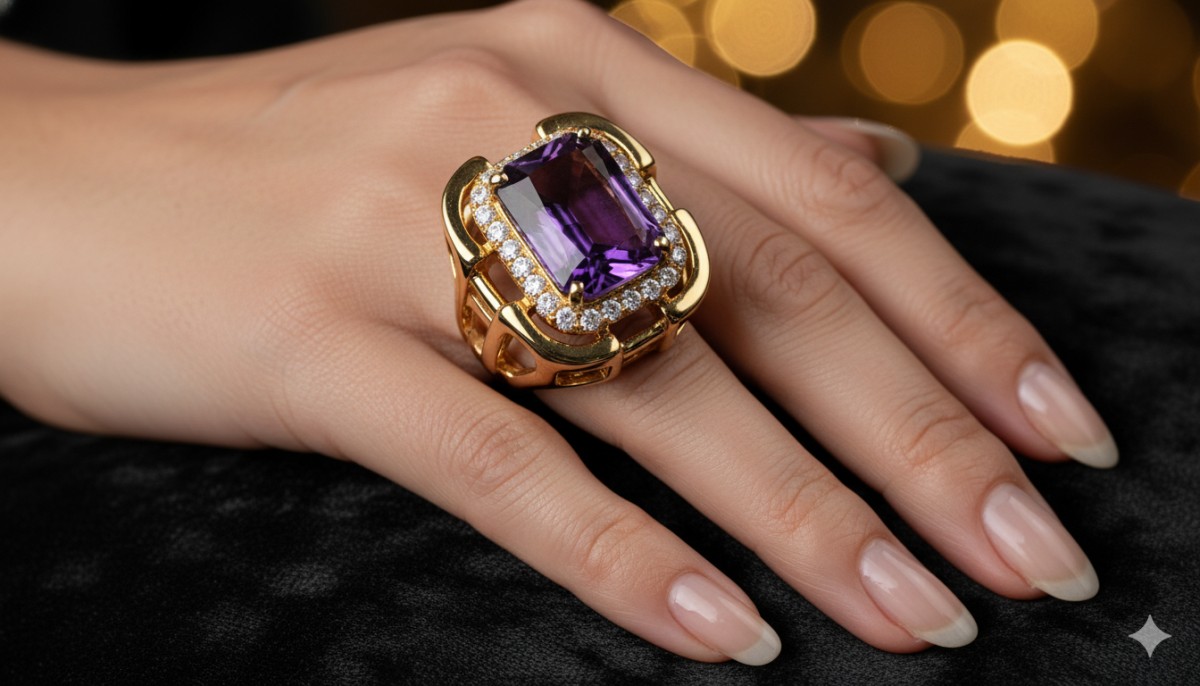
The Cocktail Gold Ring is the ultimate expression of jewelry extravagance. It is intentionally oversized, undeniably bold, and designed to command attention from across the room. More than just a piece of jewelry, the cocktail ring carries a storied history rooted in social rebellion and glamour, making it the perfect statement accessory for high-stakes formal events, receptions, and elegant evening gatherings.
The modern cocktail ring utilizes structural gold work and voluminous gemstone clusters to achieve its dramatic effect. Unlike the delicate solitaire, the cocktail ring is meant to be worn solo on the index or middle finger, acting as a conversation piece and the visual anchor of an entire outfit. This comprehensive guide explores the rich history, the essential design aesthetics, the top trending structural styles, and the crucial styling tips for mastering this powerful symbol of luxury and confidence.
Read more: Tri-Color Gold Bracelets
1. The History of Extravagance: From Prohibition to Power
The cocktail ring’s origin is inseparable from the roaring social changes of the 1920s, a decade defined by opulence and rebellion.
A. The Roaring Twenties
The ring gained prominence during the Prohibition era in the United States. Women would wear large, conspicuous rings, often featuring vibrant colored gemstones, as a subtle signal of their independence and presence at illegal cocktail parties (speakeasies). The ring was used to draw attention while ordering illicit alcoholic beverages.
B. Symbol of Independence
The cocktail ring became a symbol of women’s growing financial and social independence. It was a declaration of disposable income and a confident rejection of the delicate, traditional jewelry confined to married life. This heritage ensures the ring retains its bold, defiant spirit today.
C. The Visual Statement
The ring’s immense size was necessary to make it visible across crowded, dimly lit rooms, cementing its function as a visual statement rather than a subtle accent.
2. The Geometry of Statement: Design Aesthetic
The design of a cocktail ring is dictated by a singular goal: maximizing volume and color impact.
A. Oversized Scale
A true cocktail ring must cover a significant portion of the finger, extending well beyond the width of a traditional band. The aesthetic relies on voluminous gold settings or large, prominent gemstone clusters.
B. The Structural Gold Frame
Since the gemstone volume is often immense, the gold work must provide significant support. 18K gold is the standard, as its hardness provides the necessary strength for thick shanks, high galleries, and secure prongs required to hold large, heavy stone arrangements.
C. Color Contrast
The design usually centers around a single, vibrant color contrasted sharply with the gold. Popular choices include deep Emerald green, sapphire blue, ruby red, or stark black onyx, often framed by brilliant white diamonds (or AD/CZ) to maximize the sparkle.
3. Top Cocktail Gold Ring Designs for Ultimate Impact
Modern cocktail rings emphasize geometric structure, high setting, and visual density.
1. The Cluster Bomb Ring
- Design: Utilizes dozens of smaller stones (diamonds, colored CZ, or semi-precious gems) clustered together to create the illusion of one massive stone. The setting is high, creating immense volume and sparkle.
- Impact: Maximum brilliance and coverage; ideal for reflecting light under evening spotlights.
2. Geometric Abstract Ring
- Design: The gold itself is the primary focus. Thick, 18K gold bands twist, layer, and overlap to create an architectural, sculptural form, often with small baguette-cut diamonds recessed into the structure.
- Aesthetic: Modern, artistic, and preferred by those who want the gold quality and design structure to speak louder than the stones.
3. The Solitaire Halo Ring (Oversized)
- Design: An enormous central cabochon-cut gemstone (e.g., synthetic quartz, garnet, or blue topaz) is surrounded by a brilliant halo of small white diamonds (or CZ).
- Volume: The large size of the central colored stone provides the necessary bulk, while the halo ensures peripheral sparkle.
4. Two-Tone Gold/Color Contrast Rings
- Design: Often utilizes a dark, opaque stone like black onyx, black enamel, or dark jade set against high-polish 18K yellow or white gold.
- Aesthetic: Sleek, bold, and high-fashion, with the dark stone providing a dramatic, minimalist contrast.
5. The Dome/Sculptural Ring
- Design: A thick, solid gold ring with a smooth, highly polished, rounded top (the dome). This style features minimal or no stone work, relying entirely on the structural volume and flawless finish of the gold.
- Look: Classic, timeless, and reminiscent of high-end vintage jewelry.
4. Technical Construction for Comfort and Longevity
Despite their size, cocktail rings must be engineered for comfort and durability.
A. 18K Gold for Secure Settings
The sheer weight of the stones in a cocktail ring necessitates 18K gold. The higher hardness prevents the prongs from bending outward, which would risk the loss of large, valuable stones.
B. Open Gallery (Maximizing Light)
High-end cocktail rings often feature an open gallery or a high setting underneath the central stone. This structural lift maximizes the amount of light that enters the gemstone, increasing its fire and brilliance, despite the dense setting.
C. Weight Distribution
A truly well-made cocktail ring will have a thick, balanced shank (band) to ensure the heavy top portion does not constantly rotate on the finger. This thick shank is vital for comfort and stability.
5. Styling Guide: Which Finger to Wear and Coordination Rules
The cocktail ring is governed by its own strict styling rules:
A. The Index or Middle Finger
The cocktail ring is traditionally worn on the index finger (pointer finger) or the middle finger. It should never be worn on the ring finger, as it competes directly with the engagement or wedding ring.
B. The Solo Statement
The ring should be the sole focal point of the hand. Avoid wearing other large rings or heavy, competing bracelets on the same hand. If wearing earrings, keep them minimal (studs or simple drops).
C. Attire Coordination
The ring pairs perfectly with:
- Monochrome Outfits: Black, white, or deep jewel-toned gowns or dresses. The simplicity of the outfit allows the ring’s color and brilliance to dominate.
- Evening Wear: Its size and sparkle are designed to be seen in the softer lighting of receptions, parties, and galas.
Conclusion
The Cocktail Gold Ring is the undisputed ultimate statement accessory, perfectly blending historical extravagance with modern structural design. By choosing a big, bold piece featuring resilient 18K gold and spectacular volume—whether achieved through clustered gems or sculptural forms—the wearer makes an immediate, powerful declaration of confidence, style, and undeniable luxury.
Frequently Asked Questions (FAQs)
Which finger should a cocktail ring be worn on?
The cocktail ring is traditionally worn on the index finger or the middle finger of the right hand. It should not be worn on the ring finger, which is reserved for commitment jewelry.
Are cocktail rings expensive if they use colored stones?
The cost is determined by size. Cocktail rings use large, voluminous stones. To maintain affordability, many designs use large semi-precious stones (like topaz, amethyst, or garnet) or high-quality synthetics (CZ/AD), rather than natural diamonds or rubies, which would be prohibitively expensive at that size.
Can I wear a cocktail ring for daily office wear?
Generally, no. Cocktail rings are specifically designed for evening and formal events. Their high profile and size can interfere with daily tasks (typing, driving) and may be considered unprofessional or distracting in an office environment.
Which gold purity is recommended for a cocktail ring?
18K gold is highly recommended. The strength and hardness of 18K gold are crucial for the secure setting and stability of the thick shanks and large, heavy stones that define a cocktail ring.