The bridal lehenga is bought. The makeup artist is booked. The venue is finalized. But as you stand in front of the mirror during your trial, something feels… incomplete.
You realized what it is, didn’t you? It’s the silhouette.
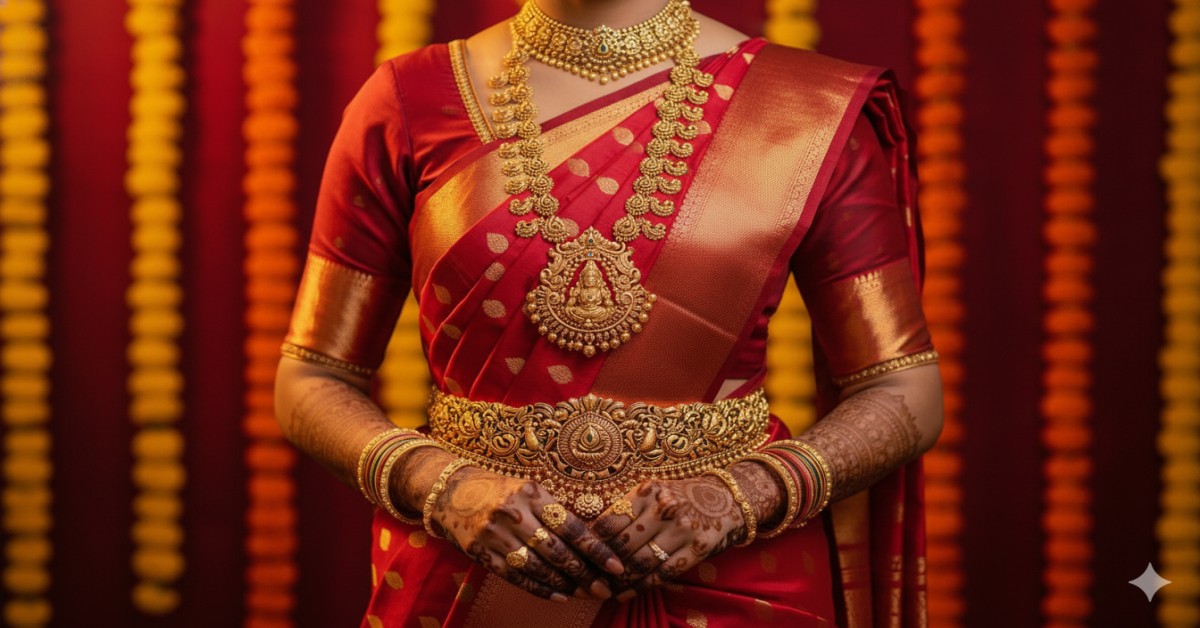
A bride isn’t just defined by her clothes; she is framed by her gold. And in 2025, two specific pieces of jewelry are defining the bridal look more than anything else: The Long Haar (Necklace) and The Waist Belt (Kamarbandh/Vaddanam).
These aren’t just accessories. The Haar adds grandeur, elongating your neck and giving you that “Maharani” aura. The Waist Belt cinches your silhouette, keeping your saree pallu or dupatta in place while highlighting your curves. Together, they are the power couple of bridal jewelry.
But here is the challenge: Traditional designs can look heavy and outdated. You want to look regal, not like a walking museum exhibit. You need designs that balance modern aesthetics with traditional weight.
In this showcase, I am going to walk you through the Trending Gold Haars and Waist Belts for 2025—designs that are ruling the runways and real weddings right now. Let’s find the perfect frame for your big day.
Read more: Royal Gold Jewellery for Bride
Part 1: The Gold Haar Revolution (Necklace Trends)
Gone are the days when a bride wore just one choker and called it a day. The trend for 2025 is “Structured Layering.” The Long Haar is no longer a backup piece; it is the main character.
1. The “Nakshi” Storyteller Haar
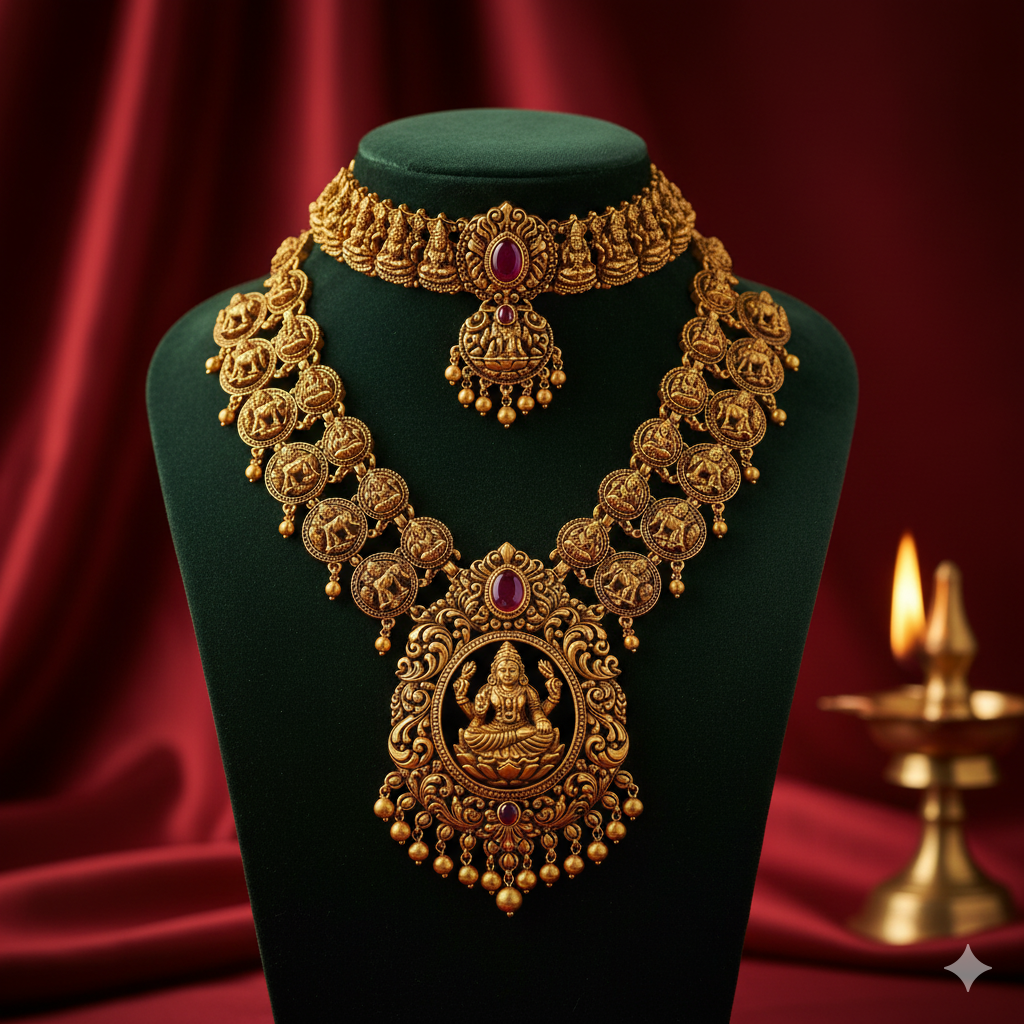
If you are a South Indian bride (or just love Temple jewellery), this is the biggest trend of the year.
- The Concept: “Nakshi” refers to the art of carving gold into 3D figures. These Haars don’t just have floral patterns; they tell a story.
- The Trend: Look for Haars depicting the Dasavataram (10 avatars of Vishnu) or the Sita Rama Kalyanam (wedding scene).
- Why it works: It adds a divine, spiritual element to your wedding. The finish is usually “Antique Matte” (reddish-yellow), which looks stunning against Kanjeevaram silks.
2. The Pastel & Polki Fusion Haar
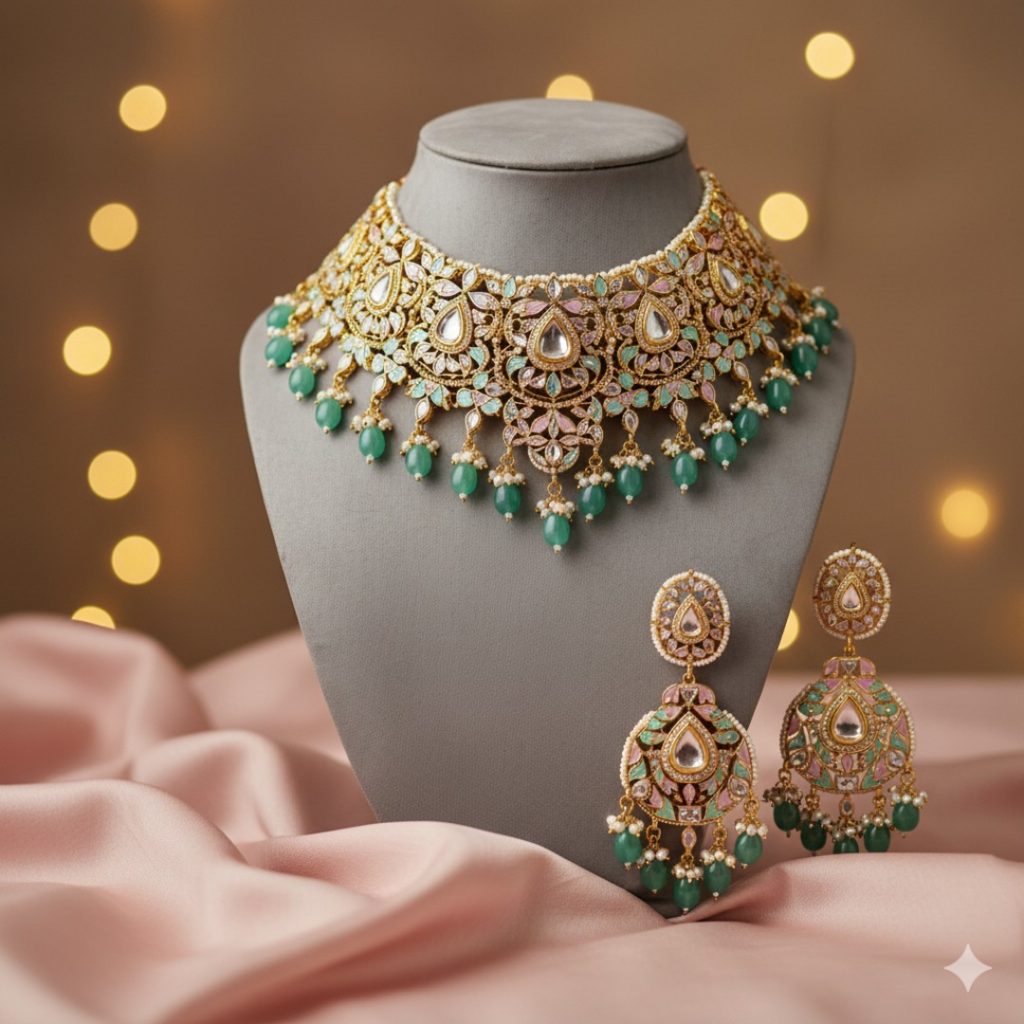
This is for the North Indian or Fusion bride. Pure gold can sometimes look too “yellow” against pastel lehengas (peach, mint, baby pink).
- The Trend: 22k Gold Haars embedded with Polki (Uncut Diamonds) and Pastel Beads (Russian Emeralds, Rose Quartz, or Blue Sapphires).
- The Look: The gold acts as a warm base, while the pastel stones match your outfit. It’s softer, romantic, and incredibly photogenic.
- Pro Tip: Choose a “Satlada” (Seven-layer) style for a royal Hyderabadi look.
3. The “Modular” Detachable Haar
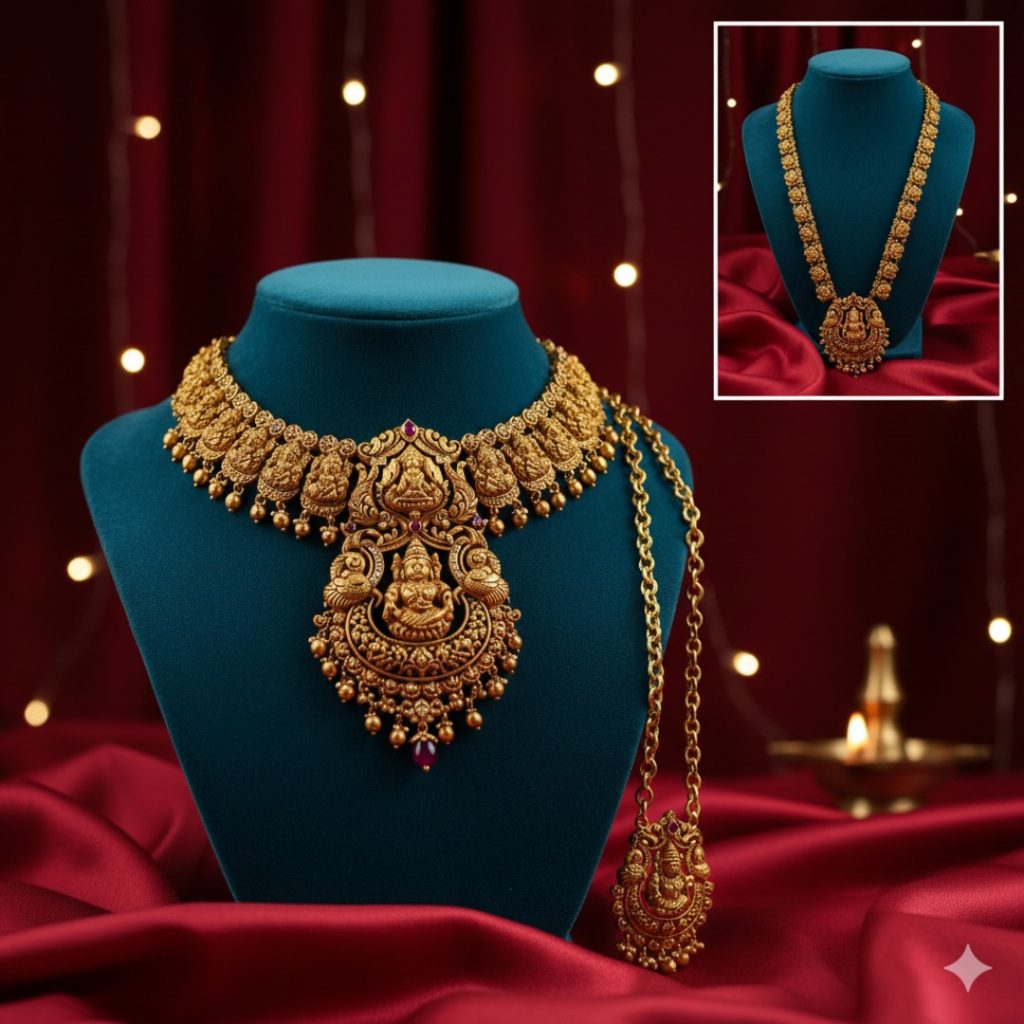
I call this the “Smart Bride’s Choice.” Gold prices are high, so why buy a heavy necklace you can only wear once?
- The Trend: Heavy Gold Haars where the bottom pendant can be detached.
- How it works:
- Wedding Day: Wear the full heavy Haar.
- Post-Wedding: Remove the heavy pendant. Wear just the gold chain for small parties. Or, attach the pendant to a string of pearls for a lighter look.
- Investment Value: You get two or three looks for the price of one.
4. The “Guttapusalu” Revival
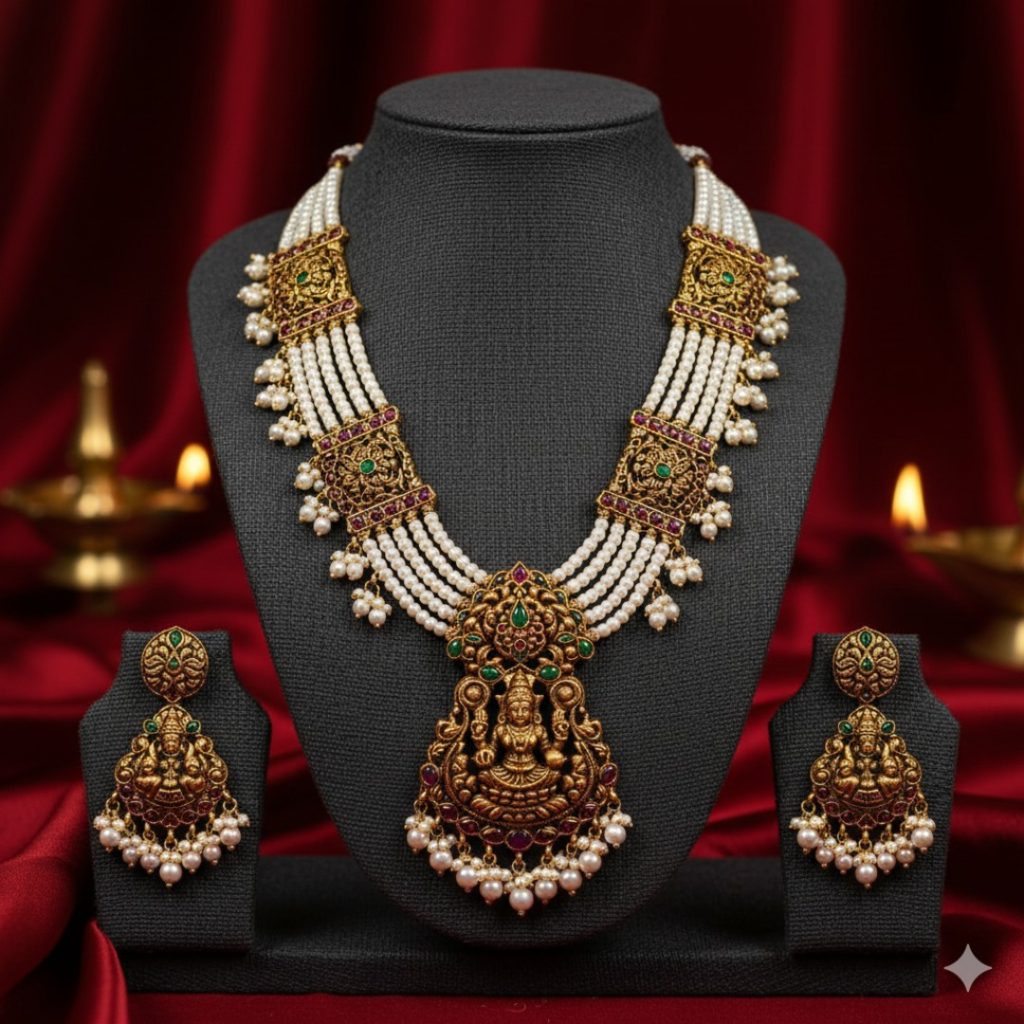
Originating from Andhra Pradesh, this design has taken over all of India.
- The Design: “Gutta” means shoal (group) and “Pusalu” means beads. It’s a gold necklace fringed with bunches of tiny rice pearls.
- The 2025 Twist: Instead of just pearls, 2025 designs are mixing Rubies and Emeralds into the pearl clusters.
- Why buy: The white pearls brighten up the face immediately. It looks heavy but feels lighter than solid gold because 40% of the volume is pearls.
Pro Tip:
The “Neckline Rule” Before buying your Haar, check your blouse neckline.
- High Neck/Closed Neck: Go for a long Rani Haar (30-34 inches) that sits below the embroidery of the blouse.
- Deep V or Sweetheart Neck: Go for a shorter “Chandra Haar” (22-24 inches) that sits on your skin, framing the chest.
- Avoid: Wearing a Haar that falls exactly on the borderline of your blouse neckline. It creates visual clutter and gets tangled in the embroidery.
Part 2: The Return of the Waist Belt (Kamarbandh/Vaddanam)
For a few years, the waist belt disappeared. But in 2025, it is back with a vengeance. Why? Because brides realized that a heavy saree or lehenga dupatta needs structure. A waist belt holds everything in place while making your waist look snatched.
1. The “Ashta Lakshmi” Vaddanam
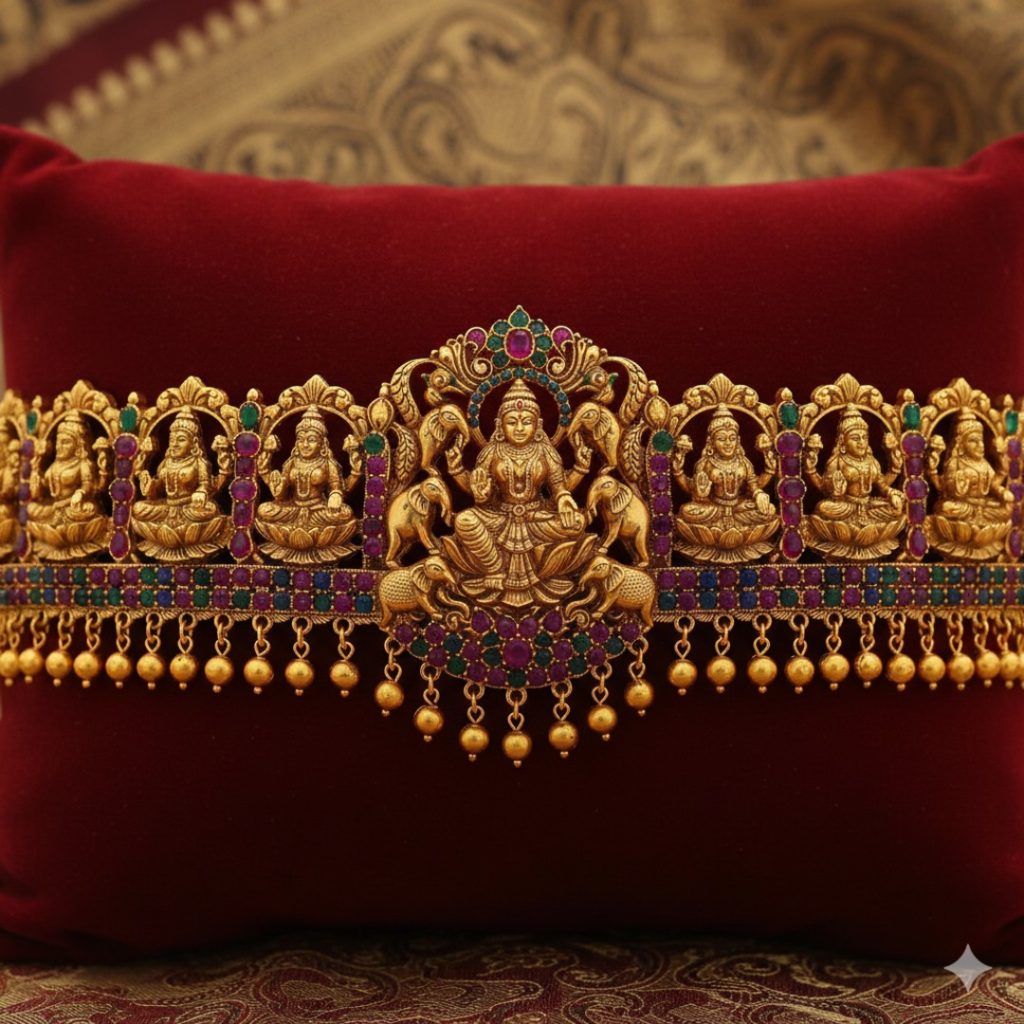
This is the gold standard for traditional weddings.
- The Design: A broad, flat belt featuring the eight forms of Goddess Lakshmi.
- The 2025 Update: The new belts are “3D Embossed.” The figures of the Goddess are raised high, giving a sculptural look.
- Best For: Muhurtham ceremonies and Pheras. It symbolizes prosperity entering the new home.
2. The “Mesh” & Chain Kamarbandh
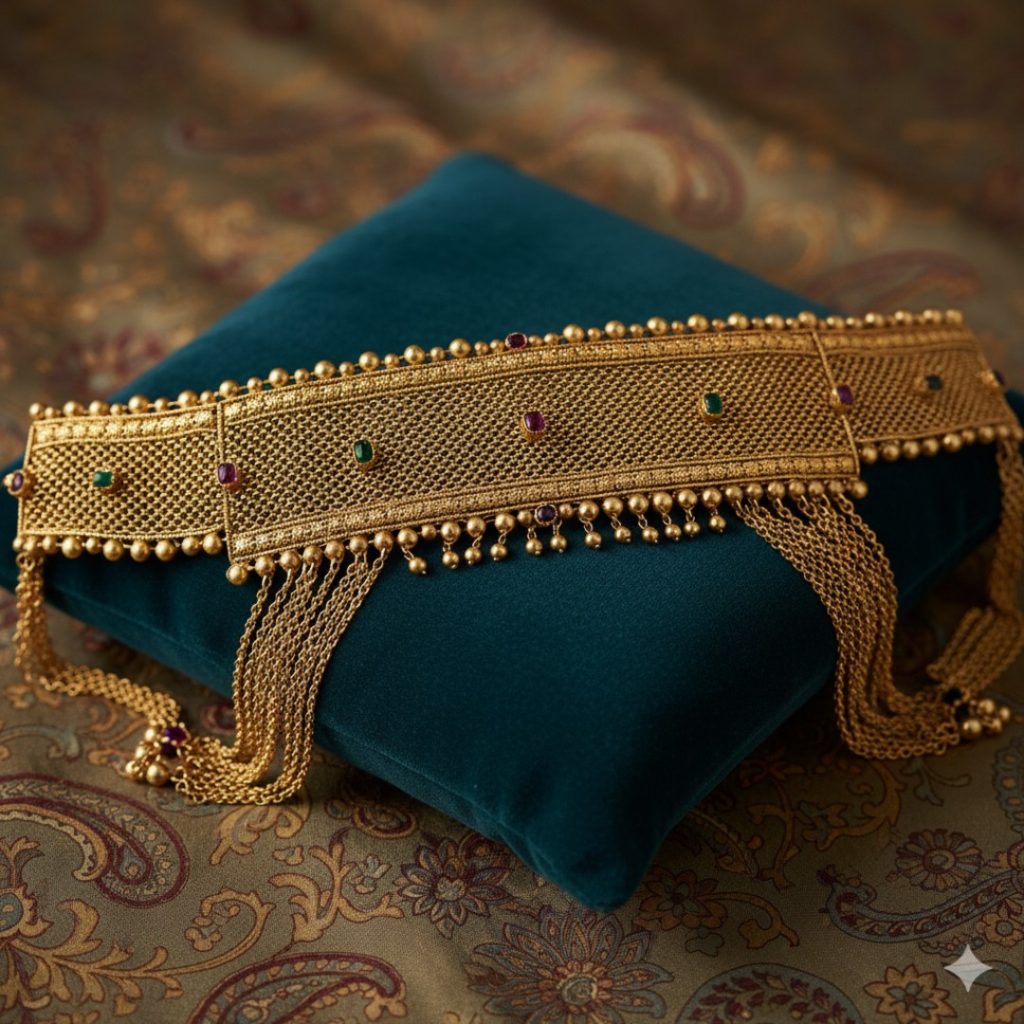
Not every bride wants a solid shield of gold around her waist.
- The Trend: Gold Mesh Belts. These are flexible, fabric-like belts made of woven gold wire.
- The Benefit: They are super comfortable. You can sit, bend, and dance without the belt digging into your ribs.
- The Look: Very chic and modern. Often adorned with dangling gold coins (Ginnies) or small ghungroos that make a soft sound when you walk.
3. The Diamond-Cut Gold Belt
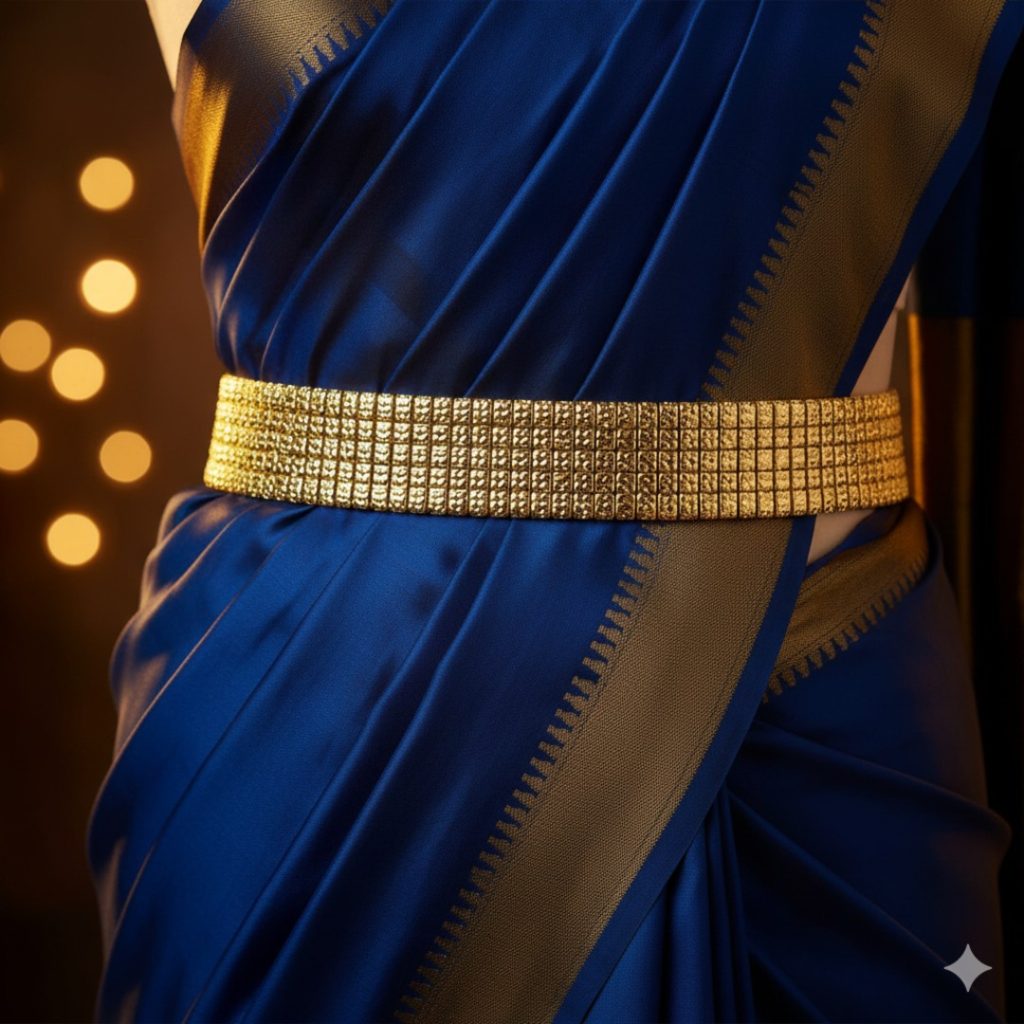
For the Reception or Sangeet, you want sparkle.
- The Design: 22k Gold that is machine-cut at sharp angles to reflect light like diamonds.
- The Vibe: It glitters like a disco ball under stage lights but costs far less than a real diamond belt.
- Styling: Wear this over a dark-colored velvet lehenga or a silk saree for maximum contrast.
4. The “Zardosi” Hybrid Belt
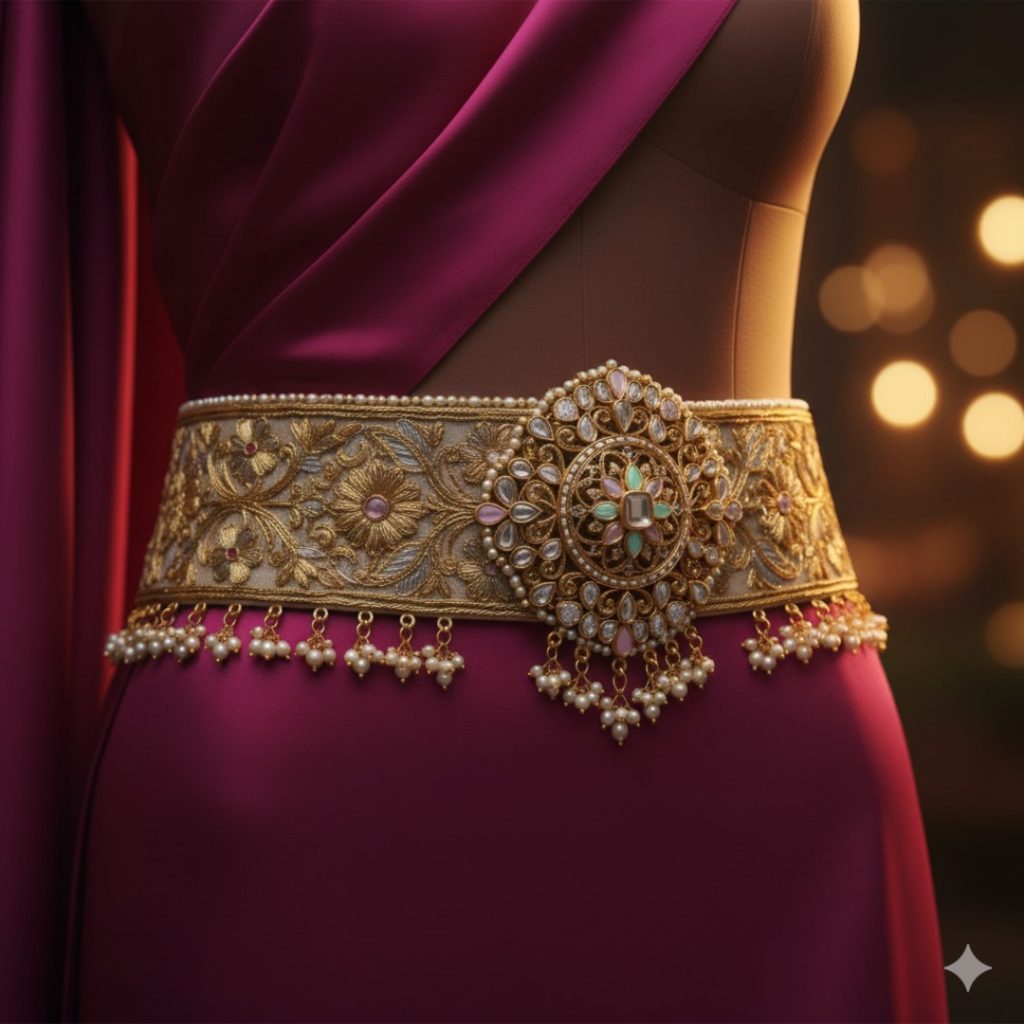
This is a fusion trend for brides on a budget or those who want comfort.
- The Design: The belt is made of embroidered fabric (Zardosi work) to match your lehenga, but the Center Piece is a pure Gold Brooch/Buckle.
- The Smart Move: You spend money only on the gold buckle (which is an asset). The belt itself is fabric, making it light and breathable.
Part 3: Styling Them Together (The Perfect Pair)
The Haar and the Belt must talk to each other. They cannot look like strangers.
Scenario A: The Traditional Royal
- Haar: Antique Nakshi Mango Mala (long).
- Belt: Matching Antique Nakshi Temple Belt.
- Vibe: Cohesive, heavy, heritage. Perfect for the main wedding ceremony.
Scenario B: The Modern Minimalist
- Haar: A sleek Layered Chain Haar with diamond accents.
- Belt: A thin, delicate Waist Chain (2-3 layers of gold chain) instead of a broad belt.
- Vibe: Youthful, airy, easy to dance in. Perfect for Sangeet.
Scenario C: The Contrast Queen
- Haar: Pearl-heavy Guttapusalu.
- Belt: Solid Gold Plain Belt.
- Why it works: The busy texture of the pearl necklace is balanced by the smooth simplicity of the belt.
Important Technical Details (Don’t Ignore These!)
Buying a Haar or Belt is a massive investment. Here is the technical checklist.
- Weight:
- A decent Long Haar starts at 40-50 grams and goes up to 150 grams.
- A solid Waist Belt starts at 100 grams (yes, they are heavy!). If you want lighter, go for “Mesh” or “Chain” styles which can be 40-50 grams.
- Sizing:
- Haar: Always ensure it has an adjustable “Dori” (thread) at the back, not a fixed chain. This lets you adjust the height.
- Belt: Waist sizes fluctuate! Ensure the belt has adjustable screw holes or a chain link extension so you can wear it even if you gain/lose weight later.
- Purity:
- Stick to 22k (916) for these items. They are “Asset Jewellery.”
- Avoid 18k unless it is heavily studded with diamonds.
Conclusion: Frame Your Big Moment
Your wedding photos will likely be framed from the waist up. That means your Haar and your Waist Belt are the two most visible pieces of jewelry you will wear—even more than your shoes or bangles.
Don’t rush this choice. Look for the Nakshi storytelling if you love tradition. Go for the Pastel Fusion if you want to look modern. Choose the Modular styles if you are an investor at heart.
Whatever you choose, make sure it fits your body comfortably. You are going to be sitting in a Mandap for hours; you don’t want a belt that pinches or a necklace that scratches. Wear your gold like armor—beautiful, strong, and uniquely yours.
I’d love to know: Are you planning to wear a traditional broad Vaddanam or a sleek modern waist chain? Tell me in the comments below!
Frequently Asked Questions (FAQs)
How much does a gold waist belt (Vaddanam) typically weigh?
A traditional, broad, solid gold Vaddanam usually starts at 100 grams and can go up to 250 grams depending on the intricacy. However, modern “Mesh” or “Sheet” designs can give a similar broad look in just 40 to 60 grams by using lighter, hollow construction techniques.
Should my Long Haar match my Choker exactly?
Not necessarily! In 2025, “Mix and Match” is trending. You can pair a Polki Choker (uncut diamonds) with a Gold Rani Haar. The key is to keep the tone of gold similar (e.g., don’t mix bright yellow gold with antique reddish gold). The contrast in texture actually adds depth to your look.
What is the difference between a Rani Haar and a Satlada?
Rani Haar: Usually a long, single or double-layered necklace with a large, heavy pendant at the bottom. It creates a “V” or “U” shape.
Satlada: A Nizam-style necklace with seven distinct layers of pearls/gold strands, often with small pendants on each layer. It covers the entire chest area like a veil of jewels.
Can I wear a gold waist belt with a lehenga?
Absolutely! In fact, it is highly recommended. A waist belt helps keep the heavy lehenga dupatta in place (tucked in) so your hands are free. For lehengas, opt for slightly thinner or “Chain-style” belts compared to the broad belts worn with Kanjeevaram sarees.