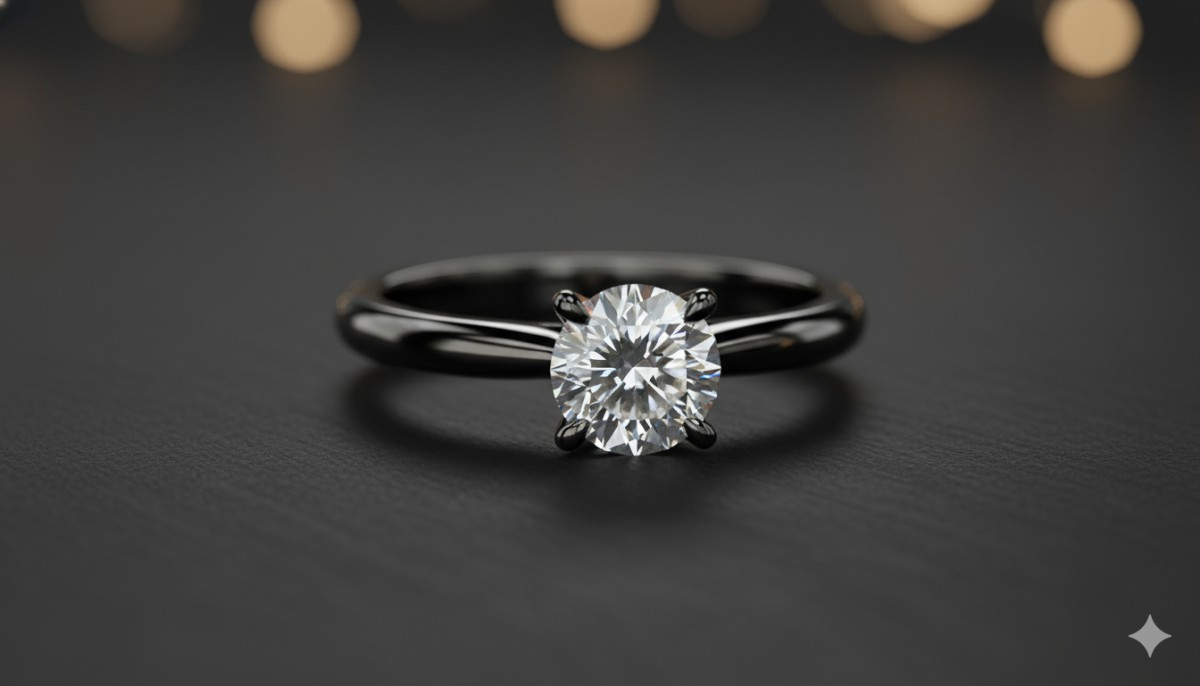
However, the term “Black Gold” often leads to confusion. It is crucial to understand that Black Gold is not a pure, naturally occurring elemental metal; it is achieved through a specialized surface treatment or plating process applied to standard gold alloys. This comprehensive guide will dissect the technical process of how this sophisticated color is achieved, analyze its growing popularity, and provide a detailed breakdown of Black Gold Jewellery Price in India in 2025.
Read more: Kashmiri “Dejhoor” Gold Earrings
1. The Truth Behind the Name: Defining Black Gold
Black Gold is essentially a gold alloy (typically 14K or 18K) that has undergone a metallurgical surface alteration. Unlike yellow gold (pure gold and copper/silver) or white gold (pure gold and palladium/nickel), the black color does not permeate the entire metal.
A. The Primary Method: Surface Treatment
The vast majority of Black Gold jewelry available in the market today achieves its color through electroplating. This is the most cost-effective and common method for achieving a deep, uniform black or gunmetal grey finish.
B. The Rare Method: Alloying (Oxidation)
In some rare, high-end applications, a black color can be achieved by alloying gold with cobalt and chrome, followed by controlled oxidation at extremely high temperatures. This technique provides a permanent black layer, but is far more expensive and less common in the general Indian market.
2. Manufacturing Process: How is the Color Added on Gold?
The sophistication of Black Gold lies in the chemical application of platinum group metals onto the gold base.
Method 1: Black Rhodium Plating (The Common Technique)
This is the most frequent method used globally for Black Gold:
- Preparation: The gold piece (usually 14K or 18K, as 22K is too soft) is thoroughly cleaned and polished.
- Electroplating: The piece is submerged into a plating solution containing black rhodium (a platinum group metal) or an alloy of rhodium and other dark metals.
- Process: An electric current is passed through the solution, causing the dark rhodium particles to bond to the gold surface.
- Result: This process results in a deep gunmetal grey or a lustrous black-grey finish. Black rhodium provides a hard, durable surface, ideal for jewelry that needs to resist scratching.
Method 2: Ruthenium Plating (For a Deeper Black)
Ruthenium, another hard metal in the platinum group, is used when a deeper, more saturated black color is desired.
- Process: Similar to rhodium plating, the gold is submerged in a ruthenium solution.
- Result: Ruthenium yields a truer, more opaque black than black rhodium. It is also highly durable and more corrosion-resistant, but the chemical is more expensive.
3. Aesthetic Appeal and Trends in India
Black Gold has found a loyal customer base in India by offering a dramatic counterpoint to traditional aesthetics.
A. High Contrast for Diamonds
Black Gold’s greatest aesthetic appeal is its ability to create maximum contrast with white stones. The dark background makes diamonds or AD/CZ stones appear whiter, larger, and more brilliant than they would in white or yellow gold settings.
B. Unisex and Modern Designs
Black Gold is inherently gender-neutral. It is highly popular in:
- Men’s Jewelry: Wedding bands, signet rings, and simple chains, where it signifies sleek, modern masculinity.
- Women’s Fashion: Geometric earrings, stacked rings, and pendants, often paired with rose gold for a sophisticated dual-tone look.
C. The Anti-Traditional Statement
It appeals to the younger, urban Indian consumer who appreciates modern, gothic, or minimalist styles and wishes to move beyond the traditional 22K yellow gold worn by previous generations.
4. Pricing in India: Factors Affecting Black Gold Cost
The price of Black Gold Jewellery is calculated differently than standard gold because the primary cost is the base metal and the specialist labor, not the thin plating itself.
| Pricing Factor | Impact on Black Gold Price |
| Base Gold Purity (14K/18K) | Main Cost Driver. Most Black Gold is 14K or 18K, making the intrinsic gold value high. 22K is too soft for the plating process. |
| Plating Material Cost | Moderate. Rhodium and Ruthenium are expensive metals, adding a substantial premium to the ‘making charges’ compared to basic polishing. |
| Specialty Labor/Making Charges | Higher. The plating process requires specialized equipment, chemical handling, and expert jewelers, leading to a higher labor cost (Making Charge) than standard electroplating. |
| Design Complexity | Highest Premium. Complex designs with intricate grooves or settings require more time and precision to plate evenly, further increasing the final price. |
Summary: Black Gold is typically more expensive than an equivalent weight of standard yellow or white gold (at the same 18K purity) because of the higher making charges and plating material costs.
5. Durability, Maintenance, and Re-Plating
The most important consideration for buying Black Gold is its durability, as the finish is only surface-level.
A. Fading and Wear
Black Rhodium plating is not permanent. Friction (such as rubbing against clothes, skin, or keys) will eventually cause the black layer to wear through, revealing the base gold color (white or yellow) underneath. This is most common on the underside of rings and bracelets.
B. Re-Plating Frequency
To maintain the true black color, the piece will need to be re-plated periodically, usually every 12 to 24 months depending on the frequency of wear. This maintenance cost is a long-term factor for Black Gold owners.
C. Care Tips
To extend the life of the plating, avoid exposing the jewelry to harsh chemicals (chlorine, bleach, abrasive cleaners) and remove the pieces when swimming or doing heavy manual work.
Conclusion
Black Gold Jewellery offers a beautiful, unique alternative to conventional metals, providing a look of high contrast, sophistication, and modern appeal that is highly relevant in India’s evolving jewelry market. While its high price tag reflects both the purity of the base gold and the specialized labor of plating, understanding the non-permanent nature of the finish and committing to re-plating maintenance is key to enjoying this striking, fashionable metal for years to come.
Frequently Asked Questions (FAQs)
Is Black Gold real gold?
Yes, the base metal is real gold (typically 14K or 18K), meaning it retains intrinsic value. However, the black color is achieved through surface plating (usually rhodium or ruthenium), not the gold itself.
How often does Black Gold need to be re-plated in India?
For items worn daily, such as rings or bracelets, re-plating is generally required every 12 to 18 months due to humidity and friction. Pendants and earrings, which receive less friction, may last longer (24+ months).
Is Black Gold safe for sensitive skin?
Yes. The base metal is usually 14K or 18K gold (which is largely hypoallergenic), and the plating materials, rhodium and ruthenium, are both platinum group metals and are generally considered highly hypoallergenic and safe for sensitive skin.
Can Black Gold be used for engagement rings?
Yes, it is a popular modern choice, especially for setting white diamonds due to the intense contrast. However, the wearer must be aware that the ring will require regular re-plating maintenance to keep the black color vibrant.
Can you turn a standard yellow gold ring into Black Gold?
A professional jeweler can plate a yellow gold ring with black rhodium or ruthenium, but they will usually recommend plating with white gold first to ensure a smooth, even, deep black finish.