The Baju Bandh (or Baaju Band) is one of the most magnificent and historically significant pieces of Indian jewelry. Worn high on the bicep, this gold armlet symbolizes strength, protection, and the marital status of the wearer. Today, the Baju Bandh is experiencing a dramatic revival, driven by two distinct aesthetics: the heavy, ornate, culturally rich Temple Gold Style and the sleek, minimalist, functional Modern Gold Style.
The choice between these two styles defines the entire look—from traditional bridal grandeur to contemporary fusion chic. This comprehensive guide dissects the historical significance, explores the precise design anatomy of the Gold Baju Bandh, analyzes the crucial differences between the Temple and Modern aesthetics, and provides expert tips for styling this powerful gold accessory.
Read more: Ayodhya Ram Mandir Theme Gold Pendants
1. The Significance of the Armlet: History and Symbolism
The Baju Bandh has been a continuous feature in Indian attire since ancient times, prominently seen in Mughal, Rajput, and South Indian royal courts.
A. Protection and Power
Historically, the armlet was often worn by warriors and royalty as a talisman of strength, courage, and protection against harm. Wearing it high on the bicep symbolizes physical and spiritual power.
B. Bridal Necessity
In many cultures, the Baju Bandh is a mandatory component of the bridal trousseau, symbolizing the completion of the sixteen traditional adornments (Solah Shringar) and affirming marital status (Suhaag).
C. Aesthetic Function
The Baju Bandh completes the entire jewelry ensemble, bridging the gap between the shoulder (earrings/necklace) and the forearm (bangles/Kadas), providing necessary structural balance to the look.
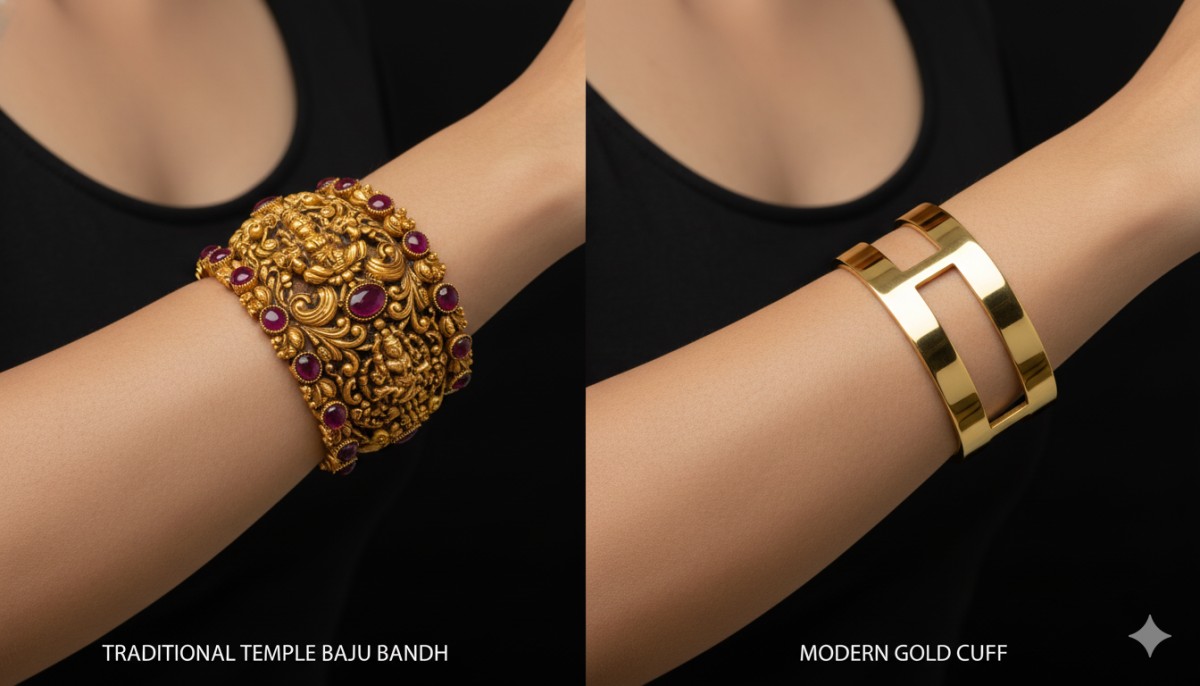
2. Style I: Traditional Temple Baju Bandh (The Heirloom Look)
The Temple Baju Bandh draws inspiration from the intricate carvings and motifs seen on South Indian temple architecture.
A. Aesthetics and Finish
- Weight and Structure: Heaviest style (often 30g+), featuring a fixed, wide, and rigid structure. The volume is created by thick gold sheets and layers.
- Finish: Antique or matte gold finish is mandatory, deliberately dulling the gold to enhance the three-dimensional depth of the carving and mimic the look of aged heirloom jewelry.
- Material: Exclusively uses 22K gold for its rich color and traditional purity.
B. Motifs and Ornamentation
- Deity Focus: Central motifs feature embossed or carved deity figures (Goddess Lakshmi, Ganesha, or Naga/serpent motifs).
- Gemstones: Heavily accented with traditional Kemp stones (cabochon-cut rubies and emeralds) set in a closed, thick gold framework.
C. Fastening Mechanism
Due to its heavy weight, the Temple Baju Bandh traditionally uses a secure, threaded screw mechanism or is fully adjustable via a thick drawstring (dori) made of intertwined gold thread, ensuring the heavy piece stays fixed on the bicep.
3. Style II: Modern Baju Bandh (The Sleek Statement)
The modern Baju Bandh is designed for versatility, comfort, and wearability with contemporary fashion.
A. Aesthetics and Finish
- Weight and Structure: Much lighter (often 15g–25g), utilizing flexible hinges or a simple cuff design. The shape is typically slender and open.
- Finish: High-polish, mirror-finish is preferred, emphasizing the sleek lines and geometric perfection of the gold.
- Material: Often crafted in 18K gold, which provides superior hardness and rigidity necessary for open cuff designs that must resist bending.
B. Motifs and Ornamentation
- Geometric Focus: Motifs are abstract, minimalist, or geometric (clean lines, interlocking shapes, or stylized wave patterns).
- Gemstones: Features minimal, modern stone accents like Pavé-set diamonds or simple bezel-set AD stones, placed discreetly to catch the light.
C. Fastening Mechanism
Relies on a secure hinged latch or a simple open cuff design (for those without mechanisms). The sleek closures allow for single-hand wear and quick removal.
4. Direct Comparison: Temple vs. Modern Baju Bandh
| Feature | Temple Baju Bandh | Modern Baju Bandh |
| Primary Purity | 22K (Mandatory) | 18K (Preferred for Strength) |
| Aesthetic Goal | Antique Volume, Cultural Richness | Sleek Structure, Minimalist Statement |
| Dominant Motif | Deity Figures, Peacocks, Lotus | Abstract Geometry, Cutouts, Plain Lines |
| Finish | Matte/Antique Oxidized | High Polish/Mirror Finish |
| Wearability | Bridal, Highly Traditional Events | Festive, Fusion Wear, Cocktail Parties |
| Fastening | Screw/Drawstring (Secure/Rigid) | Hinged Clasp/Open Cuff (Quick/Flexible) |
5. Purity, Practicality, and Size Management
A. Adjustability is Key
The armlet must be adjustable. Temple designs use the drawstring or screw mechanism to handle significant size changes, while Modern cuffs rely on a small, secure hinge or a flexible band to accommodate arm circumference comfortably.
B. 18K Strength for Modern Designs
For Modern Baju Bandhs, the 18K purity is crucial. Its hardness allows the creation of thin, open cuff structures that look light and airy but possess the necessary resilience to maintain their circular shape under stress.
C. Sizing and Fit
The Baju Bandh should sit high on the bicep, close to the shoulder. It should be snug enough not to slide down but loose enough to be comfortable. Always measure the thickest part of the arm to ensure the chosen design (especially the rigid Temple style) will fit.
6. Styling Guide: Placement and Coordination
A. Outfit Coordination
- Temple Style: Pairs flawlessly with traditional silk sarees (Kanjivaram, Kora, Pattu) where the saree fabric covers the shoulder, leaving the Baju Bandh visible through the blouse opening.
- Modern Style: Ideal for fusion wear, evening gowns, or sleeveless blouses. The high polish and sleek design complement the exposed shoulder and bare skin.
B. The Solo Rule
The Baju Bandh is a powerful statement piece. It should generally be worn solo on one arm, leaving the other arm bare or adorned only with a simple watch or bracelet. This ensures the armlet remains the singular focus of the upper body.
C. Layering with Neckwear
The Baju Bandh must coordinate with the necklace. Pair a Temple Baju Bandh with heavy Temple Harams or Kundan necklaces. Pair a Modern Baju Bandh with a simple diamond tennis necklace or a sleek gold choker.
Conclusion
The Gold “Baju Bandh” (Armlet) remains a timeless symbol of feminine strength and regal beauty. By choosing between the culturally dense, antique Temple Style and the sleek, durable Modern Cuff, the wearer secures a magnificent accessory that is tailored to their specific needs—whether it is affirming traditional identity in 22K gold or making a minimalist statement in contemporary 18K designs.
Frequently Asked Questions (FAQs)
Is the Baju Bandh traditionally worn on one arm or both?
It is traditionally worn on one arm (usually the right), particularly in bridal and ceremonial contexts, though modern styling allows for wearing a lightweight, matching pair on both arms for symmetry.
What is the most secure mechanism for a heavy Temple Baju Bandh
The screw mechanism (a hinge on one side and a secure screw clasp on the other) is the most secure, as it ensures the heavy gold piece remains perfectly fixed and cannot be accidentally dislodged.
Can a Baju Bandh be worn over a full-sleeve blouse?
It can be worn over a sheer or transparent fabric, but the traditional look requires it to be worn directly on the skin to maximize the visual impact and the symbolic connection to the body.
Which gold purity is better for a Modern Cuff Baju Bandh?
18K gold is better for the modern cuff design. Its higher hardness and resilience maintain the structural integrity and open shape, resisting bending more effectively than 22K gold.
How do I measure my arm size for a Baju Bandh?
Measure the circumference of your upper bicep (the thickest part of the arm where you intend to wear the armlet). If buying a rigid, fixed design, add 1/2 inch for comfort. Always ensure the chosen piece has an adjustable mechanism.