The consecration (Pran Pratishtha) of the Ayodhya Ram Mandir stands as a defining moment in modern Indian history and spiritual life. This monumental event has not only revived deep cultural devotion but has also inspired the single most significant trend in spiritual jewelry for 2025: the Ayodhya Ram Mandir Theme Gold Pendant. Wearing this piece is more than a fashion statement; it is a visible, personal declaration of faith, national pride, and reverence for Lord Ram.
These gold pendants, crafted predominantly in high-purity 22K gold, utilize specialized carving (Nakshi) and intricate structural designs to translate the majesty of the Mandir and the sanctity of Lord Ram’s persona into a wearable amulet. This comprehensive guide explores the spiritual imperative, the trending motifs, the precise craftsmanship required, and the etiquette of wearing this highly auspicious gold jewelry.
Read more: Traditional “Jada Billai” Designs
1. The Spiritual Imperative: Lord Ram and Ayodhya
The pendant’s value is rooted not just in gold but in the profound spiritual significance it represents.
A. Lord Ram: The Ideal of Dharma
Lord Ram is revered as Maryada Purushottam (The Ideal Man), symbolizing righteousness (Dharma), courage, integrity, and adherence to moral values. Wearing his symbol is believed to invoke these virtues in the wearer, providing moral guidance and strength.
B. The Janmabhoomi Connection
The Ram Mandir represents the culmination of centuries of devotion and the restoration of the sanctity of the Janmabhoomi (birthplace). The pendant is a tangible link to this sacred space, allowing the devotee to carry the temple’s blessing wherever they go.
C. The Amulet of Purity
Gold is the purest metal and is astrologically compatible with most planetary energies. Placing the divine motif of Ram Mandir on 22K gold maximizes the pendant’s role as a shield of spiritual purity and positive energy.
2. Gold: The Auspicious Medium (22K Mandate)
For a piece of this spiritual magnitude, the gold purity cannot be compromised.
A. Highest Purity for Auspiciousness
The vast majority of Ayodhya Ram Mandir pendants are crafted in 22K gold (916 Hallmarked). This high purity is mandatory because gold is linked to the Goddess Lakshmi (prosperity) and is deemed the most suitable metal for housing deity figures and sacred structures.
B. Rich Color and Traditional Craftsmanship
The deep, rich yellow color of 22K gold beautifully complements the traditional aesthetic of the Temple structure and enhances the intricate carvings (Nakshi work) required to detail the Mandir’s facade.
3. Top Ayodhya Ram Mandir Theme Pendant Designs
The trending designs focus on translating the Mandir’s architectural and spiritual elements into wearable forms, appealing to both traditional and contemporary tastes.
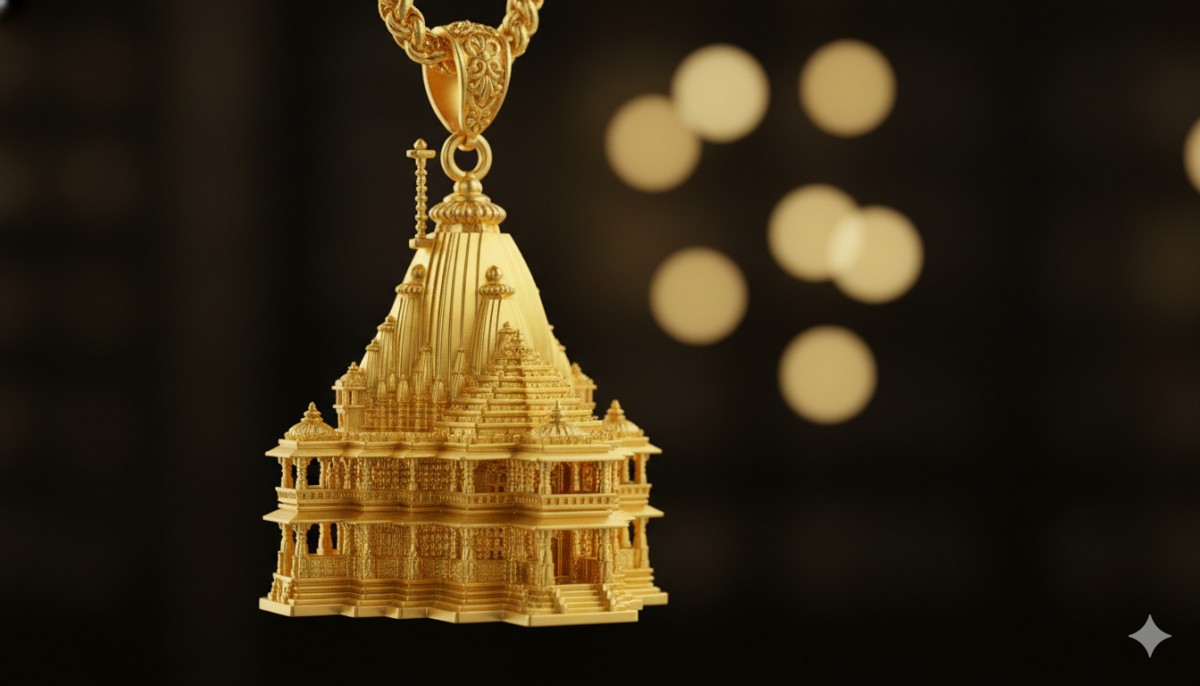
1. The Temple Replica Pendant (Structural Design)
- Design: This is the most complex and sought-after design. The pendant is an intricate, three-dimensional miniature replica of the Mandir’s Shikhar (tower) or the main archway.
- Craftsmanship: Uses advanced Nakshi (deep carving) and Repoussé (hammering for 3D volume) techniques to detail the pillars, domes, and kalash (finials).
2. Lord Ram’s Profile or Emblem
- Design: A minimalist, sleek silhouette of Lord Ram’s standing profile or a representation of his symbolic accessories—the bow and arrow—set within a smooth gold circle or shield.
- Aesthetic: Subtle, modern, and suitable for daily wear, appealing to a younger, minimalist demographic.
3. The ‘Jai Shri Ram’ Calligraphy Pendant
- Design: The phrase “Jai Shri Ram” is beautifully rendered in elegant Hindi (Devanagari) calligraphy, often laser-cut from a thin sheet of 18K or 22K gold.
- Appeal: A direct, devotional statement, popular for gifting and personal conviction.
4. Ram Darbar Miniature Pendant
- Design: A dense, traditional design featuring the complete Ram Darbar—Lord Ram seated with Sita, Lakshman, and Hanuman—in miniature relief carving.
- Detailing: Often incorporates tiny, close-set ruby red and emerald green accents (Kemp stones) to reflect the traditional colors of the deities’ clothing.
5. The Dhwaj (Flag) Pendant
- Design: A stylized representation of the temple flag (Dhwaj or banner) in waving gold, often featuring the symbol ‘Om’ or the word ‘Ram’ embossed on the flag surface.
- Symbolism: Represents victory, protection, and the spiritual establishment of Dharma.
4. Craftsmanship, Technique, and Durability
The longevity of the Ram Mandir pendant depends on the goldworking technique chosen for the specific design.
A. 3D Volume (Nakshi Work)
For the Temple Replica and Ram Darbar designs, Nakshi work is crucial. This high-skill carving requires the gold to be thick enough to hold the intricate depth, ensuring the details of the pillars and figures remain sharp and clear over time.
B. Strength for Calligraphy (18K Focus)
For sleek designs like the ‘Jai Shri Ram’ script, 18K gold is sometimes used for the frame. While 22K is traditional, 18K offers superior strength to prevent the delicate, fine gold lettering from bending or breaking easily.
C. Smooth Finish and Wearability
Since the pendant is often worn 24/7 as an amulet, the back must be perfectly smooth and highly polished to ensure it rests comfortably against the skin without chafing.
5. Wearing Etiquette, Gifting, and Trend Longevity
A. Maintaining Sanctity
As a sacred item, the Ram Mandir pendant should be treated with reverence. It should be kept clean and removed during unsanitary activities. The pendant should always be worn on a clean gold chain or a sacred red/yellow thread.
B. Auspicious Gifting
The pendant is the ideal gift for auspicious occasions, including housewarmings (Griha Pravesh), weddings, naming ceremonies (Namkaran), or major festivals (Diwali, Ram Navami), symbolizing blessings for purity, stability, and prosperity.
C. Trend to Heirloom
While the initial peak demand is tied to the temple’s opening, the theme’s spiritual and cultural weight ensures the pendant will transition from a temporary trend to a timeless, generational heirloom.
Conclusion
The Ayodhya Ram Mandir Theme Gold Pendant is more than just jewelry; it is a radiant symbol of a profound cultural reawakening. By investing in a piece crafted from auspicious 22K gold, the wearer carries a constant, beautiful reminder of the ideals of Lord Ram and the spiritual sanctity of Ayodhya. This piece is the ultimate fusion of faith, history, and contemporary elegance, destined to be cherished for generations.
Frequently Asked Questions (FAQs)
Is 22K gold necessary for an Ayodhya Ram Mandir pendant?
While financially and traditionally, 22K gold is preferred for its purity, jewelers may use 18K gold for very delicate or intricate structural designs (like the calligraphy or small pillars) to ensure the necessary hardness and prevent breakage.
Should the pendant be worn over or under clothing?
Both are acceptable. Wearing it underneath, close to the skin, is seen as an intimate, protective amulet. Wearing it over clothing is a visible, proud declaration of faith and devotion.
How should I clean the intricate Temple Replica designs?
Temple designs require care. Clean the pendant with mild soap and lukewarm water only. Use a very soft brush (like a watercolour brush) to gently clean the intricate grooves of the Shikhar (tower). Avoid harsh chemicals or aggressive scrubbing.
Can this pendant be gifted to non-Hindus?
Yes. The pendant can be gifted to anyone who appreciates the cultural, historical, and architectural significance of the monument and the universal ideals of righteousness and integrity (Dharma) represented by Lord Ram.
Is it advisable to wear this pendant constantly (24/7)
Yes, as an amulet, it is intended for continuous wear. However, it is generally considered respectful and pragmatic to remove the pendant before sleeping or bathing to prevent damage to the gold and maintain its spiritual sanctity.