For decades, we have been told that “perfect” jewelry means mirror-smooth finishes and identical machine-cut designs. But if you have been watching the runways or scrolling through the feeds of luxury designers lately, you know that the rules have changed. In 2025, perfection is out. Character is in.
The biggest shift in the gold market isn’t about the price of 22k gold; it is about the “Soul” of the metal. We are moving towards Artisan Jewellery—pieces that look and feel like they were made by human hands, not robots.
As a Senior Jewelry Editor, I call this the “Slow Gold Movement.” It is for the woman who doesn’t just want to wear what everyone else is wearing. She wants a piece of art. Whether you are a bride looking for a unique trousseau or an investor who appreciates craftsmanship, here is your exclusive guide to the artisan trends that will define 2025.
Read more: Latest Lightweight Gold Jhumka Designs
1. The “Raw & Imperfect” Texture Trend
The Aesthetic: Earthy, Ancient, and Tactile
Have you ever seen a gold ring that looks like it was dug up from a royal treasure chest 500 years ago? That is the “Raw Texture” trend.
Artisans are ditching the high-gloss polish for something more organic. We are seeing heavy use of Hammered Finishes, where you can literally see the dents of the goldsmith’s hammer. Another massive trend is the “Sand-Blasted” or “Nugget” texture, where the gold looks like raw, molten lava that has cooled down.
- Why buy this: It is incredibly practical. Because the texture is already rough and matte, you don’t have to worry about scratches. It ages beautifully, developing a patina that tells your story.
- Best for: Statement rings and thick bangle cuffs.
2. Sculptural Gold: The “Wearable Art” Look
The Aesthetic: Fluid, Abstract, and Heavy
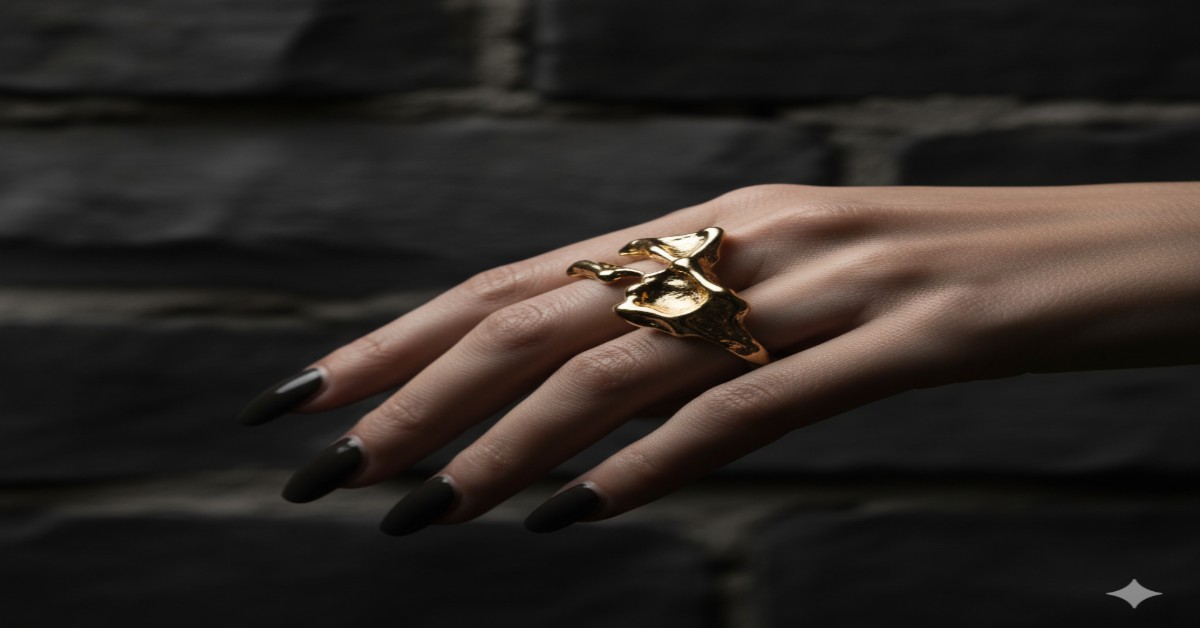
Forget the symmetrical circles and squares. The future of artisan gold is Sculptural. Think of gold that looks like it is melting or flowing like water.
Designers are creating earrings that look like crumpled gold foil or necklaces that mimic the curves of the human body. These pieces don’t follow a set pattern. They are free-form. This is often done using the “Lost Wax Casting” method, where the artist carves a wax model by hand before turning it into 18k or 22k gold.
- Trend Alert: “Molten Gold” ear cuffs are dominating this category. They wrap around the ear like liquid gold.
3. The New Meenakari: Pastel & Monochrome
The Aesthetic: Heritage Technique, Modern Palette
Meenakari (Enamel work) is a centuries-old Indian art, but in 2025, it is getting a Gen-Z makeover. The traditional bright reds and greens are being replaced by sophisticated Pastels—mint greens, powder blues, and soft lilacs.
Even bolder is the Monochrome Meenakari trend. Imagine a heavy 22k gold choker with stark Black or White enamel work. It is dramatic, edgy, and looks fantastic with a black evening gown or a white shirt. It is heritage jewelry for the woman who wears Prada, not just sarees.
4. Nature Reimagined: The “Abstract Flora”
The Aesthetic: Subtlety over Literalism
Flower motifs are timeless, but the artisan version is different. Instead of a clear 5-petal flower, you will see abstract interpretations. A pendant might look like a twisted vine, a dried leaf, or the texture of tree bark.
This trend focuses on the “imperfections” of nature. You might see a gold pendant shaped like a rough pebble or a pair of earrings that mimic the texture of coral. It is nature, but deconstructed.
- Stone Pairing: These designs often use rough, uncut gemstones (like raw emeralds or tourmalines) to match the earthy vibe of the gold.
5. Narrative Jewelry: Your Story in Gold
The Aesthetic: Deeply Personal and Hidden
Artisan jewelry is about connection. The “Narrative” trend involves customizing the gold itself.
We are seeing artisans offering Fingerprint Jewelry (where your loved one’s actual fingerprint is cast into the gold) and Soundwave Rings (where the visual wave of a voice recording—like “I Love You”—is engraved into the band). This turns a simple gold band into a secret message that only you understand.
Important: Understanding “Making Charges” for Artisan Work
If you plan to buy artisan jewelry, you need to adjust your budget expectations.
- Standard Jewelry: Making charges are usually 8% to 14% because machines do most of the work.
- Artisan Jewelry: Making charges can range from 20% to 35%.
Why pay more? You are paying for the Time and Skill of a master craftsman (Karigar). A machine can stamp out 100 rings in an hour. An artisan might take three days to hand-hammer a single cuff. You are paying for exclusivity. When you resell, you get the value of the gold back, but the “Art” value is something you enjoy while you wear it.
Technical Guide: 18k vs. 22k for Artisan Pieces
- 22k (91.6% Pure): Best for the “Raw Texture” and “Hammered” look. The softness of 22k gold allows the artisan to create deep, rich textures that look ancient and royal.
- 18k (75% Pure): Essential for “Sculptural” and “Abstract” pieces that have thin curves or structural elements. 18k is harder and holds complex shapes better without bending.
Conclusion
The year 2025 is inviting us to slow down. It is asking us to stop buying gold just for its weight and start buying it for its beauty.
Artisan Jewellery is not just an accessory; it is a rebellion against the ordinary. Whether you choose a molten gold ear cuff or a pastel Meenakari necklace, you are wearing a piece of human history.
So, the next time you visit your jeweler, don’t ask, “What is the cheapest making charge?” Ask, “What was made by hand?”
I’d love to hear your thoughts! Are you a fan of the “Raw & Imperfect” look, or do you still prefer the shiny, polished finish of traditional gold? Let me know in the comments below!
Frequently Asked Questions (FAQs)
Is artisan gold jewelry a good investment?
From a pure “melt value” perspective, standard gold is better because making charges are lower. However, artisan jewelry is an investment in art. High-quality handcrafted pieces often become “Heirlooms” that can be sold as vintage art pieces later, sometimes fetching prices higher than the gold weight itself if the designer is renowned.
How do I clean raw/textured gold jewelry?
Textured gold is actually easier to maintain than polished gold because it hides scratches! However, dirt can get trapped in the grooves. Use a soft baby toothbrush and warm soapy water to gently scrub the texture. Avoid polishing cloths, as they might smooth out the intentional matte finish.
Can I customize artisan jewelry?
Yes, that is the best part! Since these pieces are made by hand, most artisans are happy to tweak the design for you—whether it’s adding a specific gemstone, changing the texture, or engraving a personal date.
Where can I find authentic artisan gold jewelry in India?
Look for boutique jewelers rather than big chain stores. Brands that use terms like “Handcrafted,” “Slow Fashion,” or “Karigar-made” are good indicators. Jaipur and Kolkata are the hubs for Meenakari and Filigree artisans, while Bangalore and Mumbai are seeing a rise in modern sculptural gold designers.