If you have ever watched a Sanjay Leela Bhansali movie—think Jodhaa Akbar or Padmaavat—you have seen the mesmerizing glint of Kundan Jewelry. It doesn’t sparkle sharply like a modern diamond cut; instead, it glows. It has a soft, soulful luminosity that feels like it’s lit from within by candlelight.
Originating in the royal courts of Rajasthan and Gujarat, Kundan (which literally means “highly refined gold”) is one of the oldest forms of jewelry making in India. While we often obsess over Kundan necklaces, today I want to talk about the unsung hero of the bridal trousseau: Kundan Work Gold Bangles.
A heavy Kundan Kada on your wrist isn’t just an accessory; it is a piece of history. It represents the pinnacle of Indian craftsmanship, known as Jadau.
In this guide, I will take you behind the scenes of how these masterpieces are made, the crucial difference between “Kundan” and “Polki” (yes, they are different!), and how to buy a pair without getting scammed on weight and wax.
Read more: Lightweight Gold Chokers
What Exactly is “Kundan” Work?
Many people mistakenly think “Kundan” refers to the stones. It does not. Kundan refers to the purest form of molten gold (24k) used to set the stones.
The technique is fascinating and labor-intensive:
- The Frame (Ghaat): A skeletal framework is made using 22k gold.
- The Wax (Lac): The hollow frame is filled with natural resin (lac) to give it strength.
- The Setting (Jadai): This is the magic step. The artisan inserts the stone (glass, uncut diamond, or gemstone) into the frame. But instead of using claws or prongs to hold it, they pour layers of “Kundan” (24k pure gold foil) around the edges of the stone.
- The Result: The stone looks like it is floating in a pool of liquid gold. This pure gold foil reflects light into the stone, making it glow.
Kundan vs. Polki: The Million Dollar Confusion
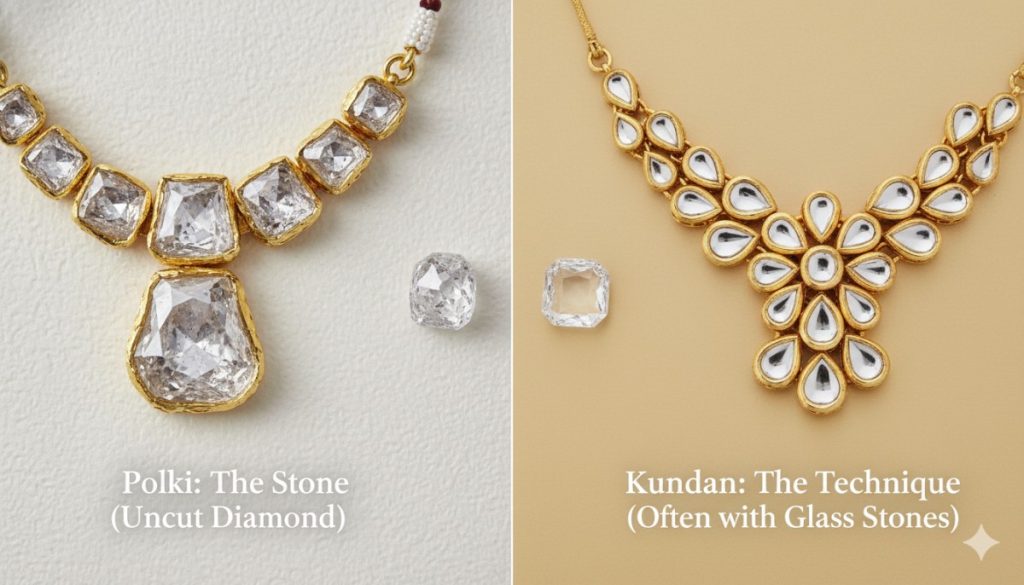
Walk into a Jaipur jeweler, and they will throw these words around. You need to know the difference.
- Polki: This refers to the Stone. Polki is an uncut, raw, natural diamond. It is expensive.
- Kundan: This refers to the Technique. However, in market terms, “Kundan Jewelry” often implies stones that are Glass (not diamonds) set in gold foil.
The Rule of Thumb:
- Polki Jadau: Uncut Diamonds set in Gold Foil. (Very Expensive).
- Kundan Jadau: Glass stones or Semi-precious stones set in Gold Foil. (More Affordable, but still pricey due to gold weight).
For this article, we are focusing on the Kundan Work Gold Bangles—the traditional Rajasthani style using glass or semi-precious stones set in 24k gold foil.
The Anatomy of a Rajasthani Bangle
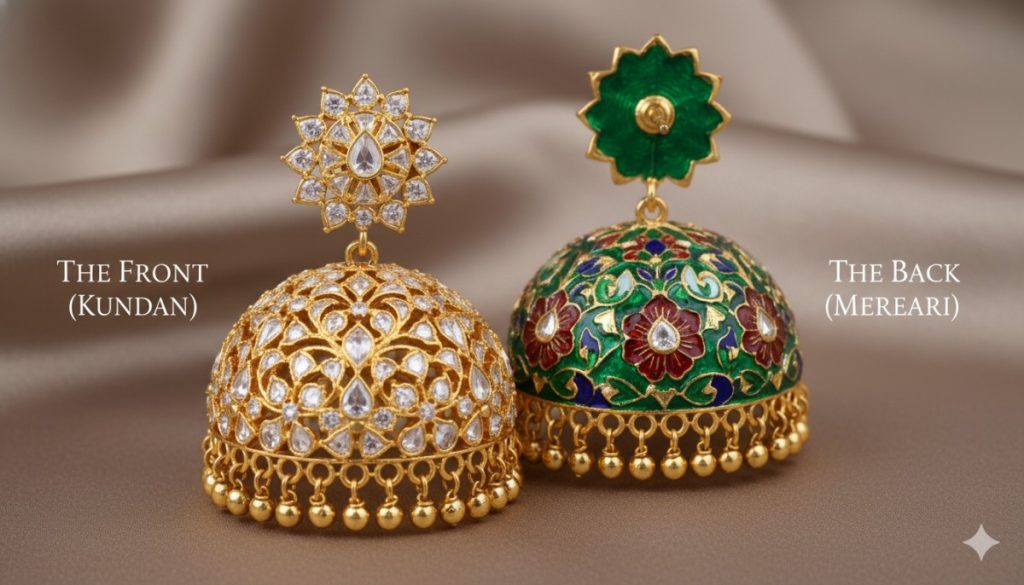
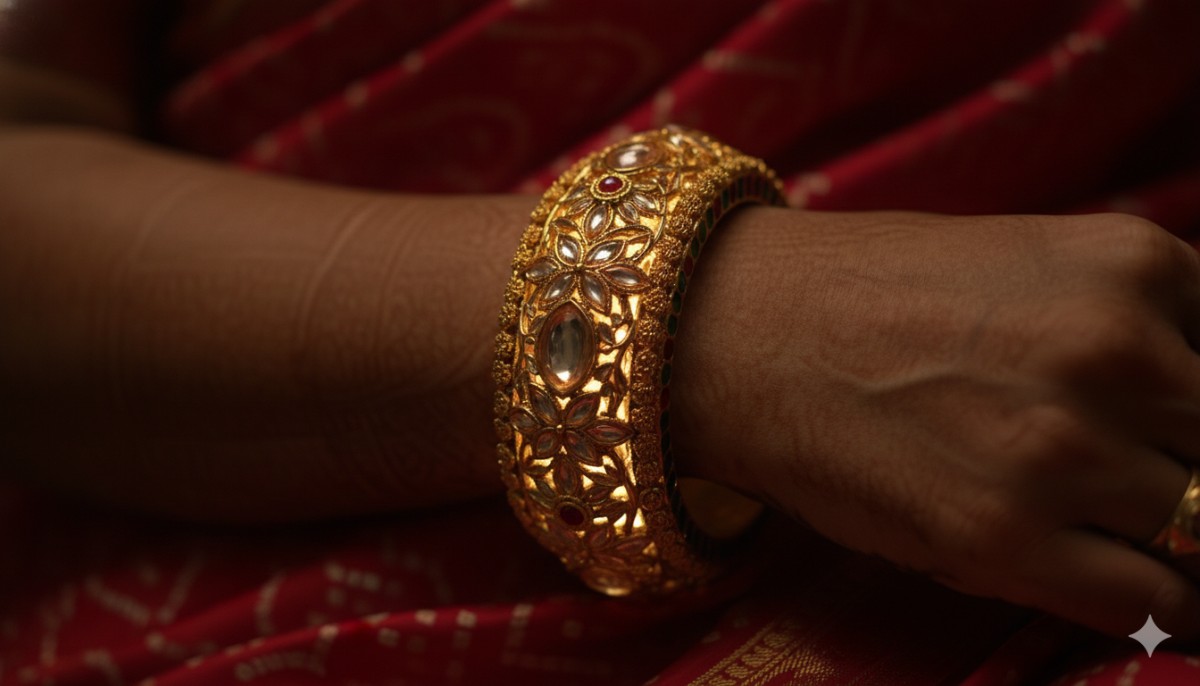
A true Rajasthani Kundan Bangle is a piece of art from every angle. It is rarely just gold on one side.
1. The Front (Kundan)
The outer face of the bangle features the stone setting. The designs are usually floral—lotuses, vines, or geometric Mughal patterns.
2. The Back (Meenakari)
This is the hallmark of Jaipur craftsmanship. The inner side of the bangle (touching your skin) is often enameled with Meenakari work.
- Why? Gold is soft. Constant friction against the skin can wear it down. A layer of hard enamel protects the gold and adds a secret pop of color (usually Red, Green, or White) that only you see.
Top Styles Trending in 2025
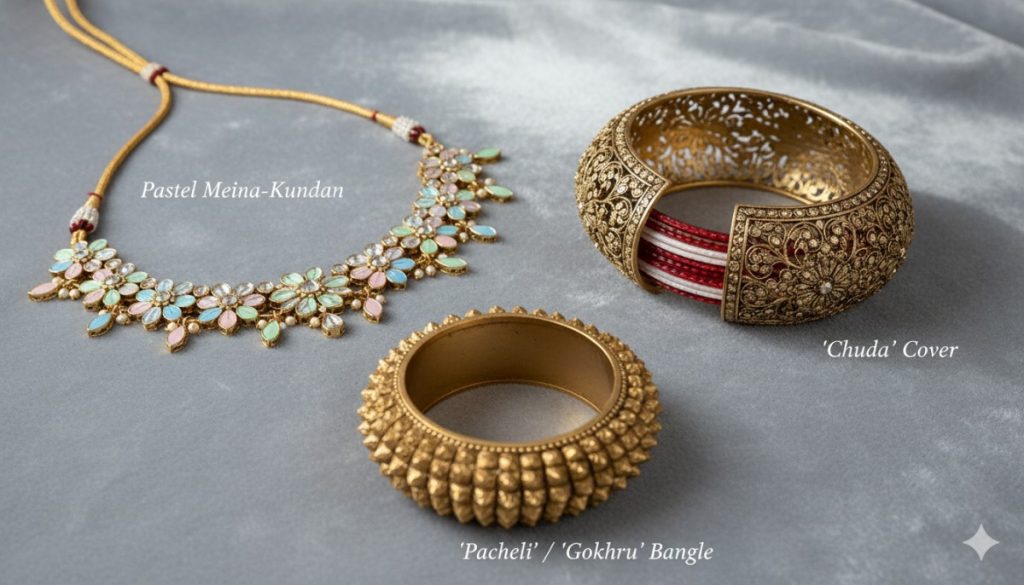
Kundan is timeless, but the settings evolve. Here is what is trending for the modern bride.
1. The “Pacheli” or “Gokhru” Bangle
This is a statement piece. It is a broad bangle with a jagged, flower-like outer edge (teeth).
- The Look: It looks aggressive yet feminine. It is usually worn as the first or last bangle in a stack.
- Best For: Marwari and Rajput brides.
2. The “Chuda” Cover
These are thinner Kundan bangles designed to be worn on either side of the traditional red Chuda (plastic bridal bangles). They elevate the plastic chuda instantly.
3. The Pastel Meena-Kundan
Instead of the traditional clear stones, these bangles use pastel pink or mint green stones set in the Kundan style. This is huge for 2025 pastel-themed weddings.
Styling Guide: Bringing Royalty to 2025
You don’t need a heavy lehenga to rock Kundan.
1. The “Fusion” Stack
Wear one broad Kundan Kada on one wrist. On the same wrist, wear a modern Gold Watch.
- The Vibe: The clash between the intricate, ancient Kundan and the sleek, modern watch is incredibly chic. Perfect for a cocktail party or a formal dinner.
2. The Silk Saree Match
Wearing a Kanjeevaram or Banarasi?
- The Match: Kundan works beautifully with silk because the “glassy” shine of the stones complements the “zari” sheen of the saree.
- Tip: If your saree has Silver Zari, wear Kundan with white stones. If it has Gold Zari, wear Kundan with ruby/emerald colored stones.
Maintenance: The Enemy is Moisture
Kundan jewelry is fragile compared to solid gold.
- No Water: Never, ever soak Kundan bangles in water. Water can seep into the Lac (wax) core. This can cause the wax to expand or rot, loosening the gold foil grip, and stones will fall out.
- The Cotton Wrap: Store each bangle wrapped individually in cotton. Kundan stones can scratch each other.
- Heat Warning: Do not leave them in a hot car or near a heater. High heat can melt the internal wax, deforming the bangle.
Conclusion: An Heirloom, Not Just an Accessory
Buying Kundan Work Gold Bangles is an emotional investment. You are buying a piece of culture that has survived empires.
The soft glow of Kundan has a romanticism that diamonds just can’t match. It whispers of palaces, poetry, and royalty. Yes, the maintenance is higher, and the pricing is tricky, but when you slip that heavy, enameled Kada onto your wrist, you feel like a Queen. And isn’t that exactly how every woman should feel?
I’d love to hear from you: Do you prefer the white glow of Kundan or the colorful sparkle of Gemstones? Let me know in the comments below!
Frequently Asked Questions (FAQs)
Is Kundan jewelry made of real gold?
Yes. The base frame is usually 22k gold, and the foil holding the stones is 24k pure gold. However, the core is filled with lac (natural resin). Always check the hallmark and ask for the Net Gold Weight certificate.
Why is Kundan jewelry so expensive if it uses glass stones?
You are paying for the Labor (Craftsmanship) and the 24k Gold Foil. The process of Jadau (setting the stones) is extremely time-consuming and requires highly skilled artisans. The “Making Charges” for Kundan are often higher than plain gold jewelry.
Can I wear Kundan bangles daily?
No. Kundan is “Occasion Wear.” The gold foil setting is delicate and soft (since it is 24k). Daily friction, water, and soap will damage the setting and dull the shine of the foil. Save them for weddings and festivals.
What is the difference between Jaipur Kundan and Bikaner Kundan?
It is a subtle stylistic difference.
Jaipur Kundan: Often features heavy Meenakari (enamel) work on the reverse side (Red/Green/White).
Bikaner Kundan: Often focuses more on the purity of the gold setting and sometimes uses a lighter, more delicate framework.