
The invitations are in. The dates are set for December and January. You have your silk sarees and lehengas ready. But there is one problem: It is going to be freezing.
Indian weddings are usually synonymous with bare backs and deep necklines. But when the temperature drops to 10°C (or lower if you are attending a destination wedding in Rajasthan or the Hills), fashion often takes a backseat to shivering.
Most women make a fatal style mistake in winter: they hide their jewelry under their shawls or skip it entirely because “it won’t show.
Winter is actually the best season for gold jewelry. Why? because heavy gold looks stunning against rich, textured winter fabrics like velvet, pashmina, and wool. The contrast of cold weather and warm metal is sophisticated, regal, and very “old money.”
In this guide, I will teach you the art of “Over-Layering”—how to style your gold necklaces over your high-neck sweaters, how to pin brooches on shawls, and how to look like a winter goddess without catching a cold.
Read more: Lightweight Gold Chokers
The Golden Rule: Fabric First, Metal Second
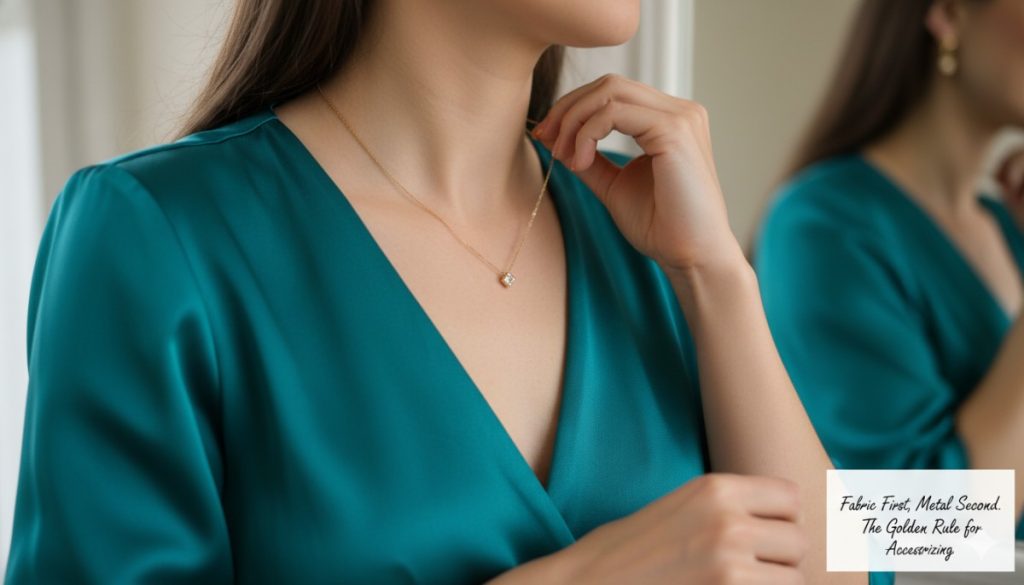
Before you pick the necklace, look at the fabric. Winter fabrics are thick.
- The Rule: Delicate, thin chains will disappear or get snagged in wool. You need Bold, Chunky Gold.
- Go For: Broad chokers, thick antique kadas, and statement cocktail rings. The jewelry needs to be substantial enough to stand out against the visual weight of a sweater or shawl.
Style 1: The “High-Neck” Hack (Sweaters & Blouses)
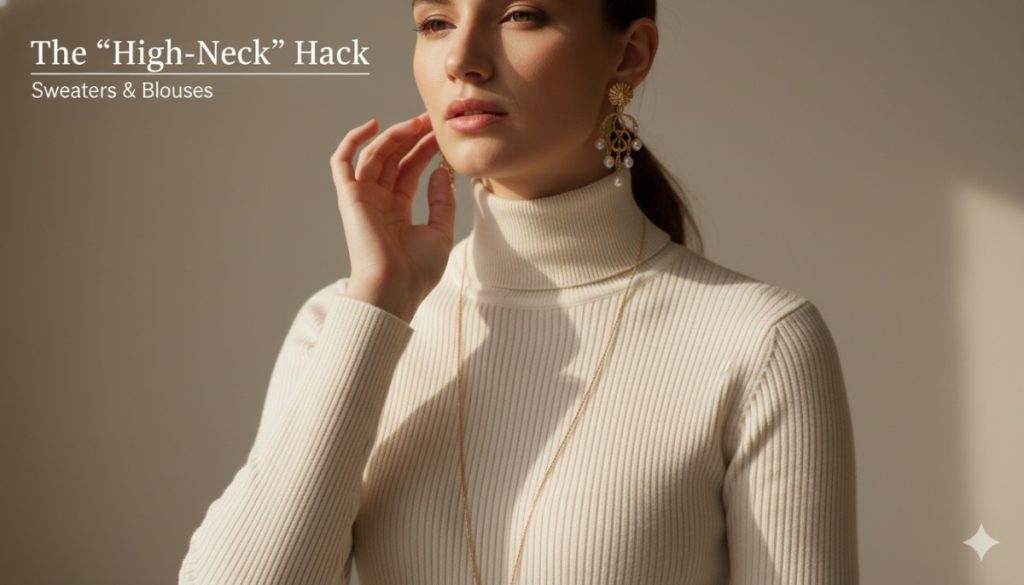
If you are wearing a high-neck velvet blouse or a chic turtleneck sweater with a saree (very trendy right now!), you have two styling options.
Option A: The Collar Choker
Don’t wear the necklace on your skin inside the sweater. Wear it ON the fabric.
- How: Choose a stiff, flat gold choker (like a Guluband or a rigid Hasli). Fasten it tightly over the high neck of your blouse/sweater.
- Why it works: It creates the illusion that the gold embroidery is part of the garment. It looks neat and incredibly high-fashion.
Option B: The Long Rani Haar
If a choker feels too constricting over a high neck, go the opposite way.
- How: Wear a super-long, multi-layered Rani Haar or a Satlada (7-string pearl and gold necklace).
- Why it works: The V-shape of the long necklace breaks the monotony of the solid high-neck sweater, elongating your torso.
Style 2: The Shawl Statement (Pashminas & Velvets)
The shawl is your biggest canvas. Don’t just drape it; decorate it.
The “Brooch” Comeback
Winter is the only time you can truly rock a brooch.
- The Style: Take a heavy gold pendant (or even a small Maang Tikka with a pin attached) and pin your shawl at the shoulder.
- The Function: It keeps the shawl in place so you can hold your wine glass, and it adds a focal point of gold to your shoulder.
The Wrist Stack
When you are wrapped in a shawl, your neck might be hidden, but your hands are visible.
- The Focus: Shift the attention to your wrists. Wear oversized gold cuffs (Kadas) over the sleeves of your sweater.
- The Look: “Cuff over Sleeve” is a major runway trend. It looks structured and powerful.
Style 3: Velvet & Gold (The Royal Match)
Velvet is the fabric of winter weddings.
- The Pairing: Velvet absorbs light (it is matte). Gold reflects light. This contrast is magic.
- The Stone: Pair your gold with Polki (Uncut Diamonds) or Pearls when wearing velvet. The shine of Polki against deep maroon or emerald velvet is unmatched.
Technical Guide: Protecting Jewelry from Wool
Winter fabrics can be dangerous for delicate jewelry.
- The Snag Factor: Wool and Cashmere catch onto everything.
- Avoid: Necklaces with “prong settings” (claws holding the stone). These claws will rip your expensive Pashmina.
- Choose: “Bezel settings” (smooth metal rim around the stone) or “Kundala Velai” (closed setting). Smooth edges are your friend.
- The Temperature Shock: Gold gets cold. If you wear a large metal plate directly on your skin in 5°C weather, you will feel the chill.
- Tip: Back your heavy necklaces with velvet or felt patches (ask your jeweler to add this). It acts as insulation between the cold metal and your warm skin.
Top Winter Jewelry Trends for 2025

- The “Hasli” (Torque Necklace): A rigid, solid gold ring around the neck. It sits beautifully over turtlenecks.
- Oversized Studs: Since scarves can get tangled in dangling earrings, huge oversized studs or “tops” are practical and chic.
- Thumb Rings: Since you might be holding a warm cup of coffee or clutching your shawl, a heavy gold thumb ring is a great way to add detail to your hand.
Conclusion: Warmth is Luxury
Don’t let the weather kill your style. A winter wedding is an opportunity to experiment with looks you can’t pull off in summer.
Wearing a gold choker over a black turtleneck? Iconic. Pinning a vintage gold brooch on a Kashmiri shawl? Regal.
The key is confidence. Treat your winter layers as a base, and let your gold be the armor. Stay warm, stay golden.
Tell me: Would you dare to wear a choker over a turtleneck? Let me know in the comments below!
Frequently Asked Questions (FAQs)
Can I wear silver jewelry with winter woolens?
You can, but Gold is preferred. Visually, Gold is a “warm” color (yellow/orange) which complements the cozy vibe of wool and velvet. Silver is a “cool” metal and can look a bit stark or icy in winter.
How do I stop my earrings from getting caught in my shawl?
The Fix: Avoid “Chandelier” earrings or Jhumkas with many small hanging bells.
The Swap: Switch to “Studs” or smooth “Hoops/Balus”. If you must wear danglers, put “stopper backs” on the hooks so they don’t get pulled out by the scarf.
Will wearing jewelry over a sweater damage the sweater?
It can if the jewelry is rough. Run your hand over the back of the necklace. If it feels scratchy, do not wear it over Cashmere or Silk. It will cause pilling (bobbling). Stick to smooth, antique-finish gold for delicate fabrics.
What is the best jewelry for a velvet lehenga?
Polki (Uncut Diamond) + Gold. The rich sheen of velvet needs the high sparkle of diamonds to balance it. Antique gold also looks great, but Polki adds that “Winter Wonderland” glamour.