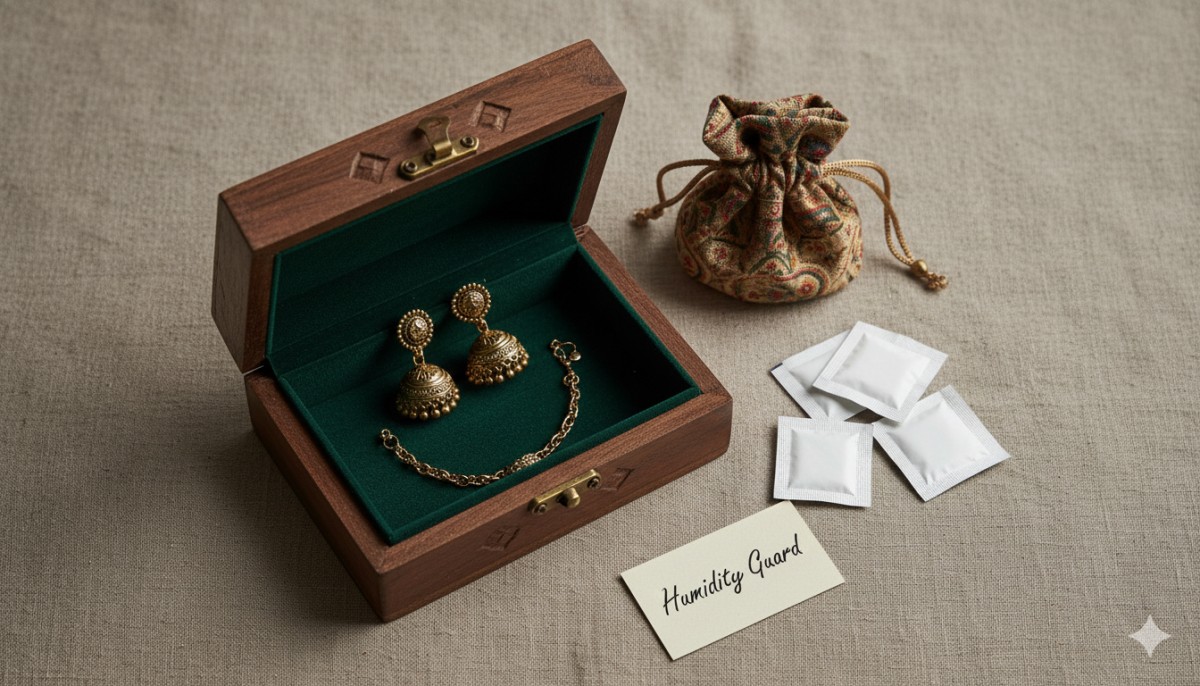
There is something undeniably romantic about the Indian monsoon. The smell of wet earth, the sound of rain against the window, and a hot cup of chai. But if you are a jewelry lover, this season brings a silent nightmare: Fungus and Tarnish.
We often assume gold is indestructible. And while pure gold (24k) doesn’t react with water, your beloved 22k necklaces and diamond rings are not pure. They are alloys mixed with copper, silver, and zinc. When the humidity in the air rises above 80%, these metals react.
The result? That stunning heirloom necklace starts looking dull. Your velvet jewelry boxes develop white, fuzzy spots (fungus). And your precious pearls might even start peeling.
As a jewelry editor, I have seen too many expensive collections ruined simply because they were stored in the wrong box during July and August. In this guide, I will walk you through the science of humidity, the “Storage Swap” you need to do immediately, and the exact cleaning routine to keep your gold glowing through the rain.
Read more: Matte Finish Gold Jewellery
The Science: Why Humidity Hates Your Jewellery
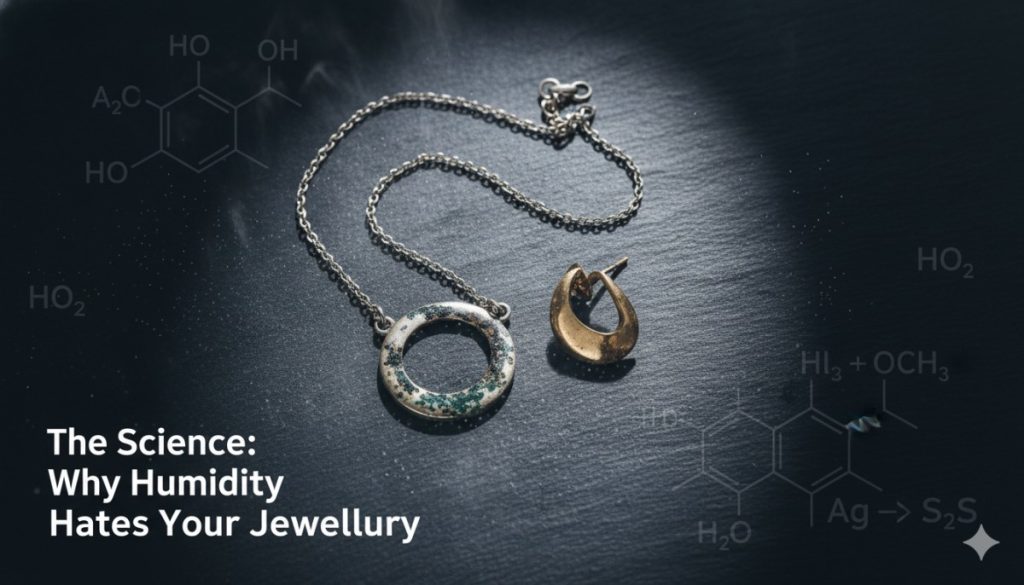
To protect your assets, you need to know the enemy.
- Oxidation: The copper in your 22k gold reacts with oxygen and moisture. This creates a dark, reddish/black layer on the surface called “tarnish.”
- Fungus: This is the scary part. Fungus doesn’t eat gold; it eats organic matter. If you put a necklace away with even a tiny bit of sweat, perfume, or dead skin on it, the humidity turns that residue into a breeding ground for mold.
- The “Box” Problem: Traditional Indian jewelry boxes are lined with velvet or silk. These fabrics absorb moisture from the air like a sponge. If you store gold in a damp velvet box, you are essentially wrapping your jewelry in a wet towel for three months.
Step 1: The “Great Storage Swap”
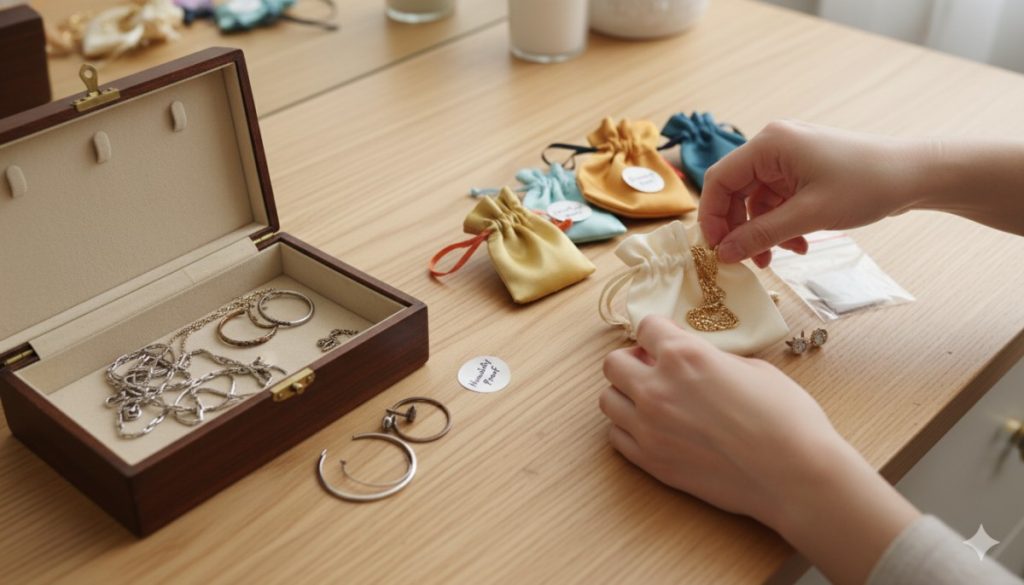
This is the most critical advice I can give you for the monsoon.Ditch the Velvet. Embrace the Plastic.
During the rainy season, those fancy velvet boxes are your enemy. Here is your new storage protocol:
- Ziploc Bags: Move every individual gold chain, ring, and earring into its own small Ziploc bag. Squeeze all the air out before sealing it. This creates a vacuum that keeps moisture out.
- Airtight Tupperware: Take all those Ziploc bags and place them inside a hard plastic, airtight container (like a Lock & Lock box).
- Silica Gel: This is your secret weapon. You know those little white packets that come with new shoes or handbags? Do not throw them away. Throw 3-4 silica gel packets into your airtight jewelry box. They will absorb any residual moisture inside.
- Pro Tip: If you can’t find silica gel, wrap a teaspoon of raw rice in a cotton cloth and place it in the box. Rice is a natural desiccant.
Step 2: The “Dry” Rule (Wearing Protocol)
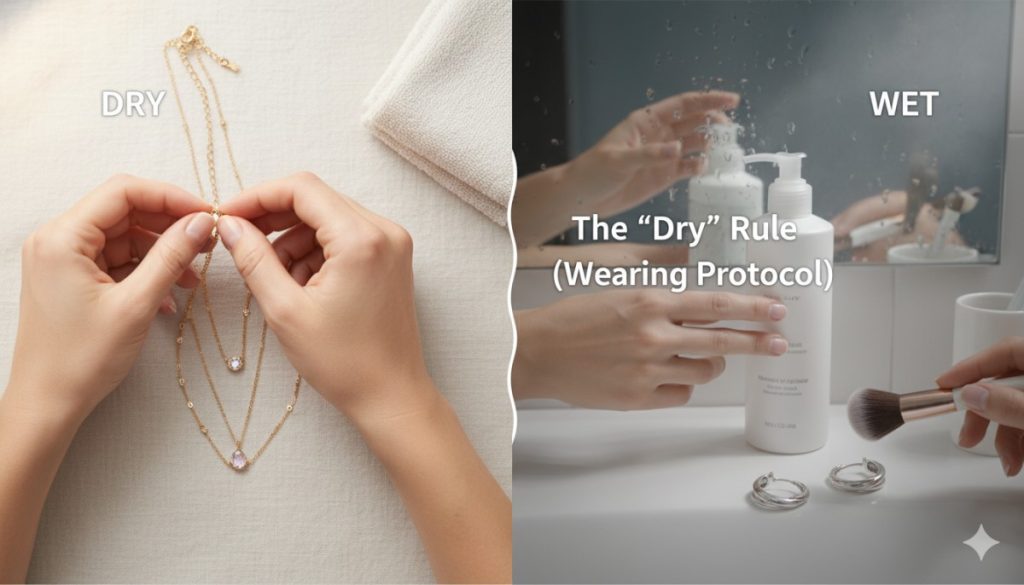
You can wear your gold in the monsoon, but you have to be disciplined.
- Perfume First, Gold Last: Perfumes contain alcohol and oils that stick to gold. In humid weather, this mixture becomes sticky and attracts dust. Always spray perfume, wait 5 minutes for it to dry, and then wear your necklace.
- The Post-Wear Wipe: When you take off your jewelry, do not put it straight into the box.
- Use a Microfiber Cloth (like the one for your spectacles) to vigorously wipe the piece. You want to remove every trace of sweat.
- The Hair Dryer Hack: Before storing heavy bridal necklaces (which have many crevices), blast them with a hair dryer on the COOL setting for 30 seconds. This ensures the nooks and crannies are bone dry.
Step 3: Cleaning Routine for Monsoon
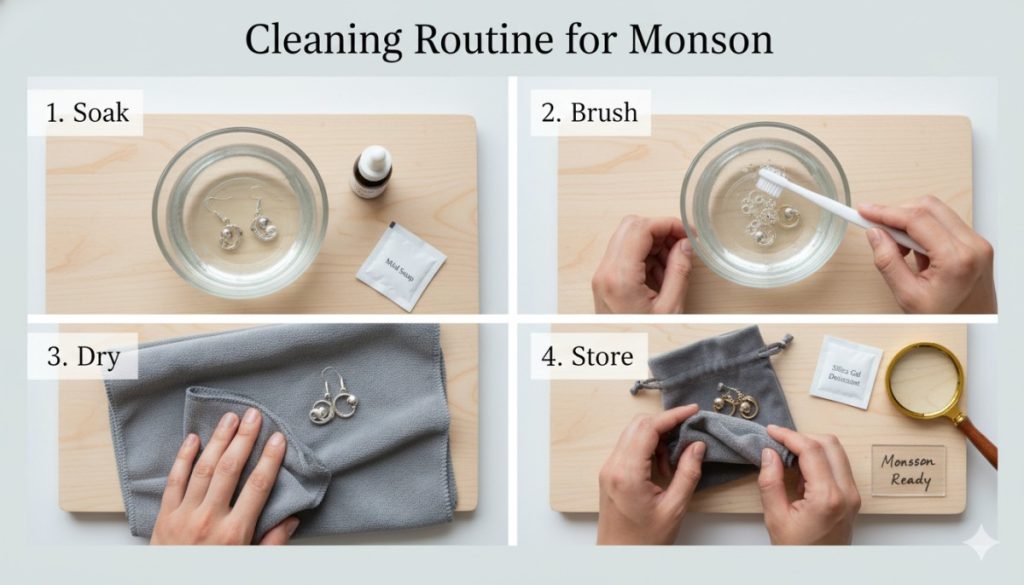
If you notice your gold looking dull or spotting a bit of tarnish, don’t panic. You don’t need a jeweler. You need your kitchen.
The “Warm Bath” Method:
- Mix: Take a bowl of lukewarm water. Add 2 drops of mild liquid dish soap (like Pril or Vim Gel). Avoid harsh detergents.
- Soak: submerged your gold jewelry for 15 minutes. This loosens the grime.
- Brush: Use a baby toothbrush (super soft bristles) to gently scrub the intricate filigree work or the back of the stones.
- Rinse: Wash under running water.
- Dry: This is the most important step. Pat it dry with a soft towel, and then air-dry it on a paper towel for at least an hour before putting it back in the Ziploc.
Special Care for Gemstones (The Danger Zone)
Gold is tough, but gemstones are sensitive.
- Pearls & Coral: These are organic gems. They are porous (they have tiny holes).
- Never store pearls in plastic for too long, as they need to breathe. However, in high humidity, keep them in a Cotton Pouch (Potli) inside a wooden box.
- Never soak pearls in water. It weakens the silk thread holding them together, and the pearls can rot from the inside. Just wipe them with a damp cloth.
- Kundan/Polki: These stones are set using “Lac” (natural resin/wax). High humidity can sometimes soften the lac or cause the silver foil behind the diamond to turn black. Keep these strictly in airtight containers with silica gel.
What to Do if You See Fungus?
If you open your locker and see green or white fuzz on your jewelry box:
- Isolate: Remove the jewelry immediately. Throw the velvet box away—it is infected and cannot be saved.
- Clean: If the fungus is on the jewelry, use the “Warm Bath” method mentioned above.
- Sanitize: For plain gold (no stones), you can dip it in a mild alcohol solution (sanitizer) for a few seconds to kill spores, then rinse thoroughly. Do not do this for stone-studded jewelry.
Conclusion: Prevention is Cheaper than Repair
Monsoon jewelry care isn’t about expensive products; it’s about controlling the environment. By simply moving your collection from velvet boxes to Ziploc bags and using silica gel, you can save thousands of rupees in polishing and repair costs.
So, this weekend, take an hour, make yourself a coffee, and organize your locker. Your gold will thank you for it.
Tell me: Do you use the “Rice Hack” or Silica Gel to keep your locker dry? Let me know in the comments below!
Frequently Asked Questions (FAQs)
Can I use toothpaste to clean tarnished gold in monsoon?
Avoid it. Toothpaste is abrasive. It contains tiny particles that act like sandpaper. While it removes tarnish, it also creates microscopic scratches on the gold surface, making it lose its shine faster in the future. Stick to mild soap and water.
Why did my silver-alloyed gold turn black?
If your gold is lower purity (like 14k or 18k), it contains more silver or copper. Silver reacts instantly with the sulfur in the humid air to create black tarnish. This is normal. A quick polish at the jeweler or a dip in gold-cleaning solution will fix it.
Is it safe to wear gold in the rain?
Pure rainwater is fine, but acid rain or city rain mixed with pollution can be corrosive. If you get drenched while wearing jewelry, rinse it with clean tap water immediately when you get home and dry it thoroughly.
How often should I change the Silica Gel packets?
Silica gel absorbs moisture until it is saturated. In the heavy Indian monsoon, change the packets once a month. If you have the “color-changing” silica beads (blue to pink), change them as soon as they turn pink.