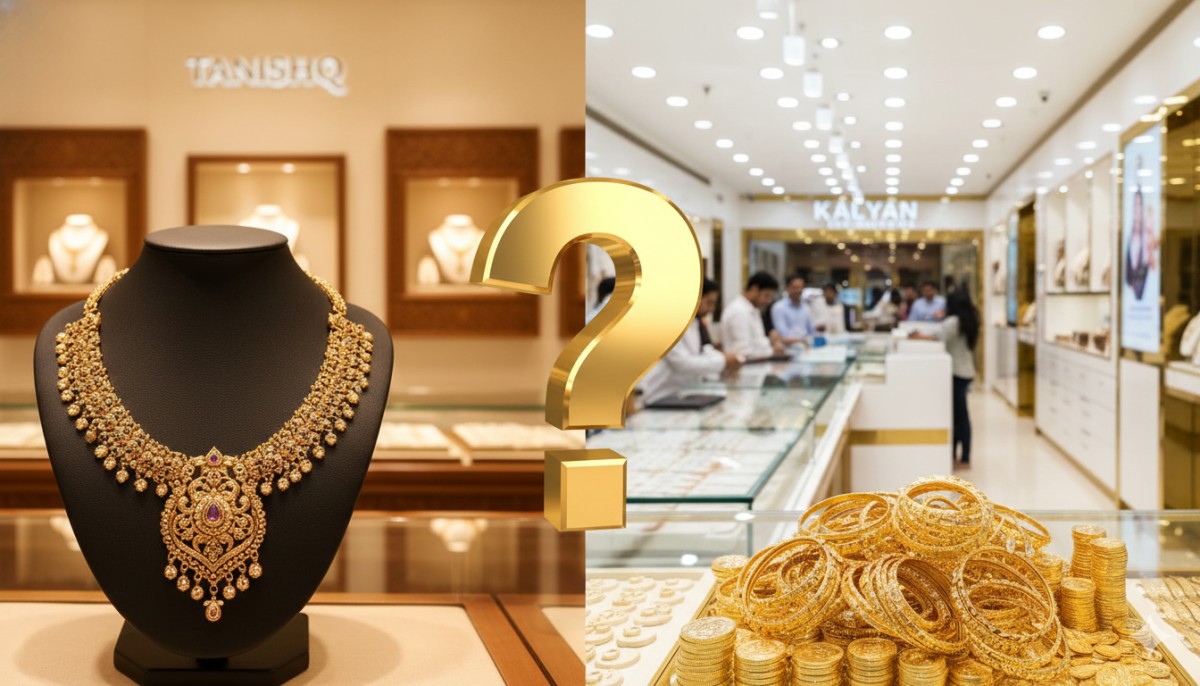
It is the classic Indian family debate. Your dad swears by the “Tata Trust” of Tanishq. Your mom loves the designs and “celebrity offers” of Kalyan Jewellers. But when you are standing at the counter with your credit card in hand, only one thing matters: The Final Bill.
We all know gold prices are standard (mostly), but the “Making Charges” (or Majdoori) is where the game is played. This hidden cost can inflate your bill by anywhere from 8% to 30%.
As a jewelry editor who has analyzed bills from both brands for over a decade, I am here to settle the score. In the battle of Tanishq vs. Kalyan Jewellers, who actually offers the lower making charges in 2025? Is the premium price of Tanishq worth it, or is Kalyan the king of savings?
Let’s decode the math, the marketing, and the hidden costs.
Read more: Half Heart Split Designs
The Basics: What Are You Paying For?
Before we pick a winner, you need to understand what “Making Charge” (MC) actually is.
It is the labor cost of turning a raw gold bar into a necklace.
- Machine-made chains: Low effort = Low MC (8% – 12%).
- Intricate Temple Jewellery: High effort = High MC (18% – 25%+).
Both Tanishq and Kalyan use this fee to make their profit. But their strategies are totally different.
Contender 1: Tanishq (The Premium Player)
Tanishq is the “Apple” of the Indian gold market. When you walk into a Tanishq showroom, you are paying for the Tata name, the standardized purity, and the “Karatmeter” guarantee.
The Pricing Strategy
Tanishq is transparent, but they are rarely the “cheapest.”
- Standard MC: Tanishq’s making charges typically start at 8% for simple gold coins or plain bands and can go up to 28% or more for antique, studded, or bridal jewelry.
- The “Fixed” Policy: Unlike local jewelers, Tanishq usually has a fixed-price policy. You cannot haggle with the sales staff. The price on the tag is the price you pay.
Why Is It Higher?
- Design Exclusivity: Tanishq invests heavily in designers. Their “Rivaah” or “Alekhya” collections are unique. You are paying for “Art,” not just gold.
- Zero Malpractice: Tanishq famously revolutionized the market by banning the practice of counting stone weight as gold weight. You pay for gold and stones separately. This transparency commands a premium.
Pro Tip:
The Golden Harvest Scheme.
If you love Tanishq but hate the charges, join their monthly saving scheme (Golden Harvest). At the end of 10 months, Tanishq pays up to 75% of the making charges on your first purchase. This levels the playing field significantly!
Contender 2: Kalyan Jewellers (The Value Warrior)
Kalyan Jewellers, with its massive celebrity endorsements (hello, Amitabh Bachchan!), positions itself as a mass-market brand. They target the average Indian family who wants “more gold for less money.”
The Pricing Strategy
Kalyan is aggressive. They often run campaigns advertising “0% Making Charges” or heavy discounts on wastage (VA – Value Addition).
- Standard MC: Kalyan’s charges are generally lower on plain gold. You can find daily wear jewelry with making charges between 6% to 15%.
- The “Wastage” Concept: In their South Indian branches, they often use the term “VA” (Value Addition/Wastage). They are known to be more flexible with offers during festivals like Akshaya Tritiya or Diwali.
Why Is It Lower?
- Volume Game: Kalyan operates on high volume. They want to sell more kilos of gold, so they are willing to take a smaller margin on the labor.
- Design repetition: While they have great designs (like the Muhurat collection), you will often find similar, mass-market designs across their stores, which lowers the manufacturing cost.
The Showdown: Direct Comparison
Let’s look at typical scenarios for 2025 shoppers.
| Jewelry Type | Tanishq | Kalyan Jewellers | Winner |
| Gold Coins | Higher premiums | Lower premiums | Kalyan |
| Plain Gold Chains | Approx 10-14% | Approx 6-12% | Kalyan |
| Antique/Temple (Heavy) | 20-25% (High Finish) | 15-22% (Mass Finish) | Tie (Quality vs Price) |
| Diamond Jewelry | Very High MC | Competitive / Lower | Kalyan |
| Resale/Exchange | Best Exchange Value | Good Exchange Value | Tanishq |
The Hidden “Gotchas”: It’s Not Just Making Charges
This is the secret that salesmen won’t tell you. You cannot judge the bill only by the Making Charge percentage. You have to look at the Board Rate.
The Gold Rate Difference
- Tanishq: Usually has a slightly higher “Gold Rate per Gram” than the general market. They justify this by claiming 100% purity assurance.
- Kalyan: Usually keeps their gold rate closer to the local market rate to attract walk-ins.
The Math:
- Scenario A: Tanishq charges ₹7,200/gram + 15% MC.
- Scenario B: Kalyan charges ₹7,150/gram + 14% MC.
- Result: You save doubly with Kalyan (lower rate AND lower charge).
Why You Might Still Choose Tanishq
If Kalyan is cheaper, why does anyone go to Tanishq?Resale Value and Trust.
When you try to exchange an old gold chain at Tanishq, their melting and purity testing policies are considered the “Gold Standard.” They offer the best exchange value for their own products. If you view your jewelry as an investment to be liquidated later, paying the extra 2-3% making charge at Tanishq now might save you 10% in deductions later.
How to Lower Your Bill at Both Stores
Regardless of which showroom you pick, here is how to hack the system in 2025.
- Wait for Birthdays: Both brands send “Birthday Discount” coupons if you are a registered member. This usually gives you flat 10-20% off on making charges.
- Negotiate (Yes, really!): At Kalyan, especially for high-value purchases (wedding sets), the manager has the discretion to lower the making charges. At Tanishq, it is harder, but they might waive off charges on a gold coin if you buy a heavy necklace.
- Buy During “Off-Season”: Avoid buying 2 days before Diwali. Buy in July or August. Showrooms are empty, and sales staff are desperate to meet targets. They will cut deals on the making charges.
Conclusion: The Final Verdict
So, who wins in Tanishq vs. Kalyan Jewellers?
- Choose Kalyan Jewellers IF: You are price-sensitive. You want a simple chain, bangles, or a gold coin and want to pay the absolute lowest price per gram. You are comfortable negotiating.
- Choose Tanishq IF: You want unique, artistic designs that stand out. You want complete peace of mind regarding purity and future exchange value. You don’t mind paying a “premium” for the Tata trust.
My Advice: For your daily wear items (chains/bangles), go to Kalyan and save the money. For your “Showstopper” wedding necklace, go to Tanishq for the finish and design.
Tell me: Are you Team Tata Trust or Team Kalyan Savings? Share your recent shopping experience in the comments!
Frequently Asked Questions (FAQs)
Can I bargain on making charges at Tanishq?
Generally, no. Tanishq operates on a fixed-price model. However, during special sale periods or if you have a “Golden Harvest” account, you get predetermined discounts. You cannot haggle like you can at a local jeweler.
Does Kalyan Jewellers really offer 0% making charges?
“0% Making Charge” is a marketing term. Usually, this offer applies only to specific, limited collections (often old stock or very simple designs) or during specific festival offers. Always read the fine print; sometimes they increase the diamond price to offset the gold making charge.
Which brand gives better exchange value for old gold?
Tanishq is widely considered to have the most transparent exchange policy. They melt the gold in front of you (or use the Karatmeter) and give you value for the pure gold content. They often have offers where you get 100% exchange value on old gold above 22k.
Why is Tanishq’s gold rate higher than Kalyan’s?
Tanishq charges a premium for their brand value and rigorous quality control checks. They claim their gold is “22k pure” (91.6%) without the tolerance limits that other jewelers might use to save money.