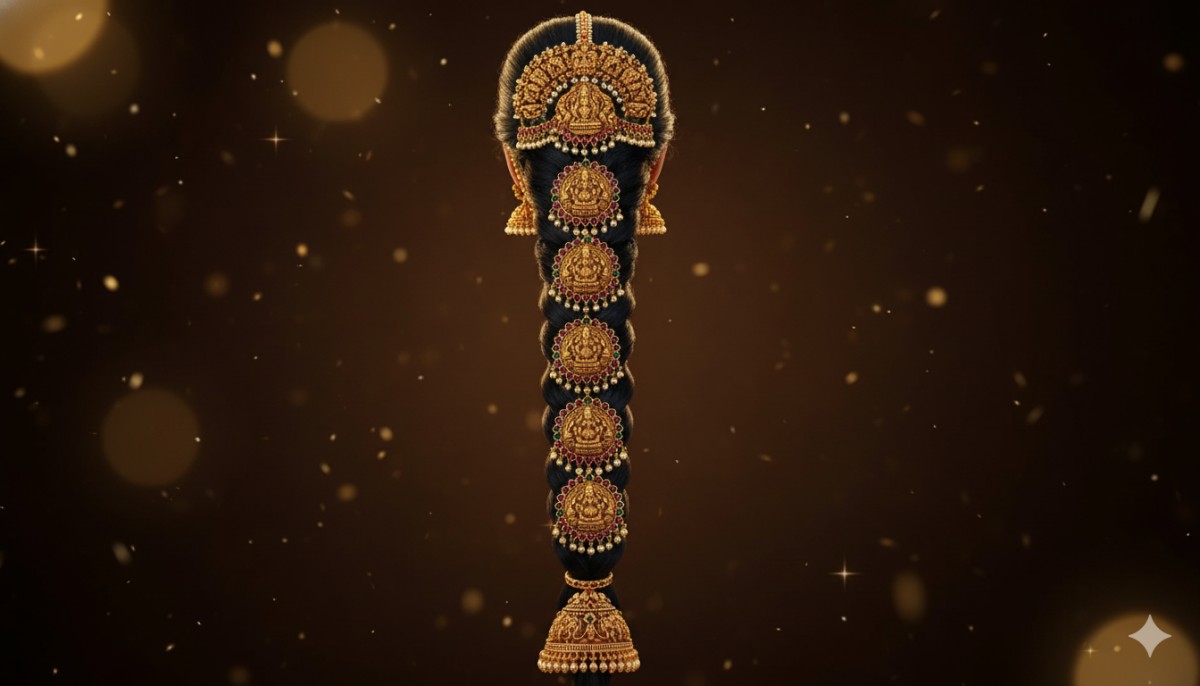
The bridal ensemble in South India is a magnificent display of gold, silk, and spiritual symbolism. While the elaborate Haram necklaces and Vaddanam waist belts frame the body, the long braid is completed by the spectacular Jada Billai (or Jadai Billai), the ultimate traditional gold hair accessory. The Jada Billai is not a single piece, but a continuous, segmented series of ornate gold plates and motifs that are woven down the entire length of the bridal braid, transforming the hair into a dazzling cascade of gold and gems.
This accessory is a powerful symbol of beauty, femininity, and auspiciousness, directly linking the bride to the adornment of the Goddesses. This comprehensive guide explores the rich cultural heritage, the specific anatomy of the Jada Billai set, the intricate craftsmanship, and the trending designs for this essential piece of South Indian bridal gold.
Read more: Fancy Gold Ring Designs for Girls
1. The Cultural Canvas: Temple Tradition and Sacred Adornment
The deep significance of the Jada Billai lies in its connection to classical tradition and spiritual reverence.
A. Adornment of the Goddess
The Jada Billai designs often feature deity motifs, lotuses, and elaborate carvings, directly mimicking the elaborate jewelry used to adorn temple idols. By wearing the Jada Billai, the bride embodies the visual splendor and auspiciousness of the Goddess (Devi) for the duration of the ceremony.
B. Classical Dance Heritage
The design is strongly influenced by classical South Indian dance forms like Bharatanatyam and Kuchipudi, where the long, ornamented braid is mandatory. The rigorous, segmented structure ensures the gold stays secure despite movement.
C. Symbol of Length and Prosperity
The long, flowing braid symbolizes health, fertility, and a long marital life (Dirgha Sumangali Bhava). The Jada Billai enhances this symbolism by covering the length of the hair in gold, signifying unending prosperity and blessings.
2. The Anatomy of the Jada Billai: A Segmented Masterpiece
The traditional Jada Billai is a set of distinct, interlocking components that decorate the braid from the crown to the tip.
A. The Crown Jewels (Surya and Chandra)
The set begins at the crown of the head with two crucial pieces: the Sun (Surya) and Moon (Chandra) motifs. These symbolize the divine cycle, balance, and the source of light and life, seeking blessings from the celestial bodies.
B. The Segmented Plates (The Billais)
The main body consists of multiple (often 5 to 10) individual, rigid gold discs or stylized ornamental pieces—the Billais. These pieces feature the primary designs (peacock, floral, elephant) and are designed to be hooked onto the braid at regular intervals. Their rigid, segmented nature ensures the heavy gold does not drag or deform the braid.
C. The Kunjam (The Tassel End)
The set culminates at the very tip of the braid with the Kunjam. This is a large, ornate final gold piece, often featuring tassels made of pearls, colored beads (Kempu), or tiny gold bells. The Kunjam secures the end of the braid and provides movement and volume.
3. Craftsmanship and Purity: The Gold Foundation
The complexity of the Jada Billai requires high-purity gold and specialized techniques to achieve the necessary volume and detail.
A. 22K Purity and Nakshi Work
The pieces are traditionally crafted in 22K gold (916 Hallmarked) for its rich yellow color and high investment value. The intricate Nakshi work (hand-carving) and Repoussé (hammering from the back) techniques are used to create the 3D relief of the deities, peacocks, and floral patterns.
B. Kemp Stones and Meenakari
The gold is rarely left plain. The segments are often set with vibrant Kemp stones (traditional rubies and emeralds/glass) to introduce color. In fusion designs, Meenakari (enamelling) is used on the reverse side or within the gold motifs to enhance the color contrast.
C. Structural Integrity
Because the gold pieces are designed to be worn vertically, their hooks and loops must be meticulously engineered to interlock without slipping. The small gold pieces are made to be hollow or semi-hollow to reduce the total weight, ensuring the long braid remains manageable.
4. Top Jada Billai Design Trends 2025
While traditional motifs remain paramount, modern Jada Billais offer variations in finish and weight management.
1. The Temple Gold Antique Jada Billai
- Design: Features an antique or matte finish that deliberately dulls the gold’s shine, emphasizing the intricate Nakshi carving of Lakshmi, Ganesha, or peacock motifs on the Billai discs.
- Look: Authentic, heavy, and perfect for pairing with matte-finish Temple Gold necklaces.
2. The Peacock (Mayur) Theme Jada Billai
- Design: The most popular choice. Every segment features an embossed or carved peacock motif, often using blue/green enamel or Kemp stones to represent the plumage.
- Symbolism: Maximum elegance, beauty, and auspiciousness.
3. Lightweight Floral Cutwork
- Design: Utilizes sheet metal cutwork (Jaali) to create large, ornamental floral discs that are light in weight. The empty space reduces the gold consumption significantly.
- Aesthetic: High volume on a lower budget, preferred for lighter festive wear.
4. Kundan Fusion Jada Billai
- Design: Integrates Kundan (glass foil work) or AD stones into the gold discs, pairing the Southern gold tradition with the sparkle of North Indian styles.
- Look: A contemporary fusion that maximizes brilliance and visibility.
5. Styling Guide: Securing the Golden Cascade
Wearing the Jada Billai correctly is a meticulous process that begins with the hair preparation.
A. Hair Preparation
The braid must be thick and stable. Traditional brides often use hair extensions or thickening aids. The hair is often oiled and adorned with fresh flowers (Gajra) woven into the braid before the gold pieces are attached.
B. Segmented Attachment
The gold Billai segments are attached by small, sharp hooks or pins that are carefully woven into the braid itself. The individual pieces are added sequentially, starting with the Sun/Moon at the top, to ensure even weight distribution and a flawless vertical line.
C. Kunjam Security
The heavy final piece, the Kunjam, must be secured not only by the braid but often by an additional pin or thread anchored deep into the hair to prevent it from swinging or pulling too heavily.
Conclusion
The Traditional “Jada Billai” Designs represent the ultimate in cultural opulence and hair artistry. By investing in this segmented gold accessory, the bride secures not just a piece of jewelry, but a magnificent heirloom that transforms her traditional braid into a sacred, flowing cascade of gold, symbolizing every blessing for a long and prosperous married life.
Frequently Asked Questions (FAQs)
What is the Sun and Moon motif on the Jada Billai called?
The Sun motif is called the Surya, and the Moon motif is called the Chandra. They are the top pieces of the Jada Billai set, symbolizing balance and blessings from the celestial bodies.
Is the Jada Billai worn only by brides?
While the full, heavy set is primarily worn by brides, a smaller, lighter version or just the top Nethichutti component is worn by classical dancers or women attending grand festive occasions and family functions.
How do you secure the heavy gold pieces to the hair?
The Billai pieces are secured using small, sharp gold hooks or pins attached to the back of each segment. These hooks are carefully woven through the hair and anchored tightly into the braid’s structure, often with the help of a stylist.
Which stones are traditionally used in Jada Billai designs?
Kemp stones (traditional cabochon-cut rubies and emeralds) are the traditional choice. They provide the necessary vibrant red and green colors associated with temple gold and auspiciousness.
Is it possible to rent a Jada Billai set?
Yes, due to the high weight and specialized nature of the Jada Billai, high-quality rental options (often gold-plated or semi-precious replicas) are widely available for brides and dancers to reduce the substantial upfront investment cost.