The peacock, or Mayur, is the national bird of India and one of the most ancient, beloved, and powerful motifs in Indian jewelry. Revered for its breathtaking beauty, elaborate plumage, and association with royalty and divine grace (often linked to Lord Krishna), the Peacock Design Gold Set is the ultimate choice for a bride seeking a look that is grand, auspicious, and deeply cultural.
This jewelry collection transforms the fluid elegance of the peacock into rigid gold masterpieces, utilizing techniques like Nakshi (deep carving), Kundan, and vibrant Meenakari (enamelling) to reproduce the jewel tones of the bird’s plumage. The resulting Royal Wedding Collection is a magnificent statement of grace, longevity, and timeless opulence. This comprehensive guide explores the rich symbolism, the intricate craftsmanship, and the essential pieces that define the trending Peacock Design Gold Sets for 2025.
Read more: Mixing Gold & Diamond Bangles
1. The Royal Symbolism: Why the Peacock Reigns Supreme
The peacock motif is far more than just decorative; its symbolism permeates Indian art and spirituality, making it highly auspicious for a wedding.
A. Grace, Beauty, and Immortality
The peacock is universally recognized as the epitome of beauty, grace, and eternal elegance. In some traditions, it symbolizes immortality and rebirth, a potent wish for the longevity of the marital union.
B. Divine Association
The peacock is the vehicle (vahana) of Lord Kartikeya (Murugan), the god of war, symbolizing vigilance and power. It is also intrinsically linked to Lord Krishna, who traditionally wears a peacock feather (morpankh) in his hair, linking the motif to romance, charm, and love.
C. Auspiciousness and Protection
The vast, colorful “eye” pattern on the peacock’s tail (chandrika) is believed to act as an amulet, deflecting the nazar (evil eye) and attracting good luck and prosperity. Incorporating this design into gold jewelry serves as a spiritual shield for the bride.
2. The Anatomy of Peacock Designs: Crafting the Plumage
Translating the fluid, colorful beauty of the peacock into rigid gold requires advanced, specialized craftsmanship.
A. Nakshi and Repoussé (The 3D Feather Effect)
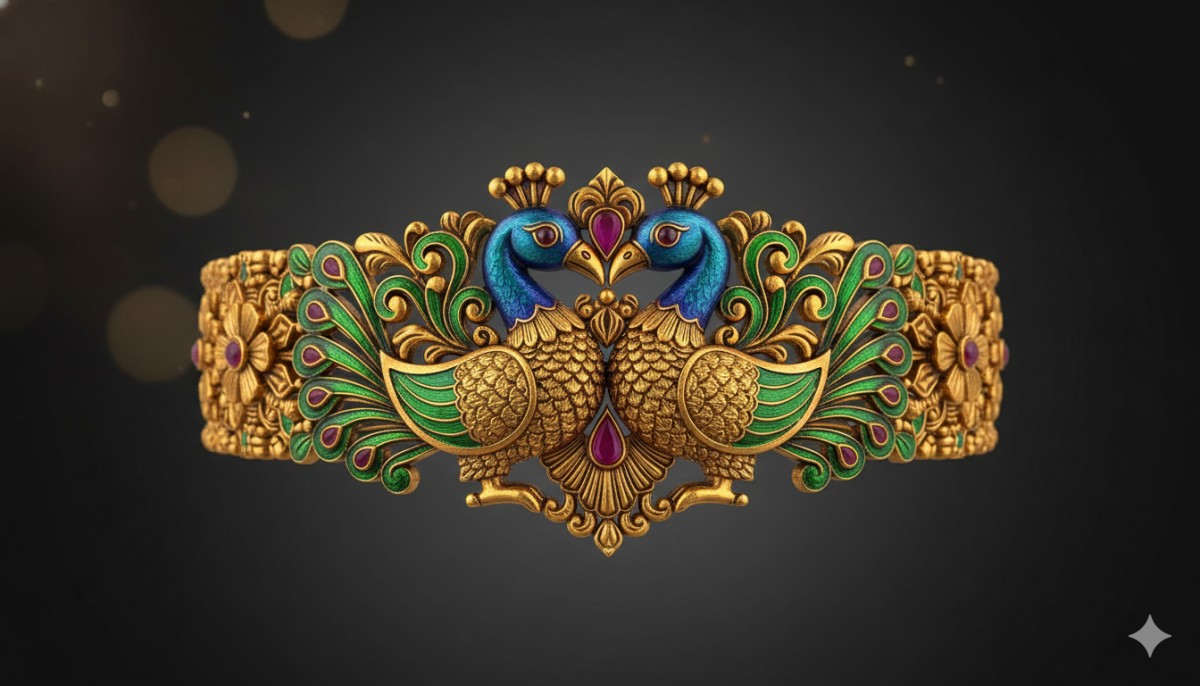
The volume and detailed texture of the peacock’s body and feathers are achieved through Nakshi work (deep hand-carving) and Repoussé (hammering the gold from the reverse side to create raised, three-dimensional relief). This technique gives the gold pieces their antique, heavy, sculpted look.
B. Meenakari (The Jewel-Tone Colors)
The most striking feature of the peacock—its vibrant blue and green plumage—is translated into gold using Meenakari (enamelling). Dark blue, turquoise, and emerald green enamel is often fused onto the gold surface of the feathers, providing the necessary color contrast without relying solely on expensive gemstones.
C. Kundan and Polki Accents
The iconic “eye” or chandrika on the tail feather is often highlighted using Kundan (uncut diamonds/glass stones) or simple, small, flat-cut colored stones (Kempu or synthetic rubies/emeralds). This creates the necessary sparkle and light reflection.
3. The Royal Wedding Collection Blueprint (Key Pieces)
A complete Peacock Design Gold Set requires coordination across multiple pieces, each featuring the Mayur motif prominently.
1. The Peacock Choker/Aad Necklace
- Role: The structural piece that frames the face.
- Design: A high-neck choker where the Mayur is the central focus. The rigid choker often features two stylized peacocks facing each other, with their sculpted bodies forming the structural frame of the necklace.
2. Peacock Jhumkas and Chandbalis
- Role: To add movement and sound.
- Design: Heavy, large Jhumkas where the dome is either shaped like a peacock’s body or heavily embossed with feather detailing. The best designs feature Meenakari accents on the dome and small green or blue beads hanging from the base.
3. The Peacock Vaddanam (Waist Belt)
- Role: The ultimate structural centerpiece, balancing the weight of the chest jewelry.
- Design: The central buckle of the Vaddanam features a large, highly detailed Peacock figure in full display. The entire band often has repeating feather motifs linked together.
4. Peacock Bangles/Kadas
- Role: To complete the look on the wrist.
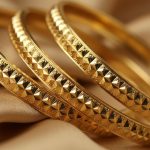
- Design: Heavy, solid Kadas featuring a single, prominent 3D peacock head at the opening or a continuous, repeating pattern of intricate feather work around the circumference.
5. Nethi Chutti and Hair Accessories
- Role: Framing the forehead and hair.
- Design: The Nethi Chutti (Maang Tikka) pendant often features a miniature, detailed peacock or a large, emerald-set stone shaped like the peacock’s teardrop eye.
4. Craftsmanship, Purity, and Styling Guide
A. 22K Purity for Heritage
The entire Peacock Gold Set is traditionally crafted in 22K gold (916 Hallmarked) to ensure the deepest, richest yellow color that complements the antique look of the Nakshi work and maintains maximum investment value.
B. Styling Guide: Color Coordination
The abundance of green and blue in the jewelry dictates a color strategy for the bridal attire:
- The Best Contrast: Pair the Peacock Set with silks in jewel tones like deep magenta, royal blue, or vibrant saffron.
- The Classic Look: Wear the set against a monochromatic red or maroon Kanjivaram saree. The blue/green accents will provide the necessary high contrast.
C. Hair and Placement
The elaborate design of the Peacock Choker and Jhumkas works beautifully with hair worn in a long braid or bun adorned with fresh flowers (gajra), allowing the long feather-motif Jhumkas to hang freely and the Vaddanam to sit flat on the waist.
Conclusion
The Peacock (Mayur) Design Gold Set is the ultimate expression of grace and royalty in Indian bridal jewelry. By choosing this magnificent collection, rich with the symbolism of beauty, love, and protection, the bride secures a timeless heirloom that transforms her into a vision of regal elegance, ready to dance with the auspicious rhythm of the Mayur.
Frequently Asked Questions (FAQs)
What is the main spiritual meaning of the Peacock motif in wedding jewelry?
The Peacock symbolizes immortality, beauty, grace, and love (often linked to Lord Krishna). It is also believed to attract good luck and offer protection against the evil eye (nazar).
Is the blue/green color in the Peacock design made from gemstones?
Often, the blue/green is achieved through Meenakari (enamelling), which is fused colored glass, or through affordable Kemp stones (synthetic emeralds/glass). In high-end pieces, genuine emeralds or sapphires may be used for the central accents.
Which type of gold finish is best for Peacock design jewellery?
The Antique or Matte Finish is best. This oxidized, dull finish highlights the intricate Nakshi (carving) work of the feathers and the 3D quality of the motifs, making the piece look heavy and authentic.
Can Peacock Jhumkas be worn with modern Western wear?
Yes. The elaborate Peacock Jhumkas can be worn with contemporary fusion outfits (e.g., silk trousers and tunics) or a simple black gown, where the large, colorful earring becomes the singular, powerful statement accessory.
Are Peacock Design Gold Sets a good investment?
Yes. Since these sets are predominantly made of 22K gold and feature significant hand-done Nakshi craftsmanship, they hold high intrinsic material value and excellent artistic value, making them a superb investment and heirloom.