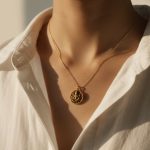
The traditional Indian wedding demands gold jewellery that is heavy, elaborate, and multi-layered. However, in the modern financial landscape, few brides want their most significant investment pieces—the spectacular Harams, Kundan chokers, and heavy Vaddanams—locked away in a safe after the wedding is over. The solution lies in the rising trend of Modular Bridal Gold Sets: ingeniously designed ensembles that allow layers, pendants, and even chains to be detached and reconfigured into wearable, contemporary accessories.
This innovation transforms single-use wedding splendour into a lifetime collection of versatile jewellery. The ultimate promise of the modular set is simple: to maximize the utility and style potential of every gram of high-karat gold. This comprehensive guide explores the financial imperative, the precise engineering, and the top modular design trends defining post-wedding luxury in 2025.
Read more: Top 5 Jewellery Boxes for Heavy Gold Sets
1. The Investment Imperative: Making Gold Work Harder
The motivation behind the modular bridal set is rooted in financial common sense and sustainable luxury practices.
A. Maximizing Cost-Per-Wear (CPW)
Traditional bridal sets have a high upfront cost but a low CPW due to infrequent use. Modular sets drastically reduce the CPW by allowing the bride to transform the heavy Haram into a sleek, daily-wear chain or the elaborate Jhumkas into simple office studs.
B. Sustainability in Luxury
The trend aligns with a desire for a more sustainable luxury lifestyle. Instead of purchasing separate, lower-value pieces for post-wedding events, the bride utilizes components from her core investment set, reducing clutter and unnecessary future purchases.
C. The Legacy of Versatility
A modular set is more likely to be used and passed down as an heirloom. Its continued wear ensures the jewelry remains part of the family narrative, rather than becoming a forgotten asset locked in the vault.
2. The Mechanics of Modularity: The Engineering of Transformation
The success of a modular set depends entirely on the quality and discretion of its connecting components.
A. Screw Systems and Invisible Latches
The primary mechanism for separating layers involves high-precision screw pins, small secure latches, or push-pin systems hidden within the gold motifs. These components must be robust, reliable, and entirely invisible when the full set is assembled.
B. The Role of the Bail
In many designs, the main central pendant is attached via a removable bail (hook). This allows the pendant to be removed from the main chain and attached to a different chain, a pearl strand, or even hooked onto a wrist Kada.
C. Structural Purity: 18K for Mechanisms
While traditional bridal jewelry favors 22K gold for its richness, the structural components (pins, threads, screw systems) of a modular set are ideally crafted in 18K gold. The higher hardness of 18K ensures that the threads do not strip and the latches do not bend or snap after repeated conversion.
3. The 3-Tier Transformation Blueprint (Core Conversions)
Modular sets are designed to solve three distinct jewelry needs, leveraging every gram of gold in the ensemble.
Tier 1: Neckline Conversion (Haram to Choker)
- The Conversion: The heavy, long Haram (long necklace) is often engineered in two or three distinct sections.
- Post-Wedding Wear: The longest, lower section detaches, and the ornate top collar section remains to be worn as a structured, sophisticated Kundan or Polki Choker for receptions and formal dinners. The detachable chain can be used separately.
Tier 2: Component Conversion (Pendant and Earring)
- The Conversion: The main center pendant of the necklace set (often a heavy Lakshmi or floral motif) and the earring drops are designed for secondary use.
- Post-Wedding Wear: The center pendant detaches from the chain and features a hidden pin or clasp on the back, allowing it to be worn as a magnificent Brooch on a blazer or saree. The large earring Jhumka bell detaches from the stud, leaving a simple solitaire or traditional stud for daily office wear.
Tier 3: Chain Conversion (Belt and Bracelet)
- The Conversion: The thick, long gold chain used for the Haram or the central portion of the Vaddanam (waist belt) is often made of specialized, large links.
- Post-Wedding Wear: The long chain can be reassembled into a sophisticated, multi-link Bracelet or, if the chain is long and thick enough, worn as a single thin waist chain over lighter sarees.
4. Top Modular Design Styles for Brides
The demand for convertible jewelry has led to several signature design innovations in the Indian market.
1. The Two-Part Kundan Haram
The necklace features a large, opulent Kundan centerpiece. The piece splits into a high-neck Kundan Choker and a separate, long Rani Haar (long chain) section. The detachable centerpiece can be clipped onto either chain.
2. The Convertible Vaddanam (Waist Belt)
This ingenious piece is built in segments. The ornate central buckle piece detaches, and the two side chains (or heavy gold ropes) are designed to clasp together, forming two separate, heavy gold Kadas (bracelets) for post-wedding use.
3. The Reversible Centrepiece
The main Kundan/Polki pendant is designed to be reversible. One side features the brilliant uncut stones (for weddings), and the reverse side features Meenakari (enamel work) or a simple, smooth gold carving (for festivals and casual events).
4. The Detachable Jhumka Set
The ultimate multi-function earring set. It provides a simple solitaire stud (office), the stud + a large Kundan drop (party), and the stud + a full Jhumka bell (wedding).
5. Purity, Durability, and Longevity
A. BIS Hallmarking of All Components
When investing in a modular set, ensure that every significant component carries the BIS hallmark. This includes the detachable necklace sections, the main pendant when separated, and the earring studs. This verifies the purity of all parts of the investment.
B. Cleaning and Mechanism Care
Cleaning is essential for longevity. The gold threads and screws should be cleaned weekly with a soft, dry brush to prevent makeup or dirt from accumulating. Before assembling, ensure all components are completely dry.
C. Professional Inspection
Due to the mechanical nature, have the entire set inspected by a professional jeweler annually to check for any wear or thinning of the gold threads within the locking systems.
Conclusion
Modular Bridal Gold Sets are defining the future of high-value jewelry. They successfully bridge the gap between traditional ceremonial grandeur and modern lifestyle demands. By investing in a set that offers the transformation capability of Choker-to-Haram and Pendant-to-Brooch, the modern bride secures not just a wedding ensemble, but a versatile, sustainable, and lifelong collection that maximizes the emotional and financial return on every piece of gold.
Frequently Asked Questions (FAQs)
Are modular bridal sets durable enough to wear every day?
Yes, the components designed for post-wedding wear (like the studs or bracelet links) are typically crafted in stronger 18K gold and are highly durable. The pieces are built with reinforced mechanisms specifically for longevity and repeated use.
Does the modular design increase the “making charge” significantly?
Yes, the initial making charge is substantially higher because of the complex precision engineering required for the screw systems and hidden latches. However, this high labor cost is offset by the multiple uses you get from the single investment.
How do I store the detached components safely?
Store all detached components (like long chain sections and Jhumka drops) in separate, labeled, velvet-lined pouches. This prevents the valuable pieces from scratching each other or getting lost before reassembly.
Which gold purity is better for the locking mechanisms?
18K gold is far superior for locking mechanisms (screws, pins) because its hardness prevents the gold threads from stripping or bending, which is a significant risk with softer 22K gold.
Can the center pendant be worn on a silk cord instead of a chain?
Yes, the detachable nature allows flexibility. The pendant can be hung on a traditional silk cord, a thin gold chain, or even a pearl strand, offering maximum versatility for matching different outfits and occasions.