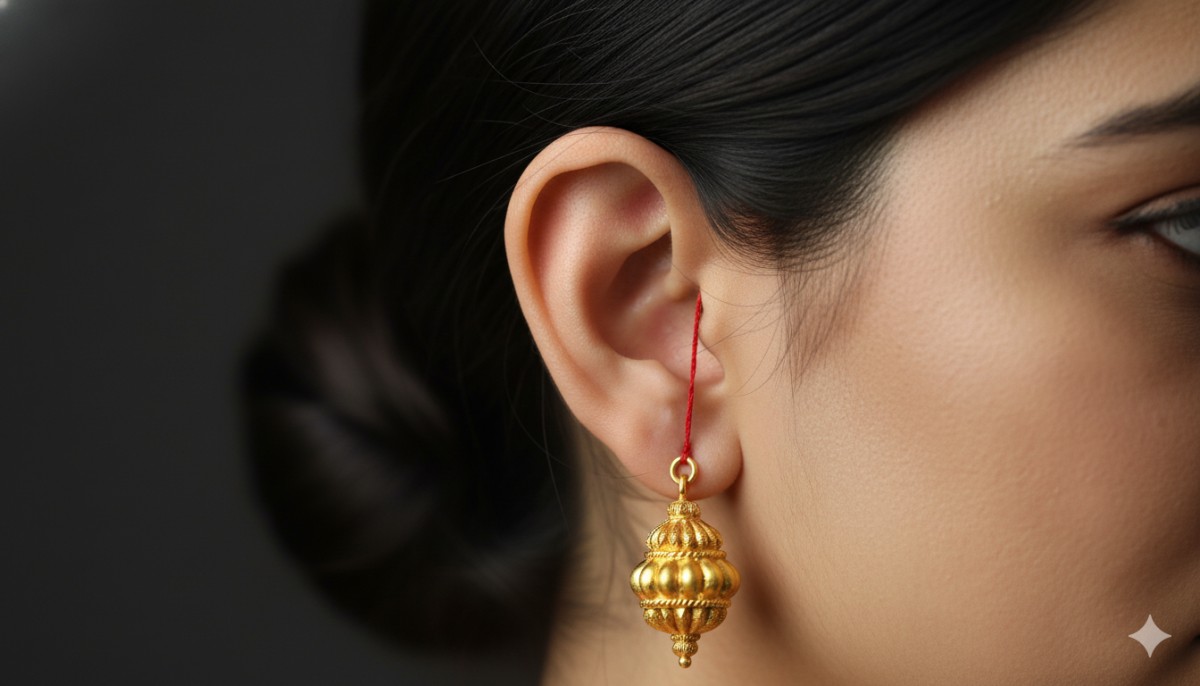
The Dejhoor (or Dejharoo) is arguably the most sacred and distinctive piece of jewelry in the Kashmiri Pandit tradition. Unlike conventional earrings, the Dejhoor is a unique, typically hexagonal or floral gold pendant that is passed through the pierced earlobe and traditionally supported by a specialized red thread or gold chain called the Ath. It is the ultimate, non-negotiable symbol of matrimony, signifying the exact moment a Kashmiri woman transitions into a married state.
The Dejhoor is worn continuously from the wedding day forward, rarely ever removed, and serves as a powerful amulet of divine protection and marital identity. Rooted in the ancient spiritual practices of the Kashmir Valley, this gold piece is a tangible link to Goddess Sharika, the family deity. This comprehensive guide explores the deep spiritual and cultural meaning, the unique design anatomy, and the essential etiquette surrounding Kashmiri “Dejhoor” Gold Earrings.
Read more: Best Gold Gifts for New Moms
1. The Sacred Ritual: Dejhoor in Kashmiri Pandit Marriage
The significance of the Dejhoor is inextricably linked to the marriage ceremony, known as Lagan, and the invocation of the divine feminine.
A. The Moment of Marital Transition
The Dejhoor is first donned during a specific, highly sacred ritual within the wedding ceremony. It is the moment when the paternal aunt (Poph) or another married female elder of the groom’s family performs the rite of attaching the Dejhoor to the bride’s ear. This is the official, permanent symbol of her married status.
B. Connection to Goddess Sharika
The Dejhoor is deeply associated with Goddess Sharika (also known as Tripursundari), the tutelary deity of the Kashmiri Pandits, who resides in the Hari Parbat mountain. Wearing the Dejhoor is an act of spiritual deference, seeking the goddess’s continuous blessings and protection for the new marital union.
C. Auspiciousness and Fidelity
The Dejhoor is seen as a source of saubhagya (good fortune and long marital life). Its continuous wear symbolizes the wife’s fidelity, commitment, and adherence to the traditions of her family and culture.
2. The Anatomy of the Dejhoor: Gold, Thread, and Placement
The Dejhoor is structurally unique; it is a pendant that utilizes the ear piercing not for support, but merely as a passageway.
A. The Gold Pendant (The Dejhoor)
The gold element itself is a pendant, often crafted in a precise hexagonal, floral, or teardrop motif in high-purity 22K gold. The gold piece is usually flat, featuring intricate gold filigree or nakshi work (carving) rather than bulky stones, ensuring its comfort for 24/7 wear.
B. The Ath (The Support System)
The most distinguishing feature is the support mechanism known as the Ath. The Dejhoor is passed through the central piercing, but its main weight is supported by the Ath—a long, thick, red woolen thread or silk cord (or a simple gold chain in modern times) that passes through the top loop of the pendant.
- Placement: The Ath is secured either behind the ear or woven into the hair/braid, ensuring the gold Dejhoor rests gently in the earlobe piercing without pulling or stretching the lobe itself.
C. The Non-Removable Nature
Historically, the Dejhoor was considered non-removable and worn constantly, signifying that the married identity is permanent. This cultural requirement dictates the high quality and smoothness of the gold used.
3. Symbolism: Divine Geometry and the Enduring Bond
The symbolic power of the Dejhoor is layered across its components and traditional materials.
- Hexagonal Shape: The geometric shape often seen in the pendant is considered highly sacred, symbolizing the union of Shiva and Shakti and offering complete divine protection.
- The Red Thread (Ath): The red color of the traditional woolen Ath symbolizes auspiciousness, shakti, and the life force. The thread itself symbolizes the continuous, unbreakable thread of the marital bond.
- Proximity to the Body: Wearing the gold pendant close to the body’s energy centers (the ear) is believed to maximize the absorption of the protective spiritual energy.
4. Design Trends: Traditional vs. Modern Adaptations
While the core shape and placement remain sacred, the style of the gold pendant has seen subtle adaptations for contemporary wear.
A. The Traditional High-Purity Dejhoor
The original style remains the gold standard: a simple, high-polish, solid 22K hexagonal or lotus-shaped pendant with a clean finish and no protruding elements.
- Focus: Prioritizes purity and symbolic form over ornamentation.
B. Gemstone Accents (Post-Marriage Styles)
After the initial wedding rite, some women upgrade the Dejhoor to a heavier version featuring pearls or small, close-set Kundan stones around the border of the main gold motif. This adds opulence for festive occasions.
C. The Gold Chain Ath (Modern Comfort)
Many contemporary Kashmiri Pandit women replace the traditional red thread Ath with a thin, delicate gold chain. This offers better durability, is easier to clean, and provides a slightly more modern aesthetic without compromising the structural support.
D. The Two-Piece Dejhoor Set
Modern jewelers often sell the Dejhoor as a two-piece set: the sacred Dejhoor pendant for the piercing, accompanied by a separate, matching pair of earrings (like jhumkas) that can be attached to the Dejhoor for grand occasions.
5. Purity, Craftsmanship, and Longevity
A. 22K Craftsmanship
The Dejhoor is almost always crafted in 22K gold (916 Hallmarked) to adhere to the traditional purity standard and maintain the maximum investment value. The craftsmanship involves specialized Kashmiri Nakshi (engraving) techniques to create the fine motifs.
B. Longevity for 24/7 Wear
The pendant’s design must be exceptionally smooth. There should be no sharp edges or harsh soldering points, as the piece is meant to stay in the piercing constantly without causing skin irritation or snagging on pillows or clothes.
6. Wearing Etiquette and Care
A. Respect and Conduct
Due to its sacred nature, the Dejhoor must be worn with dignity. It should not be touched unnecessarily and must be handled with care to prevent accidental loss.
B. Cleaning and Hygiene
Since the Dejhoor is non-removable, hygiene is critical. The Dejhoor and the piercing area must be cleaned daily using a soft cotton swab and mild soap to prevent residue buildup, ensuring the longevity of both the gold and the piercing.
Conclusion
The Kashmiri “Dejhoor” Gold Earrings stand as a powerful and unique testament to the cultural identity and spiritual faith of Kashmiri Pandit married women. By choosing this sacred pendant, the wearer embraces a tradition of divine protection, enduring marital commitment, and the singular, resilient heritage of the Kashmir Valley.
Frequently Asked Questions (FAQs)
What is the main structural difference between a Dejhoor and a regular gold earring?
A regular earring is supported by the earlobe. The Dejhoor is a gold pendant that is passed through the piercing but is primarily supported by a chain or thread (the Ath) anchored in the hair, relieving the earlobe of the weight.
Is the red thread (Ath) mandatory, or can I use a gold chain?
Traditionally, the red thread is mandatory for the initial wedding ritual due to its powerful symbolic color (auspiciousness). Post-marriage, the red thread is often replaced with a thin, durable gold chain for hygiene, comfort, and longevity.
Can the Dejhoor be removed?
Traditionally, the Dejhoor is never removed. It symbolizes the permanent married status and is only taken off under specific, rare, adverse circumstances. This cultural rule is what dictates the piece’s non-snag, smooth design.
Which gold purity is traditionally used for the Dejhoor
High-purity 22K gold is traditionally used to adhere to the cultural standards of auspiciousness and investment value required for sacred wedding jewelry.