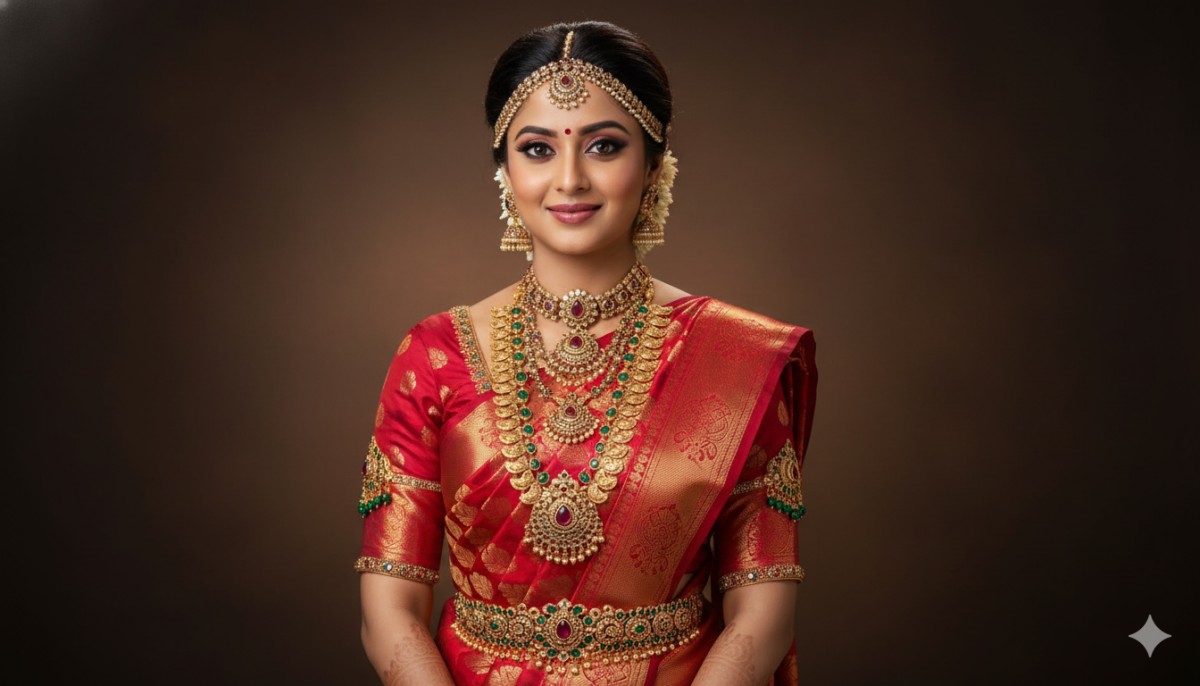
South Indian cinema has always been the definitive trendsetter for traditional bridal aesthetics, and in 2025, the wedding jewellery worn by leading actresses firmly places Temple Gold at the pinnacle of royal elegance. Temple Gold, characterized by its antique or matte finish, heavy craftsmanship, and central motifs of Hindu deities, offers a look that is profoundly rooted in heritage, commanding both respect and admiration.
This style eschews the high polish of contemporary diamond jewelry, favoring the dense, oxidized texture and rich color palette of pieces traditionally used to adorn temple idols. The resulting look—heavy layering of Kasu Malas, Vaddanams, and intricate Jhumkas—is majestic, auspicious, and the ultimate statement of cultural pride. This comprehensive guide explores the specific trends, craftsmanship, and pieces defining South Indian Actress Wedding Jewellery for the modern traditional bride.
Read more: Turkey Gold vs. Dubai Gold vs. Indian Gold
1. The Trendsetter Influence: Why Temple Gold is Trending
The aesthetic decisions made by high-profile South Indian actresses and stylists are based on reviving cultural authenticity, moving away from generic glamour.
A. Authenticity Over Awe
Recent celebrity weddings (in Kollywood and Tollywood) have emphasized a return to deep cultural roots. Temple Gold provides this authenticity, instantly linking the bride to ancient artistry and spiritual heritage.
B. The Power of the Antique Finish
The antique or matte finish is key. This deliberate dullness provides a beautiful contrast to the sheen of the Kanjivaram silk saree, preventing the jewelry from looking too bright or synthetic. The matte texture emphasizes the Nakshi (carving) work of the motifs, making the pieces look heavy and genuinely old—like family heirlooms.
C. Visual Density and Volume
The look demands maximum visual volume. The layering of multiple heavy necklaces, often covering the entire chest area, creates a mesmerizing and spectacular display of wealth and tradition, befitting a modern-day queen.
2. The Aesthetic DNA: What Defines Temple Gold
Temple Gold’s distinct identity is built upon specific structural, color, and motif requirements:
A. Centrality of Deity Motifs
The hallmark of Temple Gold is the presence of auspicious motifs, primarily:
- Goddess Lakshmi: Symbolizing prosperity and fertility, often seen on pendants or entire Kasu Malas.
- Peacocks and Elephants: Symbols of grace, royalty, and strength, frequently integrated into the Vaddanam (waist belt) and Kada (bangles).
B. The Color Palette: Kemp Stones
The color is provided by traditional Kemp stones—bright red and green glass stones (or synthetic rubies and emeralds). These colors are highly auspicious and lend the jewelry its distinctive historical look, perfectly matching the vibrant hues of bridal sarees.
C. Craftsmanship: Nakshi and Repoussé
The technique used is primarily Nakshi (intricate hand-carving) and Repoussé (hammering the gold from the reverse side to create three-dimensional relief). This heavy, detailed work gives the jewelry its signature volume and depth.
3. Key Temple Gold Trends for 2025 (The Bridal Set)
The look is built on mandatory layering, where each piece serves a specific purpose, from the neck to the waist.
1. The Magnificent Vaddanam (Waist Belt)
- Trend: The Vaddanam is essential. Trending designs feature an elaborate central buckle with a large Lakshmi or Elephant motif, flanked by dense geometric gold work.
- Role: It cinches the saree perfectly and is vital for balancing the weight of the chest jewelry.
2. The Layered Mala Ensemble (The Necklaces)
Brides layer an odd number of necklaces (three, five, or seven) for maximum auspiciousness:
- Kasu Mala: The coin necklace, often the innermost layer, representing accumulated wealth.
- Manga Malai: The mango-shaped motif necklace, symbolizing fertility and prosperity.
- Mulla Mottu Haram: The jasmine bud motif necklace, often the longest layer, providing texture contrast.
3. Statement Jhimkis (Jhumkas)
- Design: Heavy, multi-tiered Jhumkas that often incorporate Temple motifs (peacocks) on the dome and are entirely set with Kemp stones.
- Accent: Supported by matching Gold Mattals (Ear Chains) to prevent the heavy weight from damaging the earlobe.
4. Nethi Chutti (Maang Tikka)
- Design: Instead of a delicate chain, the Temple Nethi Chutti features a large, ornate pendant (often the Goddess Lakshmi or an elephant head) that covers a large portion of the forehead, framing the hair.
- Style: The sides are often strings of pearls and gold beads that integrate into the hairline.
4. Purity, Craftsmanship, and Investment
Temple Gold is fundamentally an investment in cultural heritage, requiring high purity and specific techniques.
A. The 22K Purity Standard
Temple Jewellery is almost exclusively made in high-purity 22K gold (916 Hallmarked). This high purity ensures the rich, deep yellow color essential for the traditional look and guarantees the highest intrinsic value.
B. Nakshi Work and Detailing
The incredible detail—such as the fine carving of scales on a fish motif or the gentle folds of Lakshmi’s saree—is achieved only through highly skilled hand-done Nakshi work, making the making charges significantly higher and reflecting the piece’s artistic value.
5. The Styling Guide: Achieving the Goddess Look
To emulate the magnificent look of a South Indian cinematic bride, every element must align with the Temple aesthetic.
A. Outfit Coordination
The jewelry is designed for the high-sheen, rich colors of Kanjivaram or Pattu Silk Sarees (especially deep red, maroon, or gold). The contrast between the matte jewelry and the shimmering silk is crucial.
B. Hair and Flower Adornment
The entire aesthetic is completed with traditional hair styling: heavy floral adornment (Gajra) woven into a large bun or long braid (Jadai). The gold Nethi Chutti and Jhumkas frame the face, while the flowers frame the heavy hair.
C. Odd-Numbered Layering
Always layer an odd number of necklaces (three, five, or seven). Ensure the longest Haram is paired with a heavy Vaddanam and coordinating bangles (Kada) to balance the visual weight across the body.
Conclusion
The South Indian Actress Wedding Jewellery trend of 2025 is a testament to the enduring majesty of Temple Gold. By choosing the antique finish, embracing the auspicious motifs, and layering with commanding pieces like the Vaddanam and Kasu Mala, the modern bride secures a look that is not only spectacularly grand but also rooted in centuries of spirituality and tradition, truly transforming her into a vision of Goddess Lakshmi.
Frequently Asked Questions (FAQs)
Why does Temple Gold have a dull or matte finish?
The dull, matte or antique finish is intentional. It is designed to emulate the look of gold that has been worn for generations and also helps to emphasize the intricate Nakshi (carving) work rather than the sheer shine of the metal.
Which stones are traditionally used in Temple Gold?
The most traditional stones are Kemp stones (ruby red and emerald green synthetic stones). These give the jewelry its authentic, historical color palette and are considered highly auspicious.
Is Temple Gold too heavy for a regular wedding guest?
Full bridal sets are extremely heavy. However, a regular guest can wear a single piece—such as a short, lightweight Kasu Mala or a pair of Temple Jhumkas—to participate in the trend without the weight.
Is Temple Gold a good investment compared to modern gold?
Yes. Since Temple Gold is almost always made in 22K purity, it holds excellent intrinsic value. However, the high making charges (due to hand-done Nakshi work) mean the total upfront cost is higher.