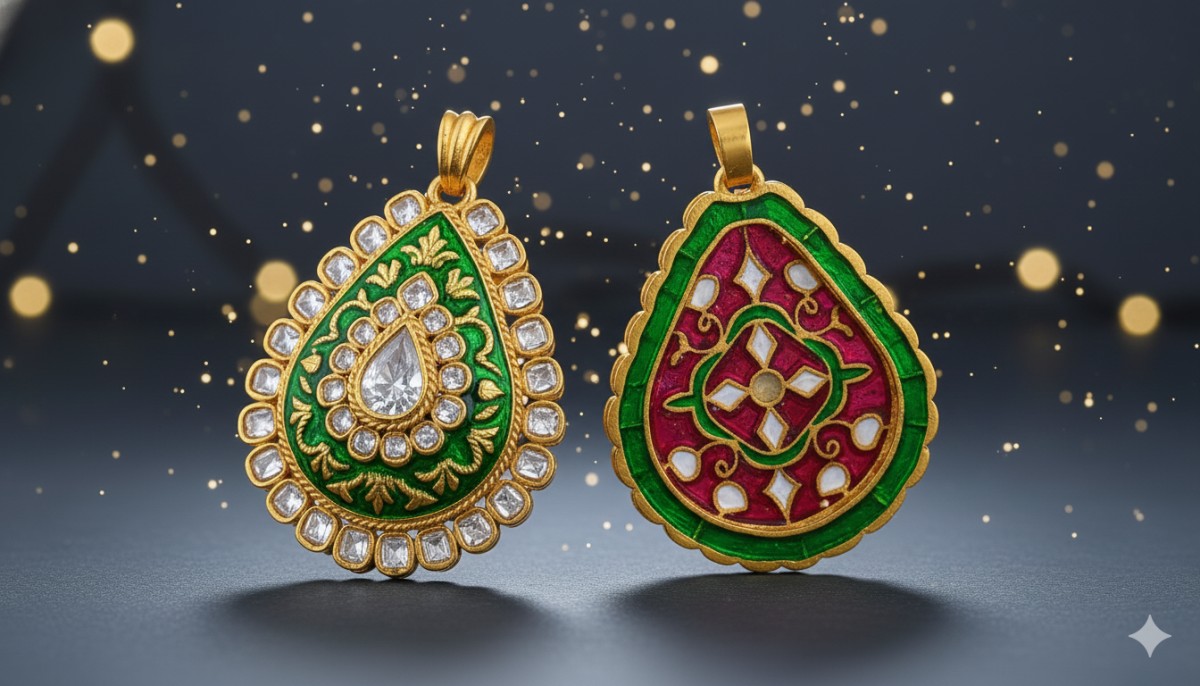
Meenakari is one of the most exquisite and visually striking art forms in Indian jewelry, transforming plain gold into a vibrant canvas of color, often described poetically as “placing paradise onto an object.” Derived from the Persian word mīnā (meaning heaven or paradise) and kārī (meaning work), Meenakari is the intricate process of decorating a metal surface by fusing brilliant mineral colors onto it through intense heat.
This centuries-old craft, refined and perfected in the royal courts of Jaipur, is what gives traditional Indian jewelry its distinctive, rich hues. Understanding how these vivid colors are achieved on a gold base—a metal that normally resists adhesion—requires delving into a detailed, multi-step process that is part science, part metallurgy, and part pure artistry.
This comprehensive guide explores the rich history, the meticulous technique, and the final aesthetic that defines Meenakari Gold Jewellery.
Read more: Turkey Gold vs. Dubai Gold vs. Indian Gold
1. The Alchemy of Color: Why Gold is the Preferred Base
Meenakari can be applied to silver, copper, and gold, but gold remains the traditional and most preferred medium for high-end jewelry for two main technical reasons:
A. Non-Corrosive Nature
Gold is chemically inert and highly resistant to corrosion. This non-corrosive quality is critical because the enamel (the color) is essentially powdered glass that needs to fuse to the metal base without any interference. Gold allows the colored enamel to adhere perfectly and remain structurally sound for centuries.
B. High Fusion Point and Color Retention
Gold has a high melting point, which allows it to withstand the repetitive, intense firing required to fuse multiple layers of color (often between 750°C and 850°C). Unlike silver, which can distort colors, gold maintains the purity and brilliance of the enamel pigments.
2. The Step-by-Step Process: How Color is Permanently Fused
The process of adding color to gold is a complex collaboration involving multiple master artisans, from the engraver (Chitera) to the enameller (Meenakar). This seven-step technical process permanently embeds the color into the metal.
Step 1: Ghadayi (The Framework)
The goldsmith (Sonar) first creates the jewelry piece (necklace, earring, or bangle) in the desired shape using 22K or 18K gold. The piece is cleaned thoroughly to remove any oils or dirt that could compromise the enamel’s adhesion.
Step 2: Khudayi (The Engraving)
The piece is passed to the engraver (Chitera or Kalamkar). Using specialized chisels and fine-tipped tools, the artisan meticulously etches or engraves the intricate design onto the gold surface. This process creates precise micro-walls or grooves (depressions). These grooves are essential as they function like tiny compartments or cells that will physically hold the powdered color in place during the firing process.
Step 3: Application of Enamel Powder
The Meenakar prepares the enamel. Enamel is made from powdered glass (a vitreous substance) mixed with metallic oxides to create specific colors. The Meenakar uses a thin tool or a fine brush to carefully apply the enamel powder (often mixed with water or oil for precise application) into the engraved grooves.
Step 4: Sequential Firing (The Key to Color Depth)
This is the most crucial step, as the piece is fired in a kiln multiple times. Each color must be fired individually because different colors melt at different temperatures.
- Order: The colors most resistant to heat (usually white, blue, or green) are applied and fired first. The colors with the lowest melting points (like red or pink) are applied and fired last.
- Fusion: The intense heat of the kiln melts the powdered glass, causing it to flow and fill the engraved grooves perfectly, fusing it permanently to the gold surface.
Step 5: The Complementary Art of Kundan
Meenakari is often combined with Kundan work (setting uncut stones). While the front of the jewelry is adorned with Kundan or Polki (diamonds), the reverse side is beautifully finished with Meenakari. This adds immense value and structural integrity, allowing the piece to be reversible.
Step 6: Polishing and Lustre
After the final color is fired and the piece cools, the surface may appear rough or dull. The piece is then polished (often using smooth agate stones) and cleaned with a mixture of tamarind and lime to remove any residue, revealing the glossy, vibrant lustre of the fused enamel colors.
Step 7: Stone Setting
Finally, the piece goes to the stone setter (Kundansaaz) and the stringer (Patua) to add any final embellishments, such as pearl drops, ruby accents, or the attachment of gold chains.
3. Regional Variations and Color Palettes
The colors used in Meenakari are deeply regional, reflecting local tastes and historical patronage:
- Jaipur (Rajasthan): Known for its Panchranga Meena (Five-Color Enamel) style, traditionally using the vibrant Mughal palette of white, red, green, dark blue, and light blue. Jaipur’s ruby red is particularly renowned.
- Varanasi (Uttar Pradesh): Famous for Gulabi Mina (Pink Enamel). This soft, dusky pink color is predominantly featured, often against a white background, giving the jewelry a distinctly delicate and romantic look.
- Lucknow (Uttar Pradesh): Known for favoring green and blue enamel, historically used more often on silver, creating a more ethereal, refined aesthetic.
4. The Fusion Advantage: Meenakari Designs
Meenakari enhances the visual appeal and longevity of various gold pieces:
A. Earrings (Jhumkas and Chandbalis)
Meenakari is used on the inner dome or the outer border of Jhumkas, bringing motifs like the peacock or floral patterns to life with color and emphasizing the earring’s structural volume.
B. Necklaces and Chokers
Bridal chokers and Harams often feature large panels of Meenakari, creating vibrant contrasts against the skin, especially in designs that fuse the art with Kundan work.
C. Bangles and Kadas
Meenakari is used to create continuous, colorful patterns (often floral or geometric) around the entire circumference of gold bangles, making them highly festive and eye-catching.
Conclusion
Meenakari Gold Jewellery is a dazzling testament to India’s artistic legacy. The unique, labor-intensive process of fusing colored glass onto gold ensures that the vibrant patterns are not merely painted but are permanently embedded into the metal, guaranteeing both structural durability and artistic permanence. By understanding the alchemy behind the color, one gains a deeper appreciation for this royal craft that turns pure gold into a portable piece of paradise.
Frequently Asked Questions (FAQs)
Why is Meenakari Jewellery often more expensive than plain gold jewellery?
Meenakari is expensive because it is an extremely labor-intensive, multi-stage process. It requires the specialized skills of several artisans (goldsmith, engraver, enameller) and multiple firings in the kiln, significantly increasing the making charges over simple machine-made or plain gold items.
Does the color on Meenakari jewellery ever fade or chip?
The color (enamel) is fused glass, making it highly durable and resistant to fading (unlike paint). However, the enamel can chip or crack if the jewelry is dropped onto a hard surface or struck sharply. Storing the piece carefully is crucial.
Which gold purity is recommended for Meenakari work?
22K gold is traditionally preferred, especially in Jaipur, as it adheres best to the enamel and retains the richest color. However, 18K gold may be used in highly delicate pieces for superior structural strength.
How should I clean Meenakari gold jewellery safely?
Clean Meenakari jewelry with only mild soap and lukewarm water. Use a very soft brush or cotton swab to gently clean the gold parts. Crucially, avoid abrasive cleaners, harsh chemicals, or ultrasonic cleaners, as these can cause damage or dislodge the enamel.