The bridal anklet, or Payal, is one of the most romantic and culturally profound accessories worn by a bride. Though often hidden beneath the grand volume of a lehenga or saree, the Payal holds deep spiritual significance, symbolizing the bride’s transition into her new home and her embrace of prosperity and grace. Its unique feature is the soft, melodic sound of the tiny bells (ghungroos) that herald the bride’s auspicious arrival.
Today’s Fancy Gold Anklet Designs for Brides expertly blend this rich tradition with modern grandeur. They prioritize spectacular visual appeal, durability, and a comfortable weight, ensuring the bride’s feet are adorned as regally as the rest of her ensemble.
Read more: Gold Watch for Ladies
1. The Cultural Significance of the Bridal Payal
The tradition of wearing anklets is ancient, rooted in mythology and ritual, making them essential for a complete bridal look.
A. The Sound of Auspiciousness
The distinctive, gentle tinkling of the ghungroos is believed to ward off negative energy and welcome positive vibrations and prosperity into the new home. This subtle rhythm is the first sound of the new bride’s presence.
B. Symbol of Femininity and Grace
The anklet draws attention to the feet, which in Hindu culture are considered a connection point to the earth and divine energy. Adorning the feet with gold symbolizes a grounding grace, tradition, and pure femininity.
C. The Gifting Tradition
Bridal anklets are often gifted to the bride by the groom’s side, serving as shagun (blessings) and signifying her acceptance and status within her new family.
2. Gold Purity and Practicality: Weight vs. Wearability
Bridal Payals must look heavy, but they must also be comfortable to walk in throughout the long ceremony.
A. The 22K/18K Choice
While pure gold (22K) is traditionally preferred for its rich yellow hue and investment value, bridal anklets often use 18K gold for the intricate chain links or use high-quality gold plating over a stronger brass base (for highly ornate, low-risk Kundan designs). This is because the movement requires the metal to be extremely durable and resistant to snapping or bending.
B. Weight and Comfort
Heavy Payals can cause discomfort, especially when worn over heavy Mehendi designs. Modern designers balance the need for grandeur by using techniques like diamond-cutting and layered chains to create high visual volume while keeping the actual weight manageable (typically under 50-70 grams per pair for heavy statements).
C. Secure Clasps
Given the constant movement, the bridal anklet must have a secure closure. Look for robust lobster clasps with an adjustable extension chain to ensure a perfect fit that is neither too loose nor too tight.
3. Top Fancy Gold Anklet Designs for Brides
Modern bridal designs fall into three categories: those focused on sound (Ghungroos), those focused on visual texture (Kundan/Polki), and those focused on layered complexity.
A. The Melodious Ghungroo Payal
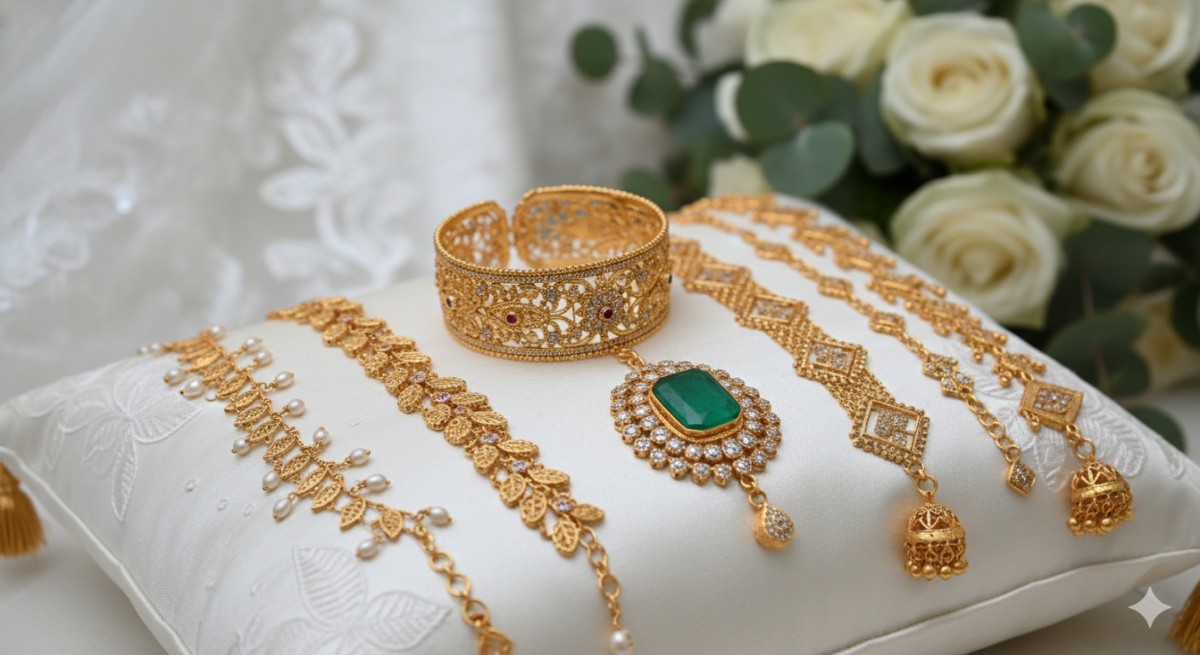
This style maximizes the traditional sound. The anklet is crafted as a strong gold chain or kada (cuff), with multiple rows of tiny, delicate gold ghungroos or metallic beads dangling from the lower edge.
- Best For: Sangeet and Haldi ceremonies, or the Grihapravesh (entering the new home), where the rhythmic sound is particularly significant.
B. Kundan and Polki Opulence
These high-fashion Payals are designed to match the bride’s Kundan or Polki neckpiece. The chain portion features large, beautifully set uncut stone or glass stone motifs (often in floral or paisley shapes) interspersed with gold links.
- Look: Exquisitely royal and high-volume, often studded with ruby and pearl accents.
C. Layered and Detachable Anklets
A trending modern style that combines two or three different chains in one set.
- Design: A thick, primary chain (often diamond-cut or beaded) is linked to one or two thinner, delicate chains, creating an immediate, voluminous layered look. Some sets include a detachable toe ring attached by a thin chain, creating a coordinated look.
D. Temple Jewellery Anklets
Inspired by South Indian heritage, these feature intricate gold designs of deities (Lakshmi), mango, or peacock motifs.
- Look: Rich, antique gold finish, designed to complement rich Kanjivaram sarees and Temple jewelry sets.
4. Styling Guide: Adorning the Bridal Feet
Styling the bridal Payal correctly ensures that it complements the detailed Mehendi and the heavy lehenga.
A. Placement and Symmetry
Brides typically wear anklets on both ankles. The Payal should sit just above the ankle bone. Ensure the length allows the main chain to drape slightly over the ankle bone without slipping over the heel.
B. Coordination with Mehendi
The intricate gold and gemstone work of the Payal provides a stunning contrast to the deep henna color of the Mehendi on the feet, emphasizing the detailed bridal foot artistry.
C. The Toe Ring Link
For the ultimate traditional look, many brides choose Payals that feature a delicate gold chain extending from the anklet to a matching toe ring (typically worn on the second toe), providing a cohesive, complete foot accessory.
Conclusion
Fancy Gold Anklet Designs for Brides are the musical, golden conclusion to the bridal ensemble. Whether you choose the melodic rhythm of the Ghungroo Payal or the royal sparkle of the Kundan style, this powerful accessory symbolizes prosperity, grace, and the auspicious joy of every step the bride takes into her new life.
Frequently Asked Questions (FAQs)
Why is silver traditionally preferred over gold for anklets?
Historically, in some Hindu philosophies, gold is considered a sacred metal associated with the Gods. Since the feet are the lowest part of the body, some traditions consider it disrespectful to wear gold there. However, modern bridal traditions fully embrace gold anklets as a symbol of maximum prosperity and luxury.
Should the bridal payal be worn on both ankles?
Yes. The traditional rule for bridal and married women’s jewelry is to wear anklets on both ankles, symbolizing balance, marital status, and completed adornment (solah shringar).
How can I prevent heavy gold anklets from feeling uncomfortable while walking?
Choose Payals that utilize lightweight layered chains or diamond-cut finishes to maximize shine without excessive weight. Ensure the clasp is securely fastened but loose enough to move freely without friction on the skin.
How should I clean a gold anklet with small ghungroos?
Clean them with warm water and a mild, non-detergent soap. Use a very soft brush (like a baby toothbrush) to gently clean around the ghungroos. Ensure the anklets are completely dried with a soft cloth before storage to prevent water spots and wear.
Are there gold anklets available that can be worn daily after the wedding?
Yes. Many jewelers offer simple, thin chain anklets with minimalist gold beads or subtle motifs. These are lightweight, durable, and perfect for daily wear to retain the tradition without the bulk of a bridal piece.