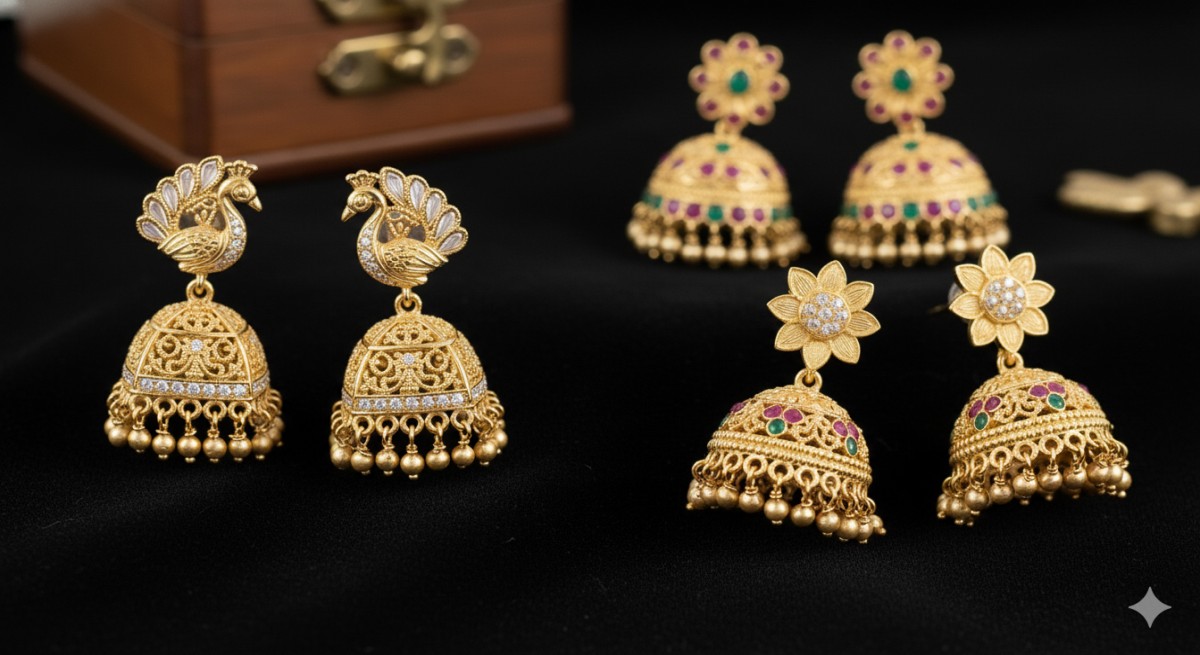
The Jhumka is perhaps the most iconic and beloved piece of Indian jewelry. More than just an earring, it is a statement of femininity, festivity, and heritage. Instantly recognizable by its distinctive bell or dome shape and the captivating sound of its tiny dangling accents, a Jhumka embodies movement, grace, and tradition.
The journey of Gold Jhumka Designs reflects the evolution of Indian fashion itself. While the traditional bell shape remains a classic, modern artistry has transformed it into sleek geometric domes, layered grandeur, and lightweight pieces suitable for daily wear. If you are seeking to understand the intricate craftsmanship and diverse styles of this timeless jewel, this comprehensive guide is your essential resource.
Read more : Peacock Design Gold Necklaces
1. The Cultural Heartbeat: The Significance of the Jhumka
The enduring appeal of the Jhumka lies in its deep cultural and symbolic roots:
A. Sound and Auspiciousness
The soft, melodic sound created by the tiny dangling beads or ghungroos (small bells) is highly auspicious and associated with positive energy and festivity. The Jhumka symbolizes the celebration of life and femininity.
B. Movement and Grace
Unlike fixed studs, the Jhumka is a dynamic piece of jewelry. Its movement highlights the elegance of the wearer’s neck and jawline, making it incredibly flattering and eye-catching during dance or movement.
C. Heritage and Tradition
Jhumkas are central to temple jewelry and various regional wedding styles (like the South Indian Jhimki), signifying tradition and generational heirloom status.
2. The Anatomy of Elegance: Structure and Sound
A Jhumka is essentially a three-part structure, designed specifically to maximize sound and movement:
A. The Stud or Dome (The Base)
The top part, which rests on the earlobe, is usually a floral, circular, or geometric stud. This section is often set with colorful stones (rubies, emeralds, or AD/CZ) or intricate gold filigree.
B. The Bell or Dome (The Body)
The core section, which gives the Jhumka its characteristic shape. This can range from a simple, round bell (ghanti) to an elaborate, multi-tiered conical dome.
C. The Danglers (The Voice)
The bottom edge is adorned with tiny pearls, beads, gold drops, or ghungroos. These delicate accents are what create the signature, melodious sound when the wearer moves.
3. Traditional Classics: The Opulent Bell Designs
The traditional Jhumka prioritizes volume, intricate craftsmanship, and high-purity gold.
A. Temple Jhumkas
These designs draw inspiration from temple architecture, often featuring deities, peacocks, or floral carvings on the dome.
- Look: Heavy, antique finish (matte or oxidized), typically set in 22K gold, often featuring rich red Kemp stones.
B. Kundan and Polki Jhumkas
Ideal for bridal wear, these Jhumkas feature the bell structure entirely covered in Kundan (foil-set glass stones) or Polki (uncut diamonds).
- Opulence: They prioritize wide surface area and high visual impact, giving the earring a rich, royal, and heavy look.
C. Meenakari Jhumkas
These Jhumkas use vibrant Meenakari (enamel work) on the outer dome, often featuring floral or bird patterns in bright blues, reds, and greens, perfect for matching colorful lehengas.
4. Modern Trends: Sleek and Structural Domes
Contemporary trends favour lightweight, structural, and versatile Jhumkas suitable for both daily wear and fusion outfits.
A. The Sleek Geometric Dome Jhumka
A sharp departure from the traditional rounded bell, these Jhumkas feature domes shaped like cones, squares, or hexagonal structures.
- Advantage: They offer a clean, modern aesthetic perfect for professional and semi-formal wear. They are often crafted in 18K gold for superior structural integrity.
B. Lightweight Filigree and Daily Wear Jhumkas
These are designed for comfort. They use highly skilled filigree (fine wirework) to create the bell’s volume while keeping the actual gold weight minimal.
- Usage: Perfect for daily or office wear, offering a dose of tradition without the weight or risk.
C. Jhumka Hoops (The Fusion Look)
A clever fusion where the dome of the Jhumka is attached to a large, prominent hoop (Bali) instead of a simple stud.
- Look: Highly fashionable and modern, ideal for styling with contemporary sarees and Indo-Western attire.
D. Multi-Tiered and Shoulder-Duster Jhumkas
For maximum bridal grandeur, these designs feature two or three decreasing-sized bells layered vertically, extending down to the shoulder. This dramatic length maximizes movement and sound.
5. Styling Guide: Pairing Your Gold Jhumka
The Jhumka demands strategic styling to ensure it shines without creating a cluttered look.
A. Neckline Coordination
Jhumkas are best paired with high necklines (like boat neck or high collar) or deep V-necks where the neck area is free of competing necklaces.
B. Hair and Movement
The Jhumka should be visible. Pair heavy Jhumkas with up-dos (buns or high ponytails) to accentuate the length and allow the earrings’ melodic movement to be fully appreciated.
C. Weight Balance
If wearing heavy, layered Jhumkas, choose a simple, lightweight necklace or a thin gold chain to ensure the earrings remain the focal point. Conversely, if wearing a heavy bridal choker, opt for simple Jhumka studs.
6. Purity and Investment
Traditional Jhumkas are predominantly made in 22K gold for their rich color and intrinsic value. However, modern lightweight and structural Jhumkas may use 18K gold for superior durability, especially in the fine wirework and clasps. Always verify the BIS hallmark for authenticity.
Frequently Asked Questions (FAQs)
Which gold purity is best for Jhumkas—22K or 18K?
22K gold is best for traditional, high-value, heavy-weight Jhumkas. 18K gold is best for modern, delicate, structural Jhumkas (like geometric or filigree designs) as the metal is stronger and less prone to bending.
Can Jhumkas be worn with Western outfits?
Absolutely. Lightweight Jhumka Hoops or small, geometric Jhumkas create an excellent fusion look when paired with simple dresses, shirts, or jeans, adding an element of sophisticated ethnic contrast.
What is the ideal weight range for comfortable daily wear Jhumkas?
Comfortable daily wear Jhumkas should be under 4 to 6 grams per pair. Look for lightweight filigree designs that maximize volume while minimizing gold weight.
How do I prevent my Jhumkas from getting damaged while travelling?
Always store Jhumkas separately in a padded box or soft pouch. Ensure the delicate danglers are not crushed or tangled with other jewelry, as this can easily bend the fine metal drops.
.