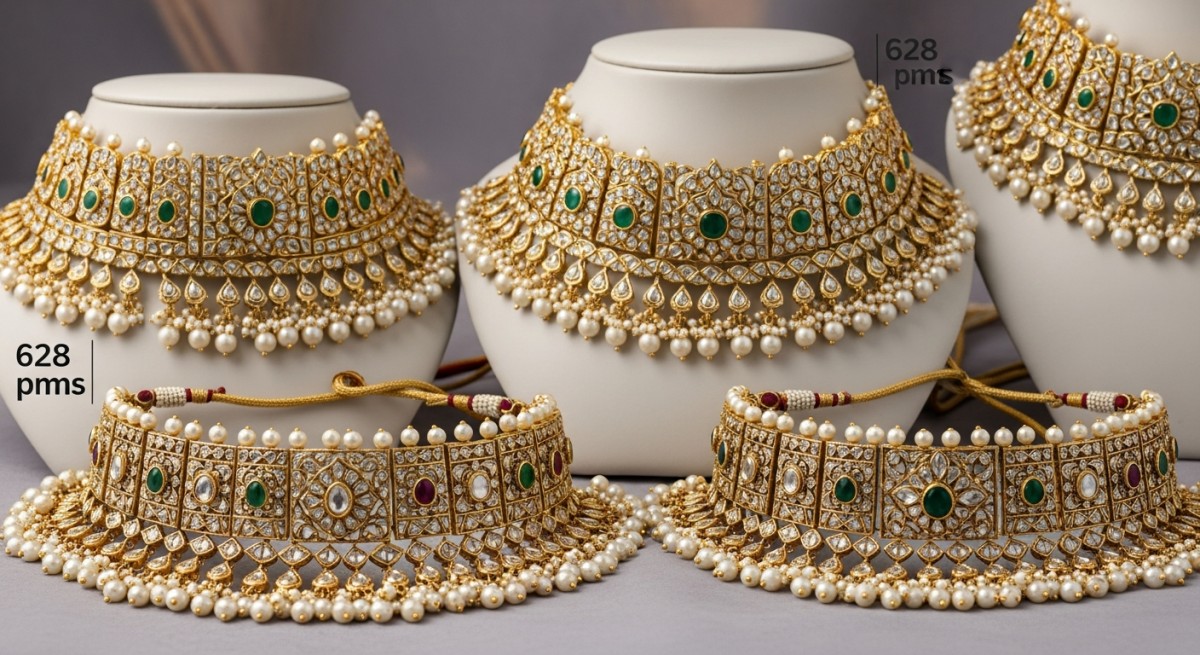
The Rajasthani “Aad” Necklace is the most commanding piece in the grand tapestry of Rajputi heritage jewelry. Distinguished by its unique, rigid, choker-style frame, the Aad (meaning “pure” or “complete”) is not just an ornament; it is a symbol of steadfast tradition, marital status, and the regal elegance of the Kshatriya women of Rajasthan.
Rooted in the royal courts of Jaipur and Bikaner, the Aad is a spectacular piece that gracefully hugs the neck, cascading into a curtain or bib of intricate craftsmanship. If you are seeking a magnificent piece that embodies the grandeur of a true queen, this comprehensive guide explores the structure, styling, and legacy of Rajasthani “Aad” Necklace Designs.
Read more: Gold Waist Chain (Belly Chain)
1. The Legacy and Significance: Symbol of Royalty
The Aad necklace holds an irreplaceable status in the Rajput culture, often gifted by the groom’s side to the bride as a symbol of prosperity and honor.
A. Steadfastness and Status
The Aad is characterized by its rigid, broad, rectangular frame that sits high on the neck. This inflexible structure traditionally symbolizes the bride’s steadfastness and commitment to her new family. Historically, its weight and precious stone content were a direct indication of the wearer’s noble status and family wealth.
B. The Art of Jadau and Meenakari
The true value of the Aad lies in the meticulous craftsmanship employed:
- Jadau Technique: Most royal Aads use the Jadau technique, where highly refined gold is heated, and uncut diamonds (Polki) or precious stones are embedded into the malleable gold base without prongs.
- Meenakari: The back of the Aad is often a hidden masterpiece, featuring vibrant, detailed Meenakari (enamel work) in traditional colors like red, green, and blue. This dual-sided artistry adds immense value and uniqueness.
2. The Unique Structure: Why the Aad Stands Apart
Unlike flexible necklaces (like a Rani Haar or Choker), the Aad has a distinct architectural structure designed to make a frontal statement.
A. The Rigid Choker Frame
The necklace’s main component is a broad, high-neck choker made of heavy gold (often 22K) or highly refined Kundan work. This fixed frame ensures the necklace does not roll or bend, maintaining its majestic horizontal shape across the collarbones.
B. The ‘Jaali’ or ‘Jhalar’ Bib
Below the rigid frame, the Aad features a flowing extension known as the Jaali (mesh) or Jhalar (fringe). This bib is composed of delicate gold mesh, pearls, and teardrop gemstones (often Rubies, Emeralds, or Polki clusters) that dangle beautifully to the bosom, adding dramatic movement and contrast to the stiffness of the main frame.
3. Traditional and Contemporary Aad Designs
The modern Rajasthani Aad Necklace Designs have evolved to offer varying levels of grandeur, maintaining the essential rigid structure.
A. The Opulent Polki Aad (The Investment Piece)
- Design: This is the most valuable and traditional form, featuring uncut Polki diamonds embedded closely using the Jadau technique. The soft, raw fire of the Polki diamonds gives the Aad an unparalleled antique glow.
- Styling: Reserved for the main wedding ceremony; it is an heirloom piece meant to be passed down through generations.
B. Kundan and Color-Studded Aad
- Design: Features meticulously cut glass stones (Kundan) set in gold foil, often complemented by large colored stones like rubies, sapphires, or emeralds. The contrast of the brilliant colors against the gold frame is intensely regal.
- Advantage: Provides the majestic, colorful Rajputi look at a more accessible price point than Polki.
C. Dual-Layered and Timaniya Fusion
Some Aads are designed as a single, multi-layered piece, combining the rigid choker with a smaller, secondary inner choker (Timaniya). This fusion adds incredible volume and depth around the neck.
D. Modern and Lightweight AD Aad
For grand festive occasions or fusion wear, contemporary Aads use high-quality American Diamonds (AD/CZ) and precision setting.
- Advantage: These versions are significantly lighter and offer exceptional brilliance, allowing the wearer to enjoy the royal design without the traditional heavy weight.
4. Styling Guide: The Rajputi Poshak Pairing
The Aad is a statement piece that requires specific styling to achieve the authentic Rajputi royal look.
A. Perfect Pairing with the Poshak
The Aad is traditionally worn with the Rajputi Poshak (the traditional royal dress of the region) or heavy wedding lehengas. The high-neck structure of the Aad complements the deep kurtis and high necklines often seen in Rajasthani attire.
B. The Art of Layering (The Rani Haar)
The Aad should be the snug, prominent choker sitting highest on the neck. It is perfectly complemented by a second, much longer, flexible necklace known as the Rani Haar (often reaching below the waist) which features a large pendant. This layering creates a beautiful visual hierarchy.
C. Fitting and Security
The Aad must fit snugly (tightly but comfortably) around the neck for the rigid frame to stay horizontal and hold its shape. A well-designed Aad uses strong fabric threads (Dori) or adjustable chains at the back for a secure closure.
5. Craftsmanship and Investment Value
The value of the Aad transcends its gold weight, lying in the skill of the Karigars (artisans) who meticulously craft the Jadau and Meenakari work—a tradition passed down through the Bikaneri and Jaipuri royal courts. The Polki Aad is particularly cherished as a generational heirloom.
Frequently Asked Questions (FAQs)
What is the main structural difference between the Aad and a regular choker?
A regular choker is usually flexible and drapes around the neck. The Aad is characterized by its rigid, fixed, broad rectangular frame that is designed to stand upright, giving it an architectural and commanding presence.
Does the Aad necklace have a specific meaning?
Yes. Historically, the Aad necklace symbolizes prosperity, honor, and the steadfastness of the bride. It is a key indicator of the family’s social status and is considered a source of auspiciousness for the newly married woman.
Which metal purity is used for the traditional Aad?
Traditional and high-quality Aad necklaces are set in 22K gold. This ensures the metal is malleable enough for the intricate Jadau and Kundan work and carries the highest investment value.
Can I wear an Aad with a modern saree or gown?
Absolutely. A lightweight or stylized Kundan Aad creates a stunning fusion look when paired with a simple, high-neck blouse or a plain gown, offering a powerful ethnic contrast to a modern silhouette.
What is the significance of Meenakari work on the back of the Aad?
The Meenakari (enamel work) on the reverse side is considered a hidden signature of quality and artistry. It symbolizes the completeness of the piece and its exquisite craftsmanship, often featuring traditional motifs and enhancing the overall value.