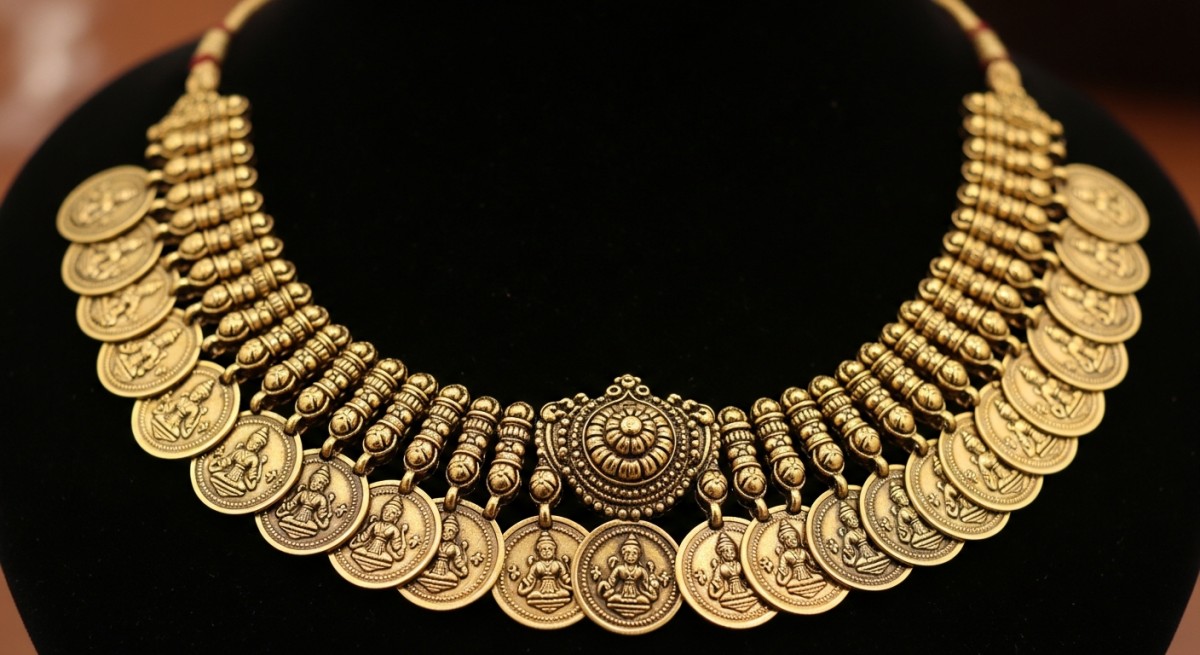
In the world of South Indian jewelry, the Kasu Mala (also known as Kasulaperu) stands as one of the most sacred and magnificent necklaces. This is not merely a gold necklace; it is considered the blessing of Goddess Lakshmi, symbolizing prosperity, auspiciousness, and enduring wealth. The Kasu Mala is identified by a series of small, circular gold coins strung so closely together that they form a dense, golden sheet.
This necklace has been an indispensable part of the South Indian bride’s trousseau for centuries, showcasing the brilliance of 22K gold and ancient craftsmanship. If you wish to understand the grandeur and cultural importance of South Indian “Coin Necklace” (Kasu Mala) Designs, this detailed guide is for you.
Read more: Ruby and Emerald AD Gold Necklace
1. Cultural Significance: The Blessing of Lakshmi and 22K Gold 🌟
Every coin (Kasu) in the Kasu Mala typically represents Goddess Lakshmi, which is why wearing it is considered highly auspicious.
A. The Importance of Purity (22K Purity)
The Kasu Mala is almost exclusively crafted in 22K purity (916 Hallmarked). In South Indian tradition, gold is not just an ornament but an investment and a holy metal. The deep, rich yellow luster of 22K gold is essential for properly conveying the traditional splendor of this necklace.
B. Roots of the Design
Traditional Kasu Malas are embossed with the image of Goddess Lakshmi on each coin. This design reinforces the belief that continuous wealth and prosperity will be maintained in the wearer’s life. The craftsmanship often utilizes fine Nakshi work (intricate carving) to bring out the details of the deity.
2. Royal and Traditional Kasu Mala Designs
Modern designs have adapted the Kasu Mala into various styles and lengths, making them suitable for layering and contemporary attire.
A. The Classic Full Coin Mala
This is the most traditional style. The gold coins in this necklace are linked very closely together, leaving no gaps, making the necklace look like a solid sheet of gold. It possesses a very heavy texture and appearance.
- Length: It is often worn in a medium length (18 to 24 inches).
B. Kasu and Temple Motif Fusion
In this modern variation, the Lakshmi coins are interspersed and mixed with other Temple Motifs such as Peacock, Swan, or floral designs. This design gives the necklace a more detailed and artistic look.
C. Layered Kasu Harams
The Kasu Mala is often crafted as a ‘Haram’ (long necklace). In this style, two or three strands of the Kasu Mala are combined in varying lengths, or the long mala is finished with a grand Emerald or Ruby pendant at the bottom.
- Use: Perfect for bridal layering, adding royal grandeur from the neckline down to the chest.
D. Guttapusalu Accent Kasu Mala
This is a fusion design popular in Andhra Pradesh and Telangana. Small, woven clusters of pearls or gold beads (Guttapusalu) are delicately suspended from the bottom edge of the Kasu coins.
- Feature: This design adds graceful movement and intricate texture to the necklace.
3. Styling Guide: With Sarees, Lehengas, and Other Jewelry 💡
The Kasu Mala is a statement piece, so maintaining balance when styling it is essential.
A. The Art of Layering
The Kasu Mala is rarely worn alone. It should almost always be layered with a shorter necklace (like an Attigai or Choker). The medium-length Kasu Mala provides a beautiful mid-layer foundation for longer, heavier Harams (long necklaces).
B. Outfit Coordination
The Kasu Mala looks magnificent with traditional Kanjivaram or Pattu Sarees. The rich, deep yellow glow of the 22K gold perfectly complements the intricate Zari work of the silk. Modern brides also wear it with their wedding lehengas for a strong traditional look.
C. Complete Bridal Look
To complete the Kasu Mala set, pair it with Surya and Chandra motifs earrings (Sun and Moon earrings) and heavy Kangan (bangles) that maintain the traditional theme.
4. Investment and Purity Guarantee
Since the Kasu Mala is constructed almost entirely from gold coins, it is one of the safest and most valuable jewelry pieces.
- High Resale Value: Due to its 22K purity and relatively simple coin-based structure, the Kasu Mala often commands a higher resale value compared to other heavily ornate designs, as it contains maximum pure gold weight.
- BIS Hallmarking: To ensure the authenticity of your purchase, always check for the BIS 916 Hallmark and the new HUID number.
Frequently Asked Questions (FAQ)
Can the Kasu Mala be worn daily?
Traditionally, the Kasu Mala is quite heavy and is worn mainly for festivals, weddings, or special occasions. However, lighter ‘Mini Kasu Mala’ designs are available today, which are suitable for daily use.
Q2: Whose image is
Whose image is typically embossed on the Kasu Mala coins?
The coins of the traditional and most auspicious Kasu Mala are embossed with the image of Goddess Lakshmi, the deity of wealth and prosperity. The necklace is believed to bring good fortune to the wearer.
What other necklaces should the Kasu Mala be layered with?
The Kasu Mala is best layered with a short necklace (choker or Attigai) or a Guttapusalu (pearl-cluster necklace). Since the Kasu Mala is mid-length, it also works well as a middle layer with a very long (30-inch) ‘Rani Haar’.
What should I check besides purity when buying a Kasu Mala?
Besides purity (916), you must check the finishing and craftsmanship of the coin edges to ensure they are not sharp and are securely joined together. Also, confirm the Net Gold Weight (excluding stones or thread).
Is it common to match the Kasu Mala with a Vaddanam (Waist Belt)?
Yes, it is very common for a grand bridal look. Often, the Vaddanam (Kamarbandh) will feature a large, central centerpiece designed to match the coin motif of the Kasu Mala, creating a cohesive and royal set.