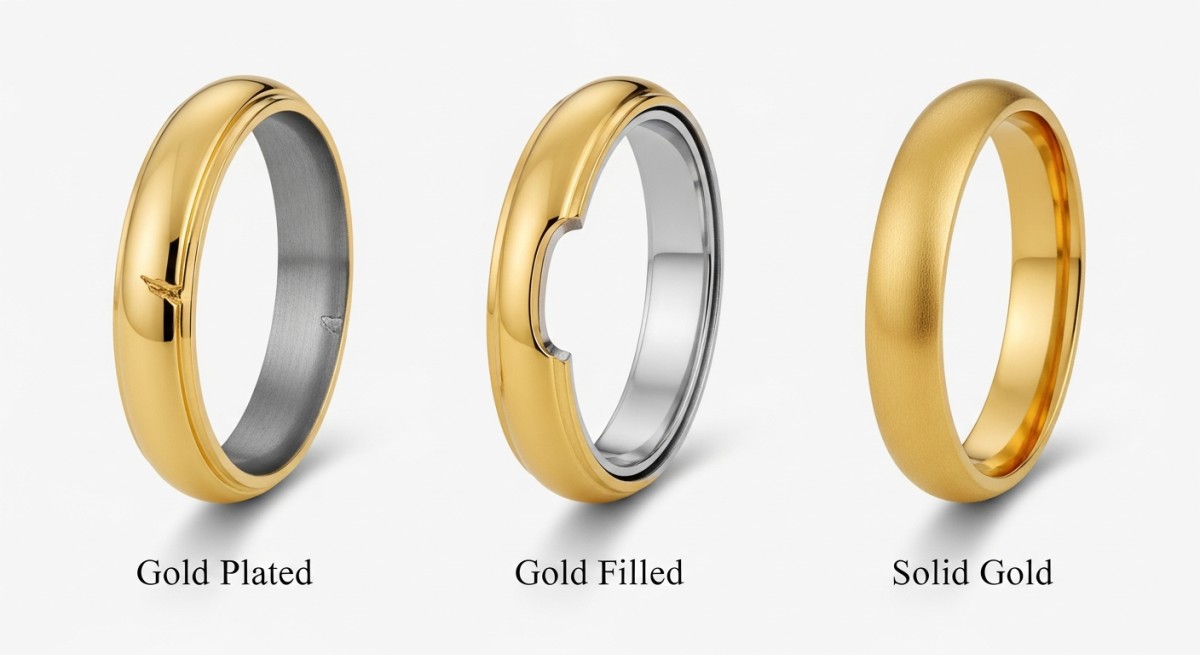
When shopping for jewelry, the term “gold” can be misleading. Not all gold that shines is created equal. Understanding the fundamental differences between Solid Gold, Gold Filled, and Gold Plated is the single most important lesson for any jewelry buyer, as these distinctions dramatically affect a piece’s price, quality, durability, and long-term value.
Whether you’re looking for a timeless heirloom or a fun, trendy piece, knowing the composition of the metal will empower you to make the smartest purchasing decision. Here is a definitive, detailed breakdown of the three main categories of gold jewelry.
1. Solid Gold: The Standard of Luxury and Investment 👑
Solid Gold refers to jewelry that is made entirely of a gold alloy—a mixture of pure gold and other metals (like copper, silver, or palladium). This alloying is necessary because pure 24K gold is too soft and malleable for durable daily wear.
Read more: Gold Waist Chain (Belly Chain)
Composition and Purity
- Definition: The entire piece is uniform in composition; the gold content runs all the way through the metal. It does not contain a base metal core.
- Purity: Measured in Karats (K). The most common purities are:
- 22 Karat (22K): 91.6% pure gold. Highly favored in India for its rich color and investment value.
- 18 Karat (18K): 75% pure gold. Offers the best balance of rich color and high durability.
- 14 Karat (14K): 58.3% pure gold. The most durable and structurally strongest option for intricate pieces and everyday rings.
Why Solid Gold is the Best Choice
- Unmatched Durability and Longevity: Solid gold (especially 14K or 18K) does not tarnish, wear off, or fade. It can last for generations and be worn 24/7.
- Retained Value: Its price is directly linked to the fluctuating gold market. It retains its intrinsic value and is the only type of gold jewelry considered a true investment or financial hedge.
- Hypoallergenic: Higher karat gold (18K and above) is generally the safest choice for sensitive skin as it contains fewer non-precious alloys that often cause irritation.
2. Gold Filled: The Durable Mid-Range Option ✨
Gold-filled jewelry is an excellent middle ground, offering a long-lasting, quality gold look without the high cost of solid gold.
Composition and Process
- Definition: Gold-filled pieces are made by mechanically bonding a thick outer layer of solid gold (usually 14K or 12K) to a base metal core, typically brass or copper, using intense heat and pressure.
- Gold Content: By law, gold-filled items must contain at least 5% (1/20th) of their total weight in real gold. This makes the gold layer 100 times thicker than standard gold plating, hence the term “1/20 GF.”
- Process: The mechanical bonding process ensures the gold layer is highly secure and resistant to peeling.
Why Gold Filled is a Smart Alternative
- Exceptional Longevity: The gold layer is so substantial that it is highly resistant to flaking, tarnishing, or wearing off with normal, consistent wear. Gold-filled pieces can last for decades with proper care.
- Value for Money: It provides the beauty and durability of solid gold at a significantly lower price point, making high-quality pieces accessible.
- Skin Friendly: Because the gold layer is substantial, it acts as an effective barrier between the base metal and the skin, making it a safe choice for many people with mild metal sensitivities.
3. Gold Plated: The Budget-Friendly Fashion Choice 💖
Gold-plated jewelry is the most economical option, perfect for experimenting with current trends without a large investment.
Composition and Process
- Definition: Gold-plated jewelry is created using a process called electroplating, where an electric current deposits a very thin layer of gold onto a base metal (usually brass, copper, or silver).
- Gold Content: The gold layer is minuscule—often less than 0.05% of the item’s total weight and measured in microns (typically 0.5 to 2.5 microns thick).
- Vermeil (Premium Plating): A special category where the base metal must be Sterling Silver (925), and the plating layer must be at least 2.5 microns thick. This is a higher-quality plated option, but still considered plated.
Why Gold Plated is the Ideal Fashion Solution
- Highest Affordability: It provides the coveted gold look at the lowest price, ideal for budget-conscious shoppers and students.
- Trend Freedom: The low cost allows you to embrace fast-fashion trends and bold, chunky designs that you might only wear for a season.
- Design Versatility: The plating process allows designers immense freedom to create complex, intricate, and lightweight designs that are not structurally possible with solid gold.
- Temporary Elegance: It’s perfect for occasional wear, events, or travel where you want a luxurious look without the risk associated with high-value pieces.
Summary: Key Differences in Durability and Value
| Feature | Solid Gold (14K/18K) | Gold Filled (GF) | Gold Plated (GP) |
| Gold Content | 58.3% – 91.6% (Throughout) | Minimum 5% by weight (Thick outer layer) | Less than 0.05% (Very thin surface layer) |
| Durability | Highest (Forever piece) | Excellent (Lasts years/decades) | Limited (May wear off in months/years) |
| Value & Investment | High Investment Value | Minimal intrinsic resale value | Negligible (Value is in the base metal) |
| Maintenance | Low (Stays gold forever) | Medium (Avoid harsh chemicals/sweat) | Highest (Must be carefully protected from moisture) |
Export to Sheets
Frequently Asked Questions (FAQs)
1. Does Gold Plated jewelry tarnish or fade? Ans: Yes. Since the gold layer is extremely thin, it can wear off due to friction or exposure to chemicals (perfume, chlorine, sweat), eventually exposing the base metal which can tarnish or change color.
2. Can Gold Filled jewelry be worn daily? Ans: Yes. Gold-filled jewelry is highly recommended for daily wear, especially for earrings and necklaces. The layer is thick enough to withstand consistent contact and maintain its appearance for many years.
3. Which type of gold is best for sensitive skin? Ans: Solid Gold (18K or 14K) is the safest choice. If seeking an alternative, high-quality Gold Filled pieces are often safe because the substantial gold layer acts as a barrier, preventing contact with base metals that might cause irritation.
4. Can I use solid gold jewelry as collateral for a loan? Ans: Yes. Solid Gold is the only category that banks and lending institutions accept as collateral (e.g., for a gold loan) because its value is based on the actual, verifiable gold content and weight.