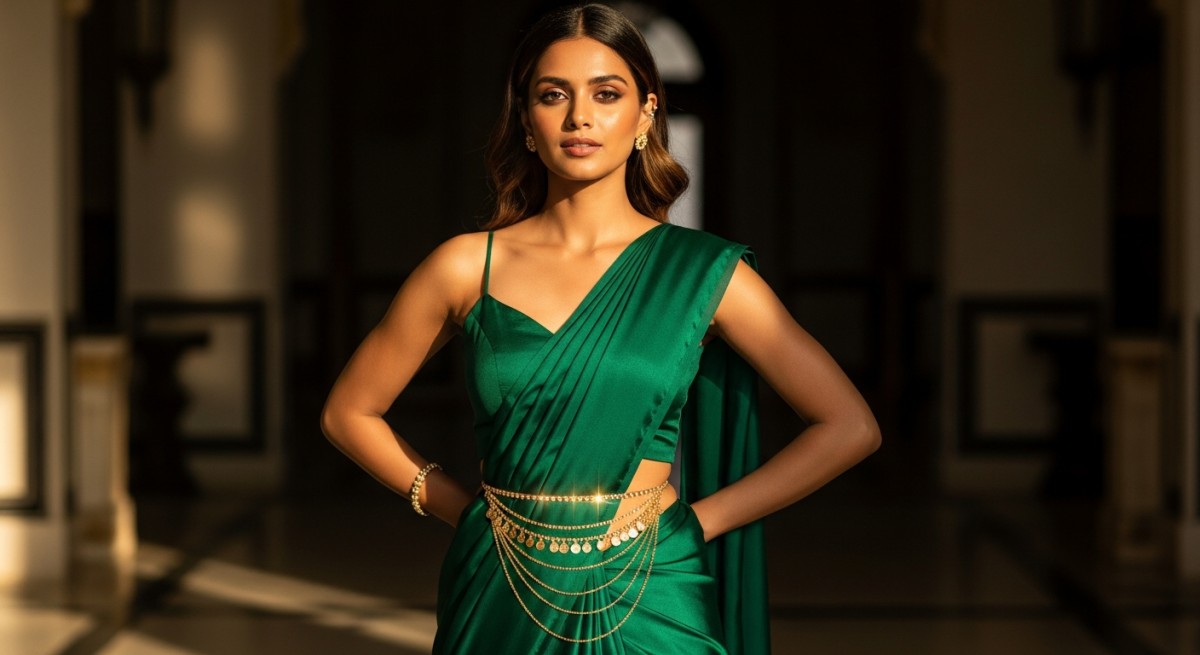
The Gold Waist Chain, often referred to as a Belly Chain or the modernized Kamarbandh, has officially transitioned from a niche traditional accessory to an essential high-fashion statement. Today, it is the sophisticated tool used by designers and stylists to perfectly define the silhouette, add a touch of antique glamour, and elevate the drape of modern sarees and flowing lehengas.
Unlike the heavy, rigid Vaddanam of the past, contemporary Gold Waist Chain (Belly Chain) Designs are lightweight, flexible, and versatile. They are designed for comfort and movement, ensuring that whether you are walking the aisle or dancing at a reception, your waist is highlighted with an effortless, luxurious sparkle.
If you are aiming to refine your profile and add a defining layer of luxury to your traditional or fusion wear in 2025, this comprehensive guide explores the trending designs, styling techniques, and advantages that make the gold waist chain a must-have accessory.
Read more: Matte Finish AD Gold Jewellery
1. The Modern Purpose: Defining the Silhouette
The resurgence of the waist chain is directly linked to the evolution of Indian fashion, particularly the popularization of pre-draped sarees, high-waisted lehengas, and long evening gowns.
A. Enhancing the Modern Drape
Contemporary sarees are often made from lighter fabrics (like chiffon or georgette) and feature intricate pleats or modern draping techniques. A waist chain serves to anchor the drape, preventing the fabric from shifting and adding structure to the flowing silhouette. It gives the outfit a finished, polished look.
B. The Defining Line
A gold waist chain instantly narrows the waist, drawing the eye horizontally and creating a defined contrast between the torso and the flowing skirt of a lehenga or gown. It is the ultimate accessory for creating an hourglass shape.
C. Styling Crop Tops and Blouses
In modern wear, the waist chain is frequently worn over high-waisted skirts or lehengas with short choli tops. The chain fills the small visible gap of the midriff, transforming the look from casual to high-fashion glamour.
2. Trending Gold Waist Chain Designs
The current trends favor layering, adjustability, and strategic placement of focused sparkle.
Category A: Layered and High-Volume Designs
These chains maximize visual impact without adding excessive weight, ensuring comfort for long events.
1. The Multi-Strand Layered Chain
A single waist chain composed of two to four separate, thin gold chains attached to one clasp. These chains fall at slightly different lengths, creating a rich, stacked effect that looks substantial and luxurious.
- Advantage: Looks heavy but is very lightweight and flexible.
2. The Delicate Charm Cascade
A primary gold chain featuring small, widely spaced charms (e.g., tiny gold coins, heart motifs, or stars) that dangle slightly. When the wearer moves, the small charms create subtle movement and light reflection.
- Look: Playful, yet sophisticated, perfect for Sangeet or Mehendi.
3. The Diamond-Cut Mesh Chain
A broad, single chain made from finely woven gold links that are meticulously diamond-cut. This technique ensures the entire chain reflects light intensely, giving it a fabric-like sheen that complements silk garments.
Category B: Solitaire and Focused Sparkle
These chains use strategic sparkle (often AD or CZ stones) to draw the eye to the center.
4. The Solitaire Drop Centerpiece
A thin waist chain featuring a single, prominent drop—either a large AD solitaire pendant or a cluster of stones—that hangs exactly at the center of the abdomen.
- Style: Minimalist, but high-impact. Ideal for Western gowns.
5. The Link and Pearl Fusion
Gold links interspersed with genuine or cultured pearls. The pearls add a classic, soft texture, contrasting beautifully with the high polish of the gold links.
6. The Geometric Segment Chain
The chain is constructed not of traditional links, but of flat, interlocking geometric shapes (like hexagons or horizontal gold bars). This adds a clean, architectural structure to the waistline.
Category C: Fusion and Traditional Remix
7. The Adjustable Coin-Mala Chain
A lightweight remix of the traditional Kasu Mala. It features small, flat gold coins linked by a fine chain, with an easy lobster clasp and adjustable extension.
- Traditional Touch: Adds heritage value without the bulk.
8. The Fusion Belt with Dangler
A slightly wider gold section (like a soft metal belt) for the front, which secures with a thin chain at the back. The front is often set with AD stones and features fine chain danglers along the bottom edge.
3. Technical Superiority: Comfort and Flexibility
The modern Gold Waist Chain is designed with the user’s comfort and safety in mind, prioritizing strength and flexibility.
A. The 18K/14K Strength
Modern waist chains are typically crafted in 18K or 14K gold. This higher alloy content makes the metal stronger, ensuring that the long, delicate chain links are less prone to bending, snapping, or kinking during movement. This enhances the piece’s longevity significantly.
B. Adjustability is Key
A high-quality waist chain always includes an extension chain (typically 4 to 6 inches long) that allows the wearer to adjust the chain precisely. This is vital because the chain should sit differently depending on the outfit—snug at the waistline for a saree, or lower on the hips for a lehenga skirt.
C. The Comfort Fit Clasp
Waist chains utilize secure, yet easy-to-manage closures, usually a durable lobster clasp or a double hook system. This ensures the chain stays safely in place through a night of activity.
4. The Expert Styling Guide
Choosing the right placement is essential for maximizing the chain’s slimming and defining effect.
A. Placement for Sarees
For traditional and modern sarees, wear the chain snugly around the natural waistline (the smallest part of the torso). The chain should sit high enough to catch the light and rest just above the top pleats of the saree.
B. Placement for Lehengas and Gowns
For high-waisted lehengas, wear the chain just above the waistband of the skirt or lehenga. For low-rise looks, position the chain lower on the hips. This highlights the fluidity of the skirt.
C. Integrating with Jewelry
The waist chain is a finishing layer. Ensure your neckline jewelry (choker or pendant) is visually separate. If your necklace is heavy, choose a simpler, single-strand waist chain to maintain balance. If you wear a simple necklace, opt for a layered waist chain for a dramatic effect.
Conclusion
The Gold Waist Chain (Belly Chain) Designs for 2025 are the embodiment of contemporary Indian glamour. They offer the traditional richness of a Kamarbandh in a comfortable, flexible, and utterly sophisticated package. By selecting a layered or solitaire-focused design, you secure an accessory that perfectly defines your silhouette, elevates your entire ensemble, and ensures you shine with confidence at every wedding, reception, or grand event.
Frequently Asked Questions (FAQs)
Should I wear the waist chain on the waist or the hips
It depends on the outfit. Wear it on the natural waist (smallest point) for sarees to define the drape. Wear it lower, on the hips, when styling a Western gown or a cropped top to emphasize the length of the midriff.
Are modern waist chains heavy like traditional Kamarbandhs?
No. Modern waist chains are designed to be lightweight and flexible, often utilizing hollow or layered techniques to create volume without weight. This ensures comfort for long hours of wear and dancing.
Which gold purity is recommended for waist chains?
18K gold is highly recommended. Its superior strength and durability make it resistant to bending or kinking—a common issue with long, thin chains.
How do I prevent the chain from slipping on a silk saree?
Ensure the chain has a good adjustable clasp. You can discretely secure the chain by clipping a small, clear safety pin through a link and catching the underside of the saree’s waistband or pleats.