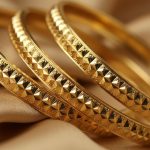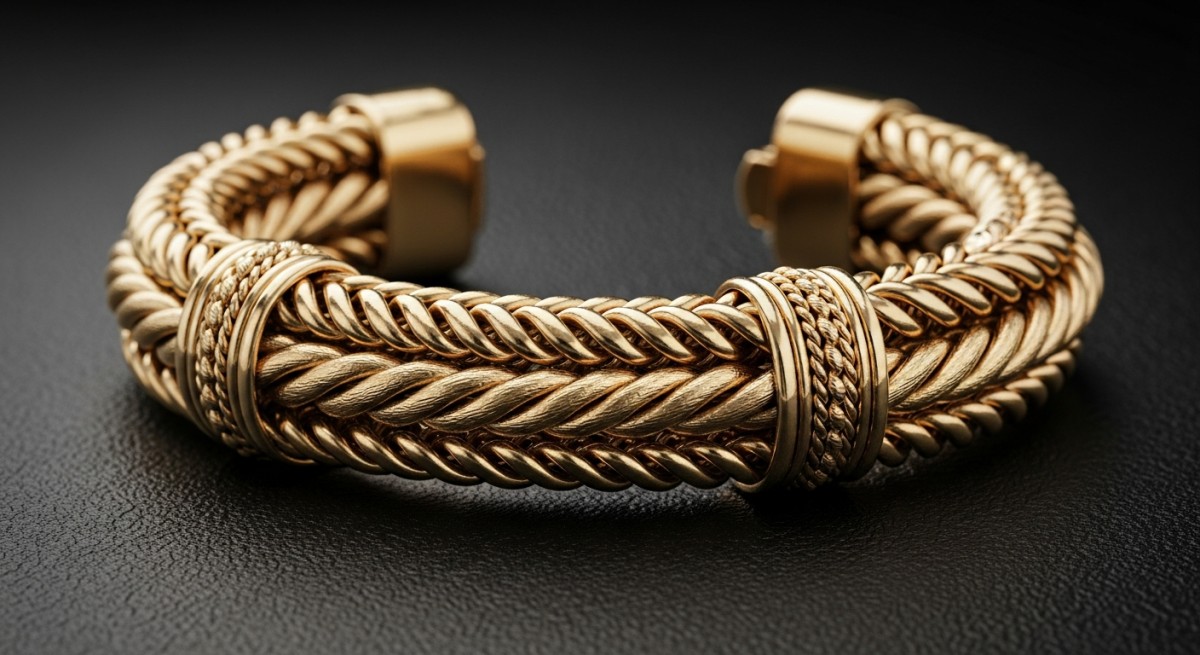
Turkish gold jewellery is a powerful confluence of East meets West, blending the intricate historical motifs of the Ottoman Empire with the bold, flexible artistry of contemporary European design. It is a style renowned globally not just for its beauty, but for its characteristic use of complex textures, high volume, and specialized antique finishing.
If you are fascinated by the rich, architectural beauty of Turkish Gold Jewellery Designs, you are looking at pieces that stand out distinctly in the international market. Their unique patterns are the result of centuries of dedication to meticulous handcrafting, particularly the use of mesh, intricate weaving, and dual-texture finishes.
Here is a look at why Turkish gold jewellery is celebrated for its unique patterns and unparalleled craftsmanship.
1. The Low-Karat, High-Volume Approach
Unlike the Indian market where 22K (916) is standard, a large portion of Turkish gold jewellery is crafted in 14K (58.5%) or 18K (75%). This purity choice is highly strategic:
- Superior Durability: The lower gold content means a higher percentage of alloys (like copper and silver), resulting in metal that is significantly harder and stronger. This strength is essential for their unique, intricate structural patterns and flexibility.
- Volume & Grandeur: Because the metal is stronger, artisans can create large, voluminous pieces (like wide cuff bracelets and dome rings) that are semi-hollow or utilize thin sheeting. This maximizes the visual impact and size of the jewellery while maintaining a comfortable weight.
2. Specialization in Weaving and Mesh
The most distinct element of Turkish gold is the masterful use of woven patterns that create a textural richness rarely seen elsewhere.
- Byzantine Weave: This ancient technique involves highly complex interlocking rings, resulting in a thick, durable, and highly flexible chain or bracelet that resembles a rope.
- Mesh & Knitting: Many Turkish necklaces and wide bracelets use fine gold threads that are literally knitted or woven together like fabric. This technique creates a rich, fluid texture that drapes beautifully and gives the jewellery a tactile, fabric-like feel.
- Tuğra & Tughra Motifs: These are stylized calligraphic signatures or emblems originating from the Ottoman Sultans. When incorporated into pendants or rings, they provide an immediate link to historical power and cultural identity.
3. Dual-Tone and Texture Focus
Turkish designs often deliberately combine different textures and gold tones within a single piece, enhancing its artistic complexity.
- Matte vs. Polish: It’s common to see a piece where the background is given a subdued sand-blasted or matte finish while the raised edges and details are highly polished. This contrast makes the patterns “pop” visually.
- Two-Tone Finish: Turkish jewellers excel at combining yellow gold with bright white rhodium plating or warm rose gold, creating sophisticated dual-tone patterns (e.g., a wide yellow gold band with white gold filigree overlay).
4. Architectural Forms: The Bangle and Ring
Turkish designers are famous for taking traditional forms and giving them bold, architectural structures:
- Wide Cuff Bangles (Hinged): Turkish cuffs are often broad and wide, featuring elaborate filigree or patterned embossing. They typically have a strong hinge and clasp, making them easy to wear despite their volume.
- Dome Rings (Kubbe Yüzük): These rings are large, high, and rounded (dome-shaped), often decorated with complex filigree and stone settings. They are designed to be statement pieces, covering much of the finger.
- Articulated Jewellery: Many necklaces and belts are designed to be “articulated”—meaning they are composed of many small, hinged segments. This allows the heavy-looking piece to bend and move fluidly with the body.
5 Popular Turkish Gold Designs
- Hallow Rope Chains: High volume, low weight chains where the links are twisted to look like a thick, solid rope.
- Filigree Earrings: Large, intricate earrings made using delicate wirework, which appear heavy but are surprisingly light.
- Tuğra Pendants: Gold pendants featuring the powerful Ottoman Sultan’s monogram.
- Ball Chains (Topu Zincir): Chains composed of small, close-fitting gold spheres, often with a diamond-cut finish for extra sparkle.
- Wide Flexible Bracelets: Mesh or woven wide bracelets that drape like fabric.
Conclusion: Investing in Heritage and Style
Investing in Turkish Gold Jewellery Designs is choosing artistry that demands attention. The unique patterns—achieved through expert weaving, high volume, and dual textures—make every piece a historical statement and a powerful addition to a modern luxury wardrobe
Read more: Italian Gold Chain
Frequently Asked Questions (FAQs)
Is Turkish gold jewellery considered high quality?
Yes. Turkish gold is renowned globally for its superior craftsmanship, innovative techniques (like hollow manufacturing), and artistic detail. The quality of the artistry and finish is exceptionally high.
Why is most Turkish gold 14K or 18K?
Turkish jewellery is often 14K or 18K because this purity level provides the maximum strength and hardness needed to create their large, intricate, semi-hollow, and woven designs without the metal being too soft to hold the shape
Are Turkish hollow chains durable for daily wear?
Yes. While hollow designs are lighter, they are engineered to be resilient. Using 18K gold ensures the metal is strong enough to resist kinking and holds its volume well, making them suitable for daily use if worn with care.
What is the difference between a Turkish and an Indian gold chain?
The main difference is purity and design focus. Indian chains are typically 22K (higher purity, softer metal, focus on weight). Turkish chains are typically 14K/18K (lower purity, stronger metal, focus on high volume, intricate weaving, and architectural design).