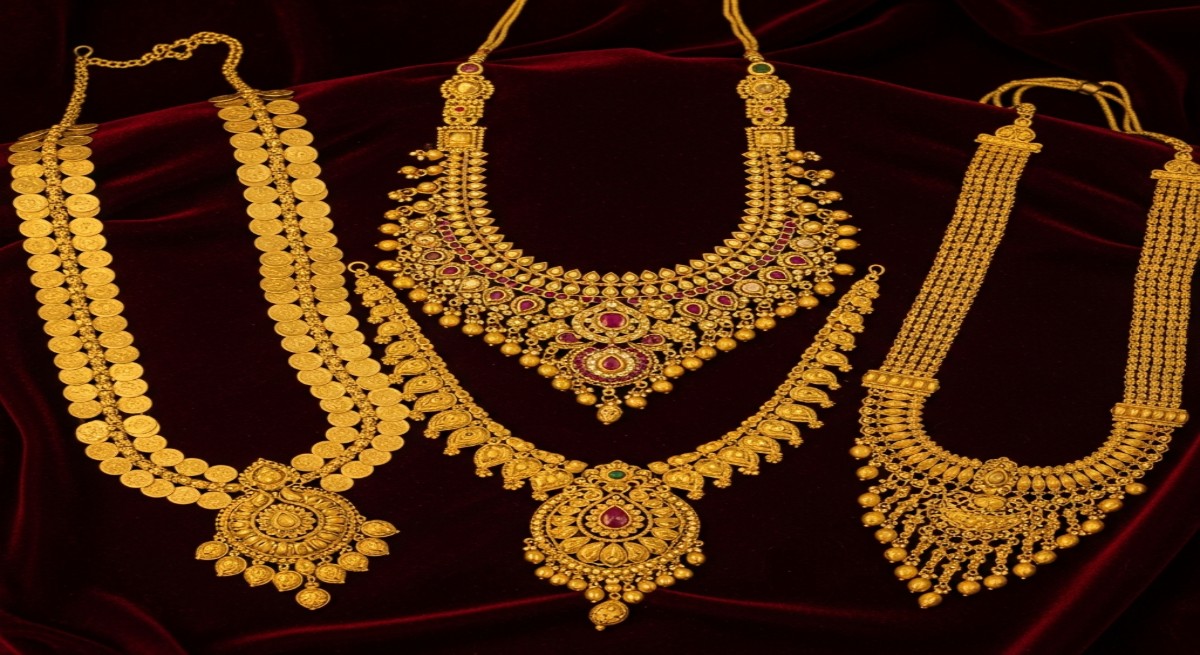
The Gold Haram (or Haaram) is arguably the most magnificent piece of Indian jewelry. More than just a necklace, it is a cascading statement that symbolizes opulence, tradition, and generational wealth, especially in South Indian culture. The Haram is always long, designed to fall below the chest, creating a stunning visual length that complements the bridal choker.
If you are seeking out traditional gold “long haram” designs and need a realistic guide on their weight and price range, you’ve found the ultimate resource. I’ve broken down the most popular traditional styles and provided approximate weight and price brackets for 2025.
Why the Long Haram is Essential in Traditional Wear
- Layering Base: It is the perfect second or third layer worn over a choker, creating the rich, multi-tiered bridal look (Royal Radiance).
- Symbolism: Many designs feature traditional motifs (Goddess Lakshmi, Mangoes, Coins) representing prosperity and divine blessings.
- Heirloom Value: Harams are almost always crafted in 22k gold, making them high in investment value and a popular family heirloom.
When investing in a traditional gold long haram, look for these technical aspects:
1. Purity and Craftsmanship
- 22k Gold (916): Harams are almost exclusively made in 22k gold for the best color and investment value.
- Intricate Work: The cost is often driven by high making charges (ranging from 12% to sometimes 40% for heavy antique pieces) due to the fine, hand-done detailing.
2. The Back Chain (Saree Dori)
Since Harams are heavy, they often use a cotton or silk Saree Dori (drawstring) instead of a gold chain for the last few inches. This is crucial for:
- Comfort: The drawstring distributes the weight better than thin gold links.
- Adjustability: It allows the bride to adjust the length perfectly to layer over her choker.
3. Hollow vs. Solid
Many Harams, especially those over 80 grams, use hollow techniques in the central chain links to reduce the final weight. While this makes the piece more affordable, solid gold designs are always more durable for generational hand-me-downs.
Pro Tip: If you have a budget constraint but want a full look, choose a Guttapusalu Haram. The pearls add significant volume and grandeur to the piece without adding much to the gold weight, giving you the best visual return for your investment.
Styling Your Long Haram for the Wedding
- Layering: The Haram should be the longest necklace. It is typically layered with a Choker (for the neck) and a medium-length necklace (for the chest).
- Pendant Focus: The large pendant of the Haram should sit below the blouse neckline, drawing attention to the waist and stomach area.
- Weight Management: Ensure the dori or back chain is securely tied before the event, as the weight of the Haram can cause discomfort if not properly secured.
Conclusion
The traditional gold Haram remains the gold standard for wedding and major festival jewelry. By understanding the typical weight ranges for popular styles like the Kasu Mala or the Temple Haram, you can confidently communicate your budget and design preferences to your jeweller. This is an investment that will be cherished for decades.
Which classic Haram design—the Mango Mala or the Kasu Mala—will you choose to become your family’s next heirloom?
Read more: 25+ Stunning Latest “Sui Dhaga” Gold Earring
Frequently Asked Questions (FAQs)
What is the minimum weight for a Long Haram?
For a truly long, traditional Haram that looks appropriate for a wedding, the minimum weight is usually 30 to 40 grams (22k). Lightweight Harams (under 30 grams) are often simple gold chain models suitable for daily wear.
What is the difference between a Haram and a Necklace?
A Haram is always a long necklace (24 inches or more) designed to hang low on the body. A Necklace is a general term for any neck jewelry, including short pieces like chokers and medium-length chains.
Are the gems used in Harams (Rubies/Emeralds) real?
In high-value traditional Harams, the stones (like Kemp, Rubies, and Emeralds) can be genuine semi-precious or synthetic stones. In designs focused on gold weight (like Kasu Malas), they are often semi-precious or glass inserts used mainly for color contrast. Always check the jeweller’s certification for the stone quality.