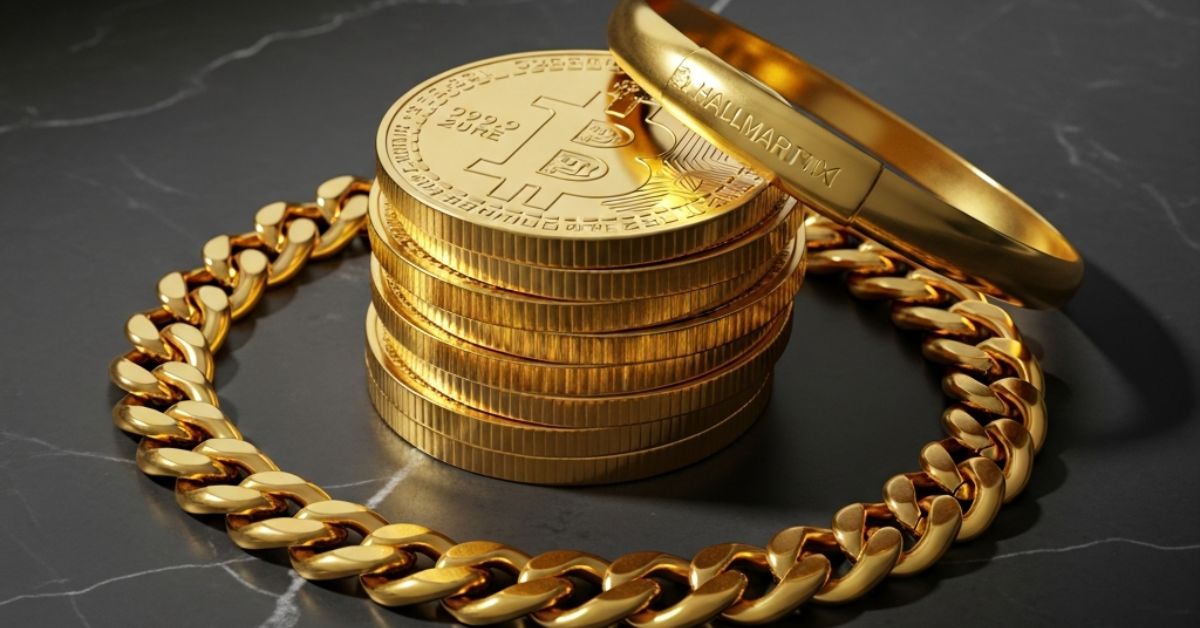
In 2026, the allure of gold remains as potent as ever. However, the way we buy and value it has undergone a quiet revolution. With domestic gold prices in India reaching record highs—outpacing traditional stock indices—gold is no longer just an ornamental luxury; it is a critical pillar of a diversified financial portfolio.1
Whether you are looking for the pure efficiency of an investment-grade gold coin or the “wearable wealth” of a hallmarked necklace, understanding the 2026 market is essential. This guide breaks down the best options for both forms, ensuring your purchase is as smart as it is beautiful.
Part I: Gold Coins – The Investor’s Choice
If your primary goal is wealth preservation and liquidity, 24K gold coins are the undisputed gold standard.2 Unlike jewelry, coins are valued almost entirely on their gold content, allowing you to bypass heavy “making charges” that can eat into your profit margins.3+1
1. Purity and Karatage: 24K vs. 22K
- 24K Gold (99.9% Purity): This is “pure gold” with no added alloys.4 In 2026, 24K coins are the most liquid asset, accepted by banks and jewelers worldwide. Because 24K is soft, these coins are strictly for investment and should be kept in their original tamper-proof packaging.5+1
- 22K Gold (91.6% Purity): Mixed with copper or silver for durability, 22K coins are often used for gifting or traditional ceremonies.6 While they hold significant value, they are technically less “efficient” as a pure investment compared to 24K.
2. The Rise of the “Digital-Physical” Hybrid
In 2026, a major trend is buying Digital Gold through apps and later converting it into physical gold coins. This allows for fractional investing—buying as little as 0.1 grams—and having a 24K gold coin delivered to your door once you’ve accumulated enough.
3. Trusted Brands for 2026
When buying coins, look for brands that offer “Buyback Guarantees” and international certifications:
- Kalyan Jewellers (Candere): Known for their diverse designs, including religious motifs (Laxmi, Ganesha, Ayodhya) and plain investment coins.7
- Tanishq: A staple for reliability, offering 24K coins with 99.99% purity and high-security packaging.
- MMTC-PAMP: The global standard for “London Good Delivery” gold. Their bars and coins are recognized internationally.
- Malabar Gold & Diamonds: Offers 100% HUID-compliant coins, ensuring full traceability and purity.
Part II: Gold Jewelry – Wearable Wealth
While coins are for the locker, jewelry is for life. In 2026, the trend has shifted from “heavy investment sets” to Neo-Heritage and Minimalist designs that can be worn daily while still retaining high resale value.8
1. The 2026 Jewelry Aesthetic
- Lightweight Masterpieces: With prices high, “Lightweight Temple Jewelry” is the biggest trend for weddings. High-tech laser cutting allows for large, ornate designs that use 30% less gold.
- Multi-Use Pieces: Modern brides are opting for chokers that can be detached and worn as pendants, ensuring the jewelry isn’t locked away after the wedding.9
- Matte and “Geru” Finishes: The high-shine yellow of the past is giving way to sophisticated matte and antique finishes, making gold more versatile for Indo-Western outfits.10
2. Resale Realities: Making Charges
Every piece of jewelry carries a “Making Charge” (labor cost).11 In 2026, these charges typically range from:
- 12% – 18% for machine-made chains and minimalist pieces.
- 20% – 35% for intricate handcrafted, Kundan, or Temple jewelry.
Pro Tip: To maximize investment value in jewelry, choose designs with the lowest making charges and ensure the gold is 22K hallmarked.
The “Must-Check” Checklist for 2026
Before you pay, ensure your gold meets the current legal and quality standards in India:
- BIS Hallmark: Look for the triangle logo. It is the only guarantee of purity.
- HUID (Hallmark Unique Identification): A 6-digit alphanumeric code.12 Use the BIS Care App to scan this code and verify the jeweler’s details and gold purity.
- Transparency: Ensure the invoice breaks down the price: Gold Price + Making Charges + 3% GST.
Comparison Table: Coin vs. Jewelry
| Feature | Gold Coins (24K) | Gold Jewelry (22K) |
| Primary Purpose | Pure Investment / Savings | Adornment / Wealth Display |
| Purity | 99.9% (Fine Gold) | 91.6% (Standard Gold) |
| Making Charges | Minimal (Approx. 2%–5%) | High (Approx. 12%–35%) |
| Resale Value | 98% – 100% of Gold Rate | 85% – 95% (Making charges lost) |
| Liquidity | Very High (Instant cash) | Moderate (Requires purity check) |
Conclusion: Finding Your Balance
In 2026, the smartest gold buyers are those who do both. They use Sovereign Gold Bonds (SGBs) or Digital Gold for their core financial safety net and invest in Lightweight, Hallmarked 22K Jewelry for personal joy and family heritage.
By prioritizing HUID-certified pieces and keeping an eye on the live market rates, you can ensure that your “Golden Future” is both stylish and secure.
FAQs
1. Is it better to buy gold coins or jewelry for a 5-year investment?
Gold coins are significantly better for pure financial returns.13 Because you pay minimal making charges on coins, almost 100% of your money goes into the gold itself.14 Jewelry is a “lifestyle investment”—you pay a premium for the design and the ability to wear it.+1
2. Why is my 22K jewelry worth less when I sell it back?
When you sell jewelry, jewelers only pay for the pure gold content. The money you spent on labor (making charges) and the 3% GST is not recoverable. This is why jewelry typically “loses” 15–20% of its initial purchase value immediately upon resale.
3. Can I buy 24K jewelry for daily wear?
It is not recommended. 24K gold is extremely soft and will bend or scratch very easily.15 Most durable jewelry is 22K, while stone-set or intricate designer pieces are often 18K or 14K to ensure the stones are held securely.
4. Does digital gold have the same value as physical gold?
Yes, digital gold tracks the live market price of physical 24K gold. However, keep in mind that when you ask for physical delivery of your digital gold, you will have to pay for minting, packaging, and delivery charges.