Have you ever looked at your gold jewelry and felt it was a bit too “serious” for a sunny afternoon or a beachside vacation? I’ve spent a decade advising clients on how to build the perfect jewelry capsule, and this year, there is one trend that is bringing pure joy back to our wardrobes.
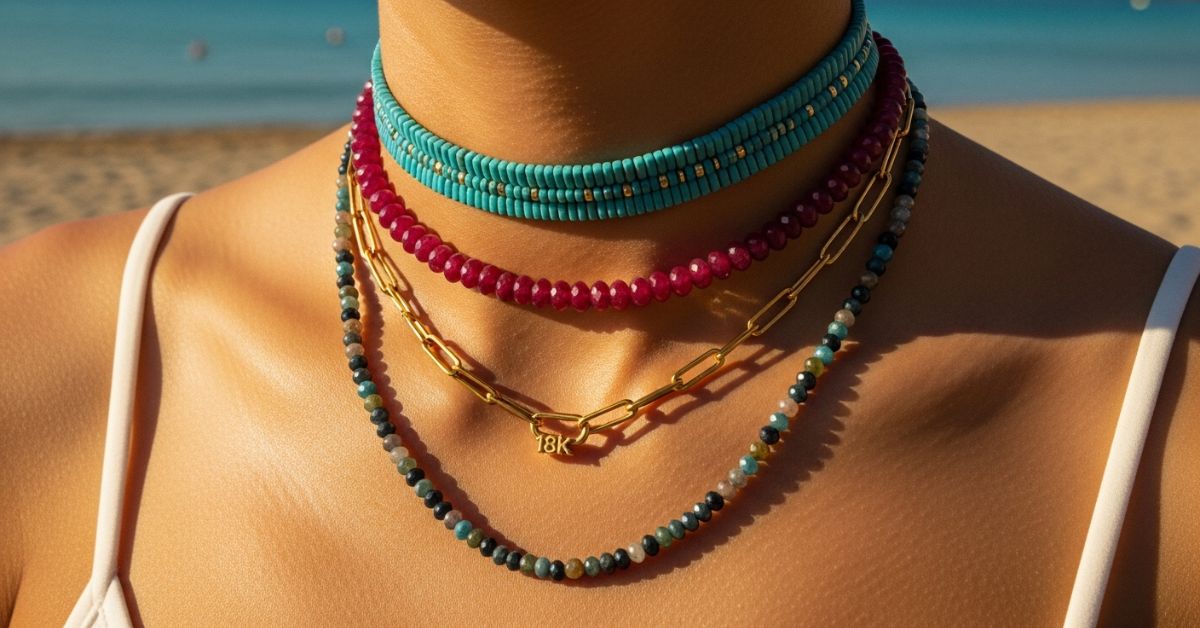
The layered colorful bead necklaces of 2026 are a far cry from the plastic beads we wore as kids. Today, they are a sophisticated fusion of high-end gemstones, organic textures, and 18k gold accents. This “Boho-Luxe” movement is all about mixing the earthy, tactile feel of beads with the timeless value of solid gold.
If you are a modern Indian woman looking to soften your traditional gold look with a splash of vibrant energy, this guide is your roadmap to mastering the stack.
Why “Bead Stacking” is the 2026 Power Move
In 2026, we are witnessing a “Texture Revolution.” We are no longer satisfied with just flat metal surfaces. We want jewelry that feels organic. Layered colorful bead necklaces offer a unique play of light—the way a faceted ruby bead catches the sun is completely different from a polished gold link.
This trend is also deeply personal. Because no two natural stone beads are exactly alike, your layered stack becomes a unique signature that cannot be replicated. It’s the ultimate expression of “Quiet Luxury” with a loud personality.
The Anatomy of a Perfect Bead Stack
Creating a successful layer isn’t just about throwing on three different strings of beads. It’s an art form that requires balance, contrast, and a touch of gold to tie it all together.
1. The “Base” Layer (The Choker)
Start with a 14-inch or 16-inch strand of small, uniform beads. I recommend Turquoise, Seed Pearls, or Coral. This sits close to the neck and acts as the foundation for the rest of your colors.
2. The “Hero” Layer (The Statement)
The second layer should be slightly longer (18 inches) and feature larger, more vibrant beads. This is where you bring in the “big guns”—think faceted Emeralds, Amethyst, or Lapis Lazuli. This layer provides the main “pop” of color against your outfit.
3. The “Gold Anchor”
To keep the look expensive and grounded, the third layer should be a gold-heavy piece. This could be a solid 18k gold chain or a bead necklace interspersed with gold “spacer” beads. In India, using 22k gold spacers is a popular way to ensure the piece maintains its investment value.
Technical Details: Investing in Quality Beads
When you’re browsing for layered colorful bead necklaces, don’t be fooled by “fashion” beads. If you want these pieces to last a lifetime, you must look for high-grade natural materials.
1. Natural Stones vs. Dyed Glass
Check for “inclusions.” Natural gemstones like Sapphire or Tourmaline beads will have tiny internal marks that prove they came from the earth. Dyed glass will look too perfect and will lose its color when exposed to perfume or sunlight.
2. The Strength of the Thread
A heavy bead necklace is only as good as the string holding it together. Look for silk-knotted strands or high-tensile steel wire coated in nylon. Silk-knotting is the gold standard; it prevents the beads from rubbing against each other and ensures that if the necklace breaks, you won’t lose every bead.
3. Gold Purity in Clasps
Always insist on 18k or 22k gold clasps. Many retailers use “gold-filled” or plated clasps to save money, but these will tarnish and turn green against your skin. A hallmarked gold clasp is the mark of a true luxury bead necklace.
Pro Tip: The “Texture Mix”
Don’t just stack different colors; stack different finishes. Pair a “matte” African glass bead necklace with a “high-shine” faceted Ruby strand. The contrast between the dull and the sparkly makes the stack look curated and expensive rather than cluttered.
Styling for the Modern Indian Lifestyle
The “Saree Fusion”
Replace your traditional heavy gold “mala” with a triple-layered stack of shaded Emerald beads. It adds a fresh, contemporary vibe to a silk saree without sacrificing the “rich” look that gold provides.
The Office Chic
Wear a single strand of small, multi-color Spinel beads under the collar of a navy blue blazer. It’s subtle, professional, and shows that you have a creative side.
The Resort Look
This is where layered colorful bead necklaces truly shine. Pair them with a white linen maxi dress and a tan. The vibrant blues of Turquoise or the oranges of Carnelian pop beautifully against sun-kissed skin.
Maintenance: Keeping Your Beads Vibrant
Beads are more delicate than solid gold. To keep them glowing:
- The “Dry” Rule: Never wear your bead necklaces in the pool or shower. Chlorine can eat away at the silk thread and certain stones like Turquoise are porous and can change color if they absorb water.
- Storage: Hang them on a jewelry tree or lay them flat. Do not bunch them up in a small box, as the wire can “kink” and lose its fluid drape.
- Restringing: If you wear your stack every day, have them professionally restrung once every two years to prevent unexpected snapping.
Conclusion
Layered colorful bead necklaces are the perfect antidote to “boring” jewelry. They allow you to play with the entire spectrum of nature’s palette while keeping your look grounded in the luxury of gold. Whether you are building a stack of birthstones or just choosing colors that make you smile, these necklaces are an investment in your own happiness.
Are you a “minimalist” who prefers two simple strands, or a “maximalist” who wants a 5-layer rainbow? Share your stacking style in the comments!
FAQs
1. Can I mix my colorful bead necklaces with my daily-wear gold chains?
Yes! This is actually the “it-look” of 2026. The contrast between a sleek gold link and organic, colorful beads creates a “High-Low” aesthetic that is very fashionable. Just ensure the gold chain is thicker than the bead strand so it doesn’t get tangled.
2. Which gemstones are best for daily-wear bead necklaces?
If you plan to wear them every day, stick to harder stones like Quartz, Agate, Jasper, or Sapphires. Softer stones like Pearls, Opals, or Malachite are beautiful but can get scratched or lose their luster if they rub against other jewelry or rough fabrics.
3. Are bead necklaces a good financial investment compared to solid gold?
While the “resale” value of the gold clasp and spacers is high, the beads themselves don’t always appreciate like gold bullion. However, high-grade precious stone beads (like “AAA” quality Emeralds or Rubies) do hold significant value among collectors. Buy them for the style and the joy, but keep the gold components hallmarked for the “asset” value.