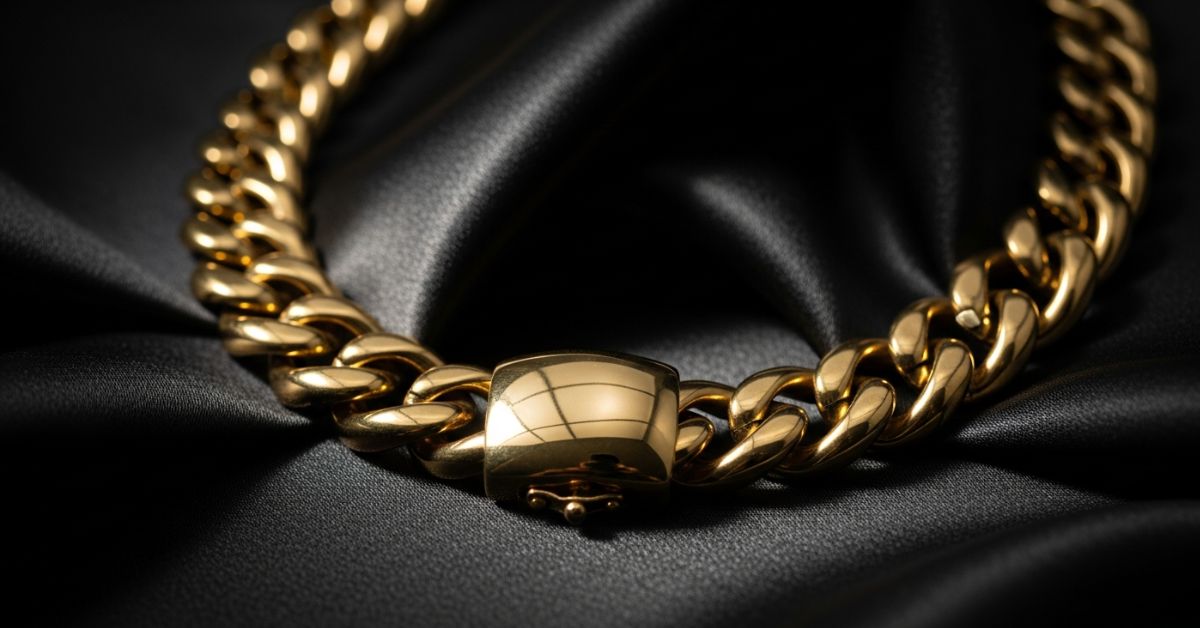
In a world where fashion trends often move with the speed of a digital scroll, some things remain immovable. As we move through 2026, the heavy gold link necklace has transitioned from a bold “trend” to a permanent staple of the modern wardrobe.
Whether it’s a thick Cuban link reflecting the sun on a beach in Goa or a sculptural, oversized cable chain peeking out from a blazer in a Mumbai boardroom, these pieces carry a weight that is both physical and metaphorical. They are the ultimate “one-and-done” accessory—a single piece of jewelry that can anchor an entire look, signaling confidence, heritage, and smart financial planning.
The 2026 Shift: Sculptural & Fluid
While industrial, boxy chains dominated previous years, the 2026 aesthetic is all about sculptural fluidity. We are seeing a move toward links that look “inflated” or liquid, with soft, rounded edges that catch the light in a more sophisticated way.
The “Quiet Power” Move
The most popular way to wear a heavy gold link necklace right now isn’t over a gown; it’s under a crisp, button-down shirt with the top two buttons undone. This “peek-a-boo” luxury is the hallmark of 2026 style—intentional, expensive, but never desperate for attention.
Technical Guide: Finding Your Perfect Link
When you are investing in a piece that can weigh anywhere from 30 to 100 grams, the technical details are non-negotiable.
1. Choosing Your Karat (The 18k vs. 22k Debate)
- 22k Gold (91.6% Pure): This is the traditional Indian choice. It has a deep, buttery yellow glow that is unmistakable. However, for a very heavy necklace, 22k can be soft. If you choose 22k, ensure the links are solid and the clasp is reinforced.
- 18k Gold (75.0% Pure): For modern, sculptural link designs, 18k is often superior. The added alloys make the links more resistant to scratching and stretching, which is vital for a piece that carries significant weight.
2. Solid vs. Hollow Links
In 2026, “Hollow” or “Electroformed” links have become highly advanced. They allow you to wear a 10mm thick chain that looks like 80 grams but only weighs 35 grams.
- Solid: Best for long-term investment and daily wear. They feel substantial and can be easily repaired.
- Hollow: Great for achieving a high-fashion “maximalist” look on a budget, but they require much gentler handling as they can dent.
3. Popular Link Styles
| Style | Vibe | Best For |
| Cuban / Curb | Bold & Authoritative | Standalone statement |
| Paperclip | Modern & Architectural | Layering with pendants |
| Rope | Classic & Textured | Evening wear / Traditional |
| Figaro | Rhythmic & Unique | Artistic, gender-neutral style |
Weight Matters: A Buyer’s Cheat Sheet
How heavy is “heavy”? In the 2026 luxury market, we categorize gold chains by their presence:
- Everyday Statement (15–30g): Noticeable but comfortable for a 10-hour day.
- The Executive Link (35–60g): Has a significant “thud” when placed on a table. This is the sweet spot for a “power” necklace.
- The Heirloom Archive (60g+): These are serious investments, often worn for special occasions or kept as a portable asset.
Styling Your Heavy Links in 2026
1. The Mixed-Metal Layer
Don’t be afraid to layer a heavy 22k yellow gold link with a smaller white gold or platinum chain. The contrast in color emphasizes the richness of the yellow gold.
2. The Pendant Anchor
In 2026, we are seeing heavy links used as “anchors” for oversized medallions or gothic heart pendants. The key is to ensure the “bail” (the loop of the pendant) is wide enough to slide over the thick links.
3. Over the Knitwear
For cooler months, wearing a heavy gold chain over a black turtleneck remains the height of “minimalist chic.” It creates a high-contrast look that highlights the craftsmanship of the links.
Preservation: Caring for Your Heavy Metal
A 50-gram necklace is a significant financial asset. To keep it in “showroom” condition:
- Avoid the “Hang”: Storing a heavy chain on a vertical hook can eventually stretch the links. Store it flat in a velvet-lined box.
- The Clasp Check: Once every six months, check the spring in your lobster claw or box clasp. The weight of the chain puts constant pressure on the closing mechanism.
- Professional Buffing: Heavy links have a lot of surface area for micro-scratches. A professional polish once a year will restore that liquid-gold mirror finish.
Conclusion
A heavy gold link necklace is more than just jewelry; it’s a suit of armor for the modern world. It is one of the few fashion items that actually grows in value while you wear it. In 2026, whether you choose a classic solid curb or a modern fluid design, you are buying a piece of history that you can pass down for generations.
Are you a fan of the classic yellow gold Cuban, or are you looking for a more modern, textured link this year? Let’s discuss your favorite styles in the comments!
FAQs
1. How do I know if my heavy link necklace is hallmarked correctly?
In India, look for the BIS Hallmark and the HUID (Hallmark Unique Identification) 6-digit alphanumeric code. For heavy chains, this is usually found on the “tab” near the clasp or laser-etched directly onto one of the end links. You can verify this code on the BIS Care App.
2. Can a heavy gold chain be too heavy for my neck?
Most people find that a chain up to 40-50 grams is perfectly comfortable for all-day wear. Once you exceed 60 grams, you may feel “neck fatigue” after several hours. If you want the look without the weight, consider an 18k hollow-link design.
3. Is it better to buy a handmade or machine-made link necklace?
Machine-made chains (like many Cuban links) offer perfect symmetry and are generally more affordable in terms of making charges. Handmade chains, however, often have “soul”—slight irregularities that make them unique—and are often more durable as the links are individually soldered by a master goldsmith.