We often hear the phrase, “Gold is Liquid Cash.” It is the one asset you can carry in your pocket and sell anywhere in the world, from a high-end showroom in Dubai to a small pawn shop in rural India, and walk out with money in minutes.
Imagine this scenario: You walk into a shop to sell a heavy, intricate bridal necklace you bought five years ago. You expect a good return. But the jeweler starts deducting. “Madam, 20 grams is just the stones.” “Sir, this is antique work, melting loss will be 15%.” “There is no HUID stamp, I have to melt it first to check purity.”
Suddenly, your “liquid asset” doesn’t feel very liquid. You are losing money, time, and patience.
If you want to build a portfolio that truly acts as a financial safety net, you need High-Liquidity Gold Jewellery. You need pieces that are standardized, recognized instantly, and hold maximum gold weight with minimum “fluff” (stones/enamel/wax).
In this guide, I am going to walk you through the Latest Hallmarked Chains & Bangles that are designed for easy resale. These are the “Blue Chip Stocks” of the jewelry world—boring to some, perhaps, but beautiful to the smart investor.
Read more: Gold Jewellery for Roka & Sagai
What Makes Jewellery “High-Liquidity”?
Before we look at designs, let’s define the criteria. For a piece of jewelry to be highly liquid, it must pass the “3-Point Resale Test”:
- Universality: Is the design recognized by every jeweler? (Standard chains vs. custom art).
- Purity Certainty: Is it 22k BIS Hallmarked with HUID? This removes the need for melting and testing, allowing for instant valuation.
- Low “Sunk Cost”: Did you pay minimal Making Charges (8-12%)? If you paid 30% making charges, you are already starting with a 30% loss that takes years of gold appreciation to recover.
The Golden Rule: The simpler the design, the higher the liquidity.
Part 1: The Best Chains for Resale (Liquid Links)
Chains are the most traded jewelry item in the world. But avoid the fancy, fragile ones. Stick to these “Investment Grade” links.
1. The “Thos” (Solid) Box Chain
This is the number one choice for investors.
- The Design: Square, interlocking box-like links. It is a machine-made design.
- Why it’s Liquid: It is solid gold. There is no air inside. It is incredibly durable and dense. A jeweler can hold it, weigh it, and know exactly what it is instantly.
- Resale Factor: Because it is machine-made, making charges are low (often 8-10%). When you sell, you get back the full value of the gold weight.
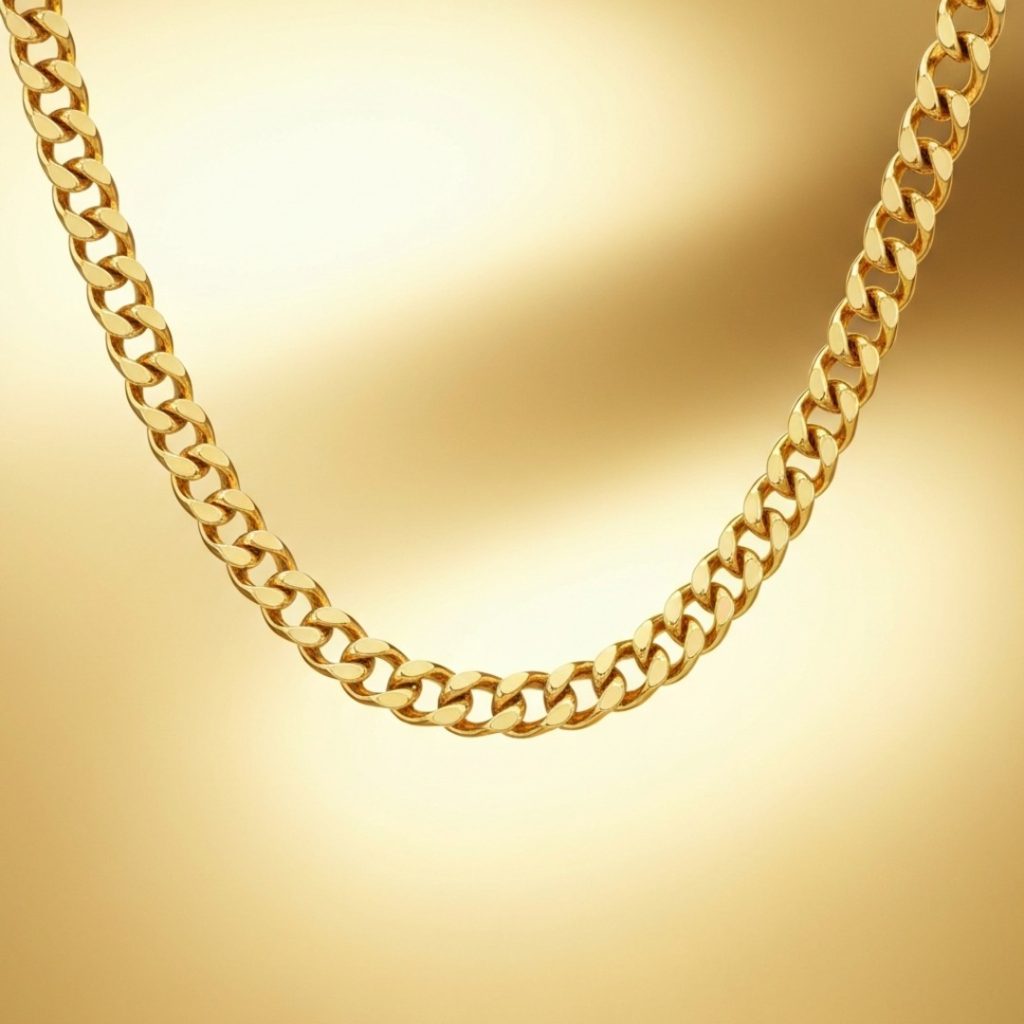
2. The Curb / Gourmette Chain
- The Design: Flat, oval links that have been twisted and diamond-cut to lie flat against the skin.
- Why it’s Liquid: It is the international standard for gold chains. It is easy to clean (no hidden crevices for dirt to accumulate and add false weight).
- Durability: It rarely breaks. Broken jewelry often fetches a lower exchange rate because it is considered “scrap.” A sturdy Curb chain usually survives for decades intact.
3. The Rope Chain (Solid vs. Hollow)
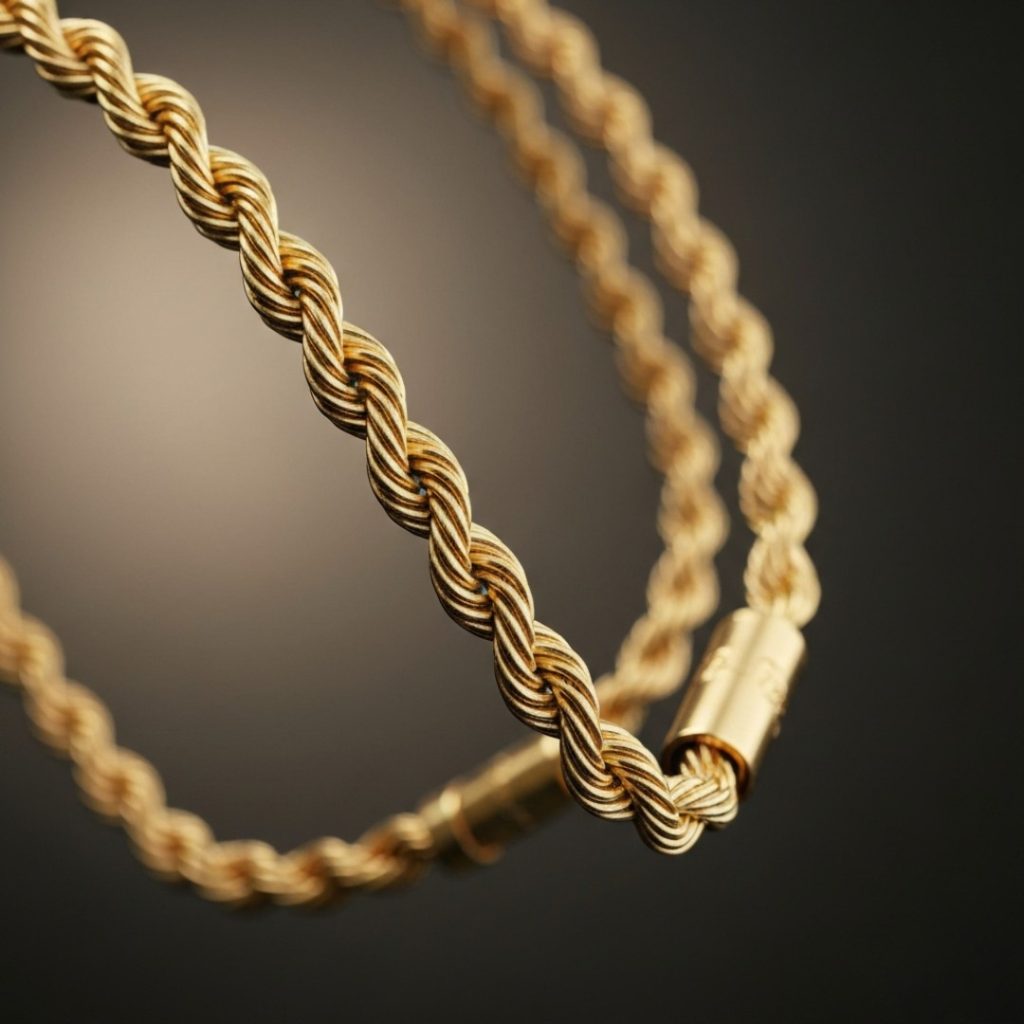
- The Trap: Many Rope chains are Hollow. Hollow chains are terrible for liquidity because they dent, break, and trap dirt inside the tube. When you sell, the jeweler will deduct a high percentage for “dirt/impurities” inside the hollow tube.
- The Strategy: Buy a Solid Rope Chain. It is heavy, dense, and commands a premium resale value.
4. The “Mughal” Chain (Tulsi/Rudraksha Beads)
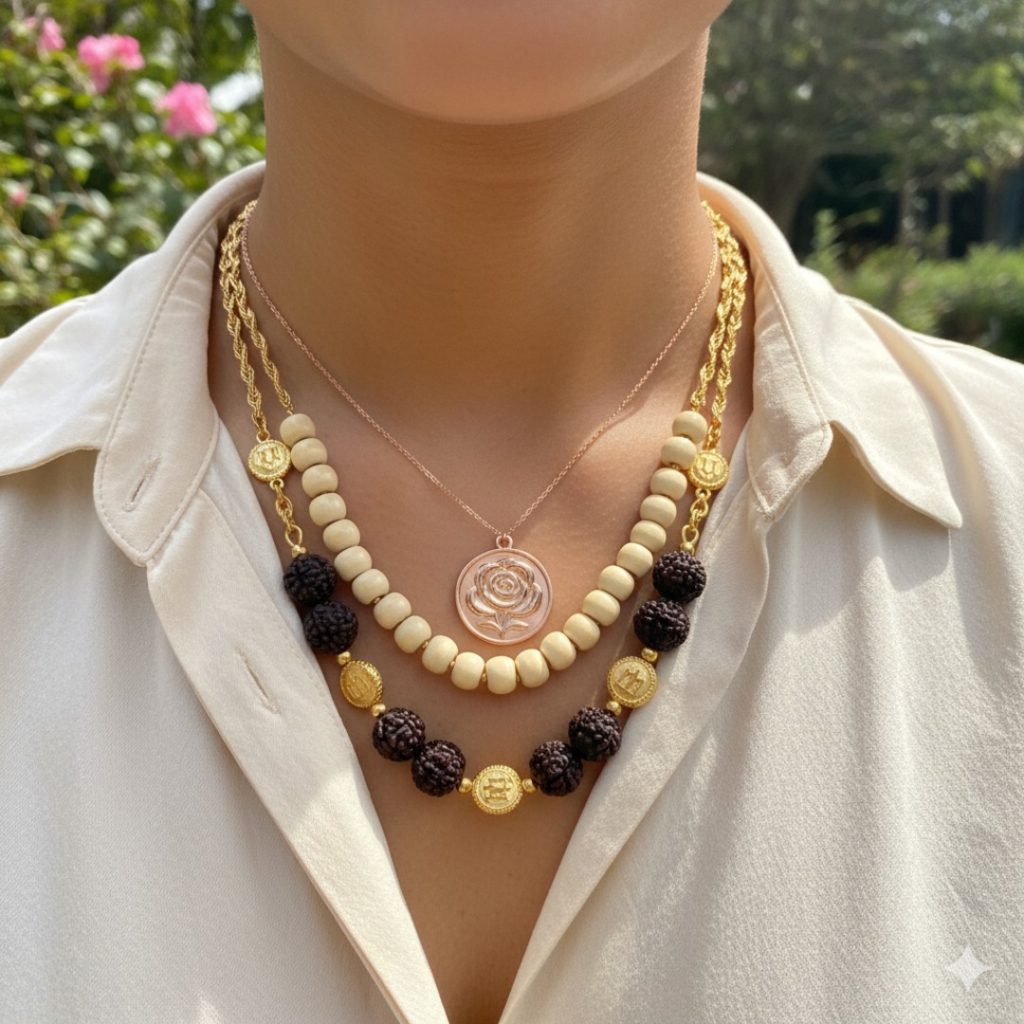
- The Design: Gold beads shaped like Tulsi or Rudraksha seeds strung together.
- Why it’s Liquid: It is essentially a string of gold balls. High purity, low joining solder.
- Investment: Often bought in heavier weights (20g – 50g) by men as a wearable asset.
Part 2: The Best Bangles for Resale (Solid Gold Circles)
Bangles are the traditional Indian savings account. But one wrong choice (lac-filled) can ruin your ROI.
1. The “Pipe” Kada (Solid)
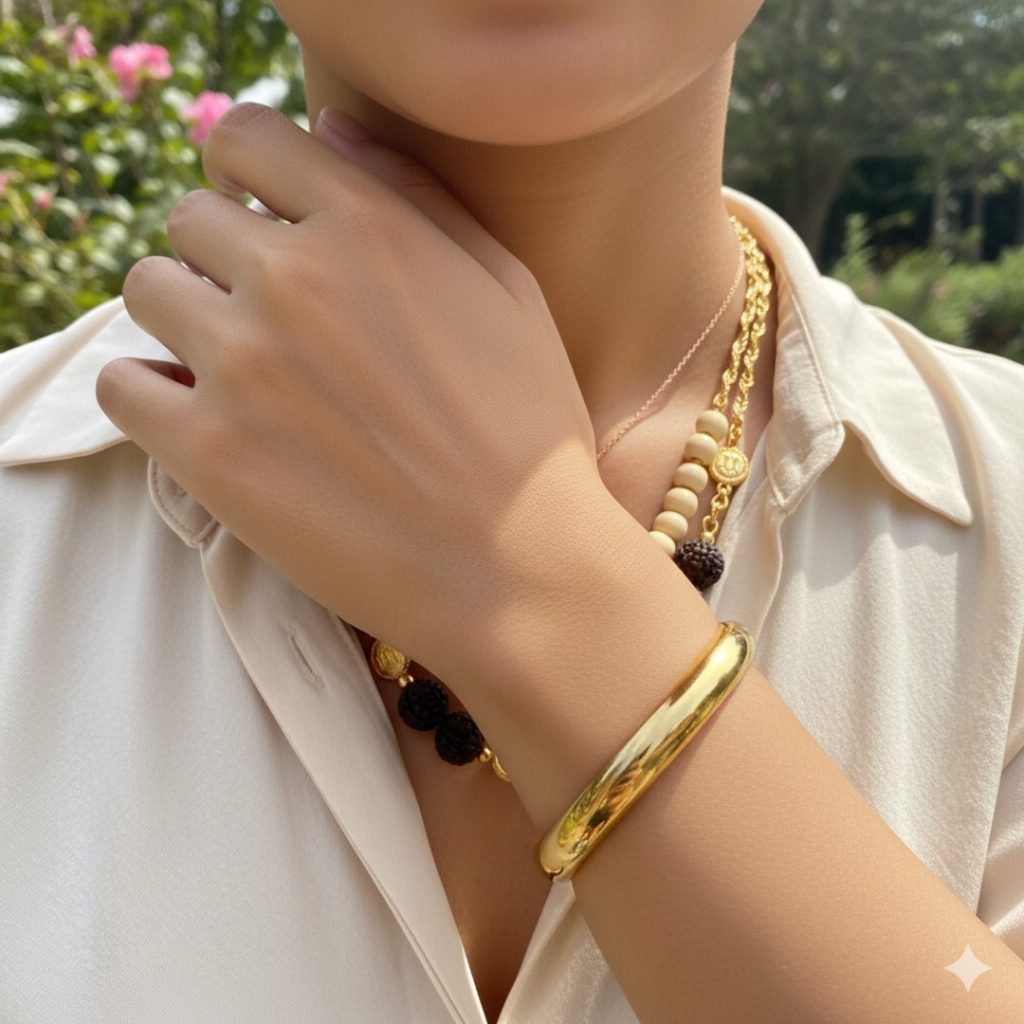
- The Design: A smooth, round, thick tube of gold.
- The Critical Detail: Ensure it is Solid (Thos), not hollow.
- Why it’s Liquid: A solid Kada is basically a gold bar bent into a circle. It has the highest gold-to-labor ratio. You pay very little for the “design” and almost entirely for the metal.
- Resale Value: 99% of the gold value is returned.
2. The Machine-Cut CNC Bangle
- The Design: These are bangles cut by Computer Numerical Control (CNC) machines. They have sharp, diamond-like facets engraved into the gold.
- Why it’s Liquid: Since a computer cuts them, the precision is 100%. The weight is standardized. Making charges are low (8-12%).
- Visual Appeal: They sparkle like diamonds but are pure gold. No stone weight to deduct!
3. The “Screw” Bangle (Pej)
- The Design: A bangle with a screw mechanism to open/close.
- Why it’s Liquid: Unlike slip-on bangles that need to be sized perfectly, screw bangles fit a wider range of buyers. If you ever sell it directly to another person (instead of a jeweler), a screw bangle is easier to sell because size isn’t a barrier.
Part 3: What to Avoid (The Liquidity Killers)
If resale is your goal, these are the “Red Flags.”
1. Lac/Wax Filled Bangles
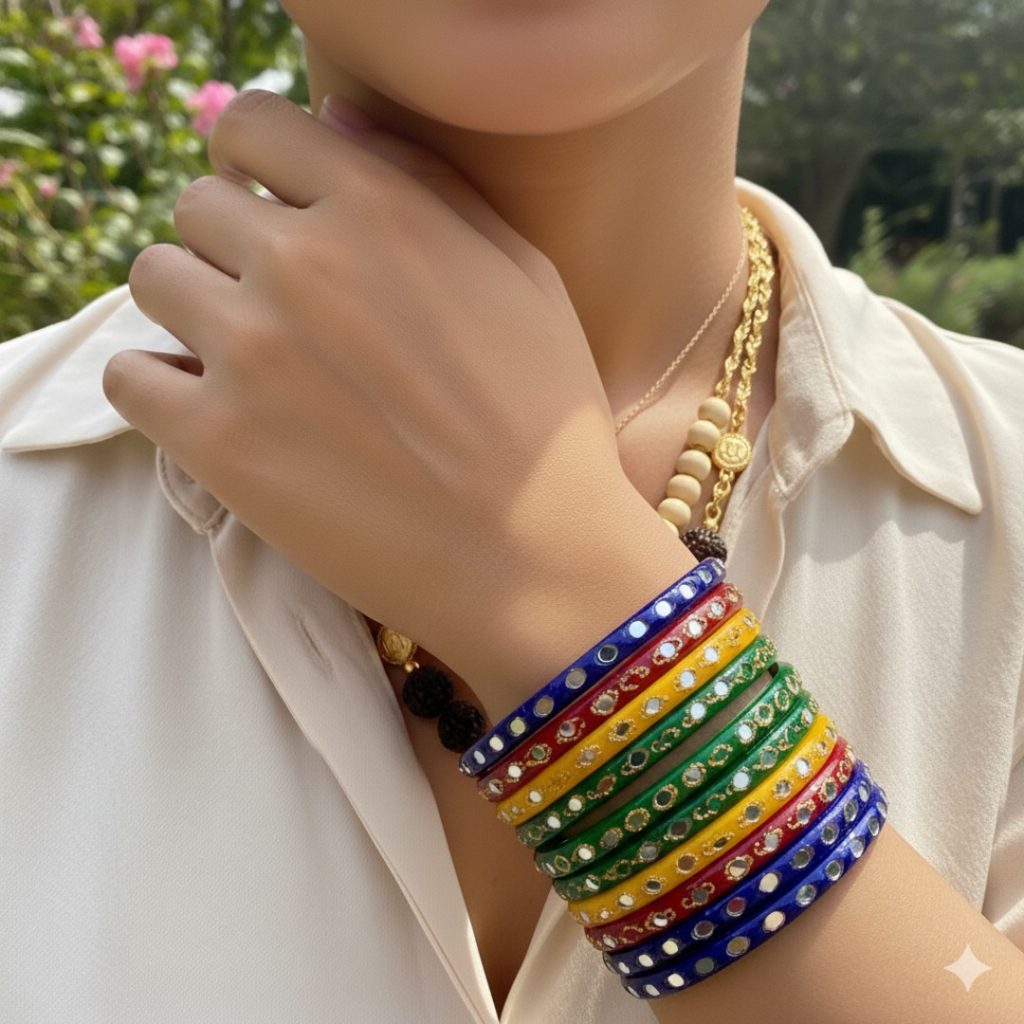
- The Scam: It looks like a thick, heavy gold bangle. But inside, it is filled with Lac (a type of wax) to give it support.
- The Resale Nightmare: The jeweler has to burn the bangle to melt the wax out before weighing the gold. You will be shocked to see that a 30g bangle might only have 10g of gold. The rest was wax.
- Verdict: Never buy filled jewelry for investment.
2. Enamel (Meenakari)
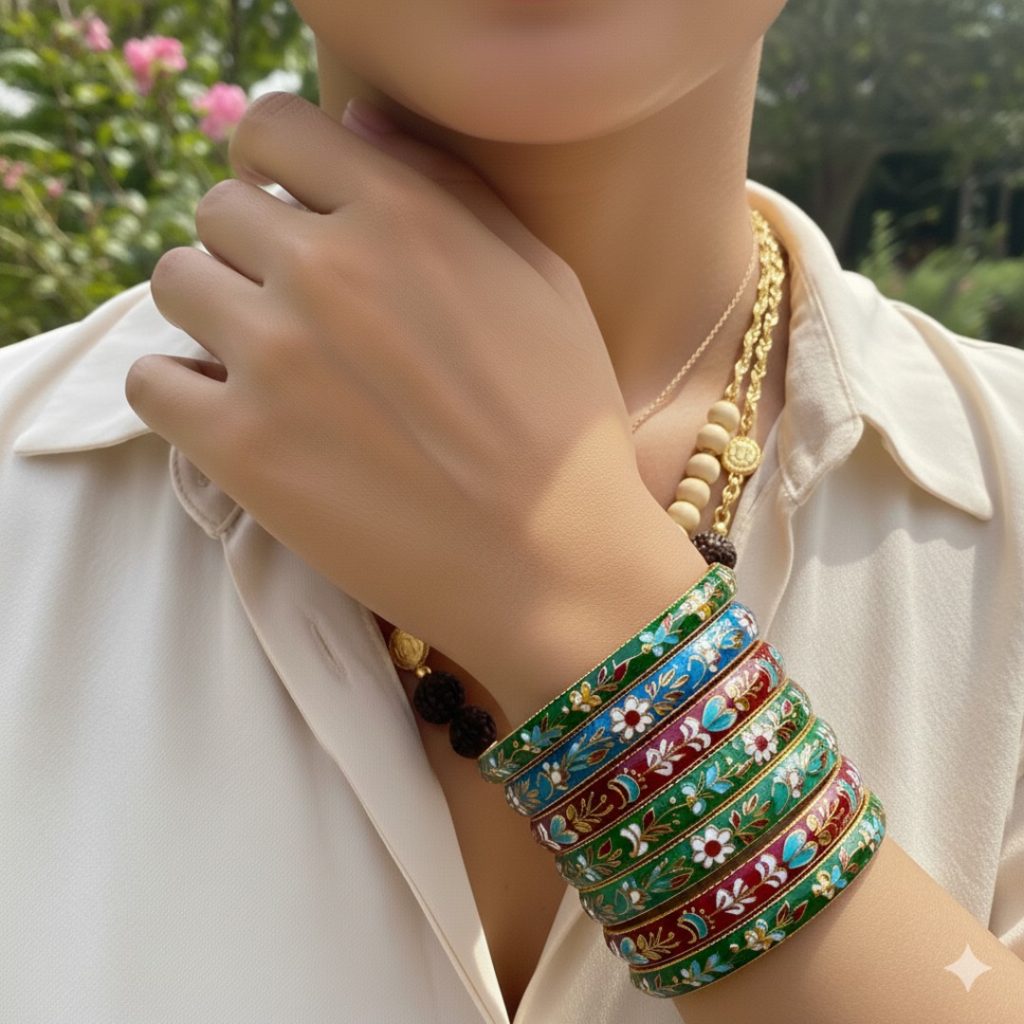
- The Issue: Enamel is glass powder fused onto gold. It looks pretty, but when you sell, the jeweler will estimate the weight of the enamel and deduct it. They often over-estimate the deduction to be safe, meaning you lose free gold.
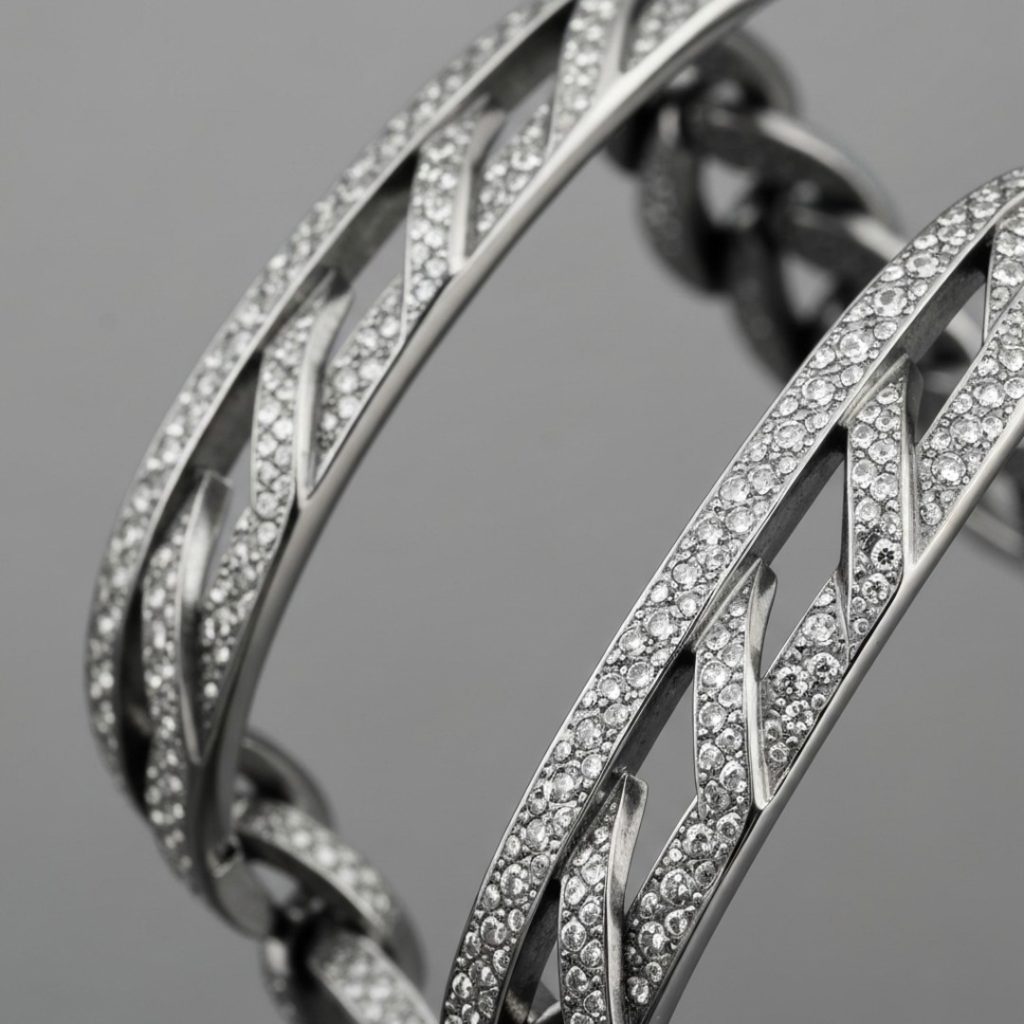
3. Stone-Studded Anything
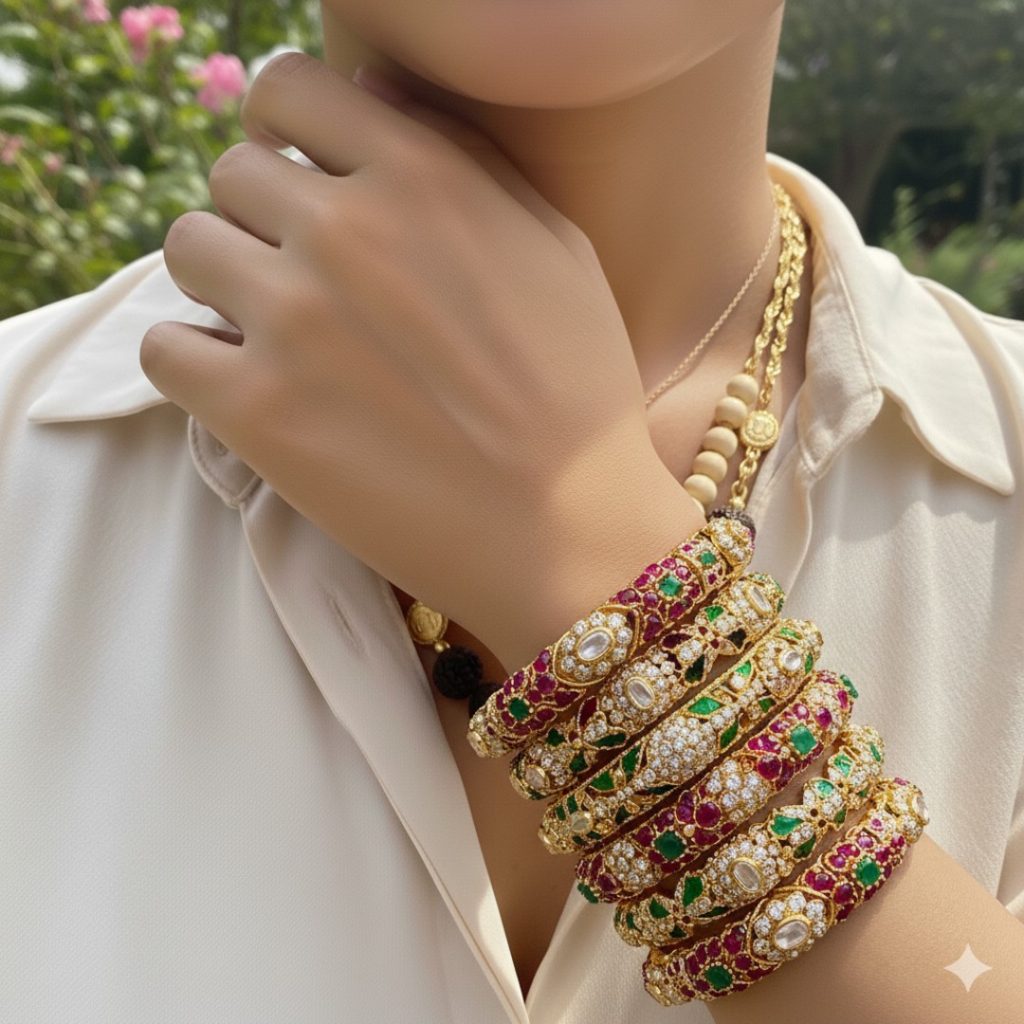
- The Rule: Stones have Zero Liquidity in the gold market.
- The Loss: You pay for the stone + setting charges. You get back nothing.
- Verdict: Buy plain gold.
Part 4: The HUID Advantage
In 2025, the Hallmark Unique Identification (HUID) code is your passport to liquidity. Without it, selling gold is a negotiation. With it, selling gold is a transaction.
- Instant Verification: The jeweler enters the 6-digit code into the BIS portal and sees the purity instantly.
- No Melting: They don’t need to cut or melt your chain to test it. This means if you don’t like their price, you can take your chain back intact and go to another shop.
- National Acceptance: You can buy a HUID chain in Kerala and sell it in Delhi effortlessly.
Smart Selling Strategy: How to Exit
You bought the right chain. Now, years later, you want to sell. Here is how to get the best price.
- Go Back to the Source: Always try to sell back to the same jeweler you bought from. Most have a “100% Exchange / 96% Cash Back” policy for their own jewelry.
- Keep the Bill: Even with HUID, having the original tax invoice helps. It proves ownership and simplifies the KYC process for cash transactions.
- Check the Rate Yourself: Don’t ask “What will you give me?” First, check the daily 24k Bullion Rate. Calculate:
- (Your Weight) x (Your Purity e.g. 0.916) x (Current Rate)
- This is your benchmark. If the jeweler offers significantly less, ask why.
Conclusion: Boring is Profitable
High-Liquidity Gold Jewellery isn’t always the most exciting. It doesn’t have colorful peacocks or dangling rubies. It is often just a simple, shiny yellow chain or a round bangle.
But there is a beauty in that simplicity. It is the beauty of Efficiency. It is the beauty of Security. When you buy a high-liquidity piece, you are buying peace of mind. You know that if life throws a curveball, that chain around your neck isn’t just an accessory—it’s a parachute.
So, for your next purchase, look past the trendiest designs. Ask the jeweler for the “Plain Gold” tray. Pick the heaviest, simplest thing there. Your future self will thank you.
I’d love to know: Have you ever tried to sell old jewelry and been shocked by the deductions? Share your experience in the comments below!
Frequently Asked Questions (FAQs)
Which gold chain link is the strongest and best for daily wear?
The Box Chain and Wheat Chain are considered the strongest because of their interlinked structure that resists kinking. For investment/liquidity, the Curb (Gourmette) Chain is best because it is solid, flat, and universally recognized, making it easiest to inspect and resell.
Is it better to buy gold coins or chains for liquidity?
Gold Coins are technically more liquid because they have lower making charges (2-4%) compared to chains (8-12%). However, chains offer Utility—you can wear your wealth. If you want pure investment, buy coins. If you want to enjoy your investment, buy a simple solid chain.
Do I get back GST when I sell gold?
The 3% GST you paid when buying the jewelry is a tax that goes to the government. It is a sunk cost. When you sell gold, you get the value of the metal only. You do not get a refund on the tax or the making charges.
Why is HUID mandatory for selling?
It isn’t strictly mandatory for you to have HUID to sell old gold (you can sell non-hallmarked gold), but it is mandatory for the jeweler to only sell HUID gold. However, having HUID on your jewelry makes the selling process much faster and ensures you get the full market rate without destructive testing (melting).